 Bradenton Window
 Why Decking Takes a Beating in Bayshore Gardens
Bayshore Gardens sits low and close to the water, which is exactly what makes it a great place to add outdoor living space — and exactly why a deck here has to be built differently than one going up inland. The same waterfront exposure that makes a backyard deck worth having is what wears one out early: near-constant humidity, salt-laden air drifting off the bay, intense UV that doesn't really let up any season of the year, and the wind-driven rain that comes with every serious Gulf Coast storm system. None of that is unique to any one house — it's the baseline condition for anything built outdoors in this part of Manatee County.
A deck that's designed and installed without accounting for that environment doesn't fail dramatically. It fails slowly — fasteners weep rust stains into the boards, framing softens where water sits instead of draining, boards cup or gap unevenly, and within a few years a deck that should have had a 20-30 year service life needs major repair. Getting it right the first time costs the same as getting it wrong; the difference is entirely in the details.
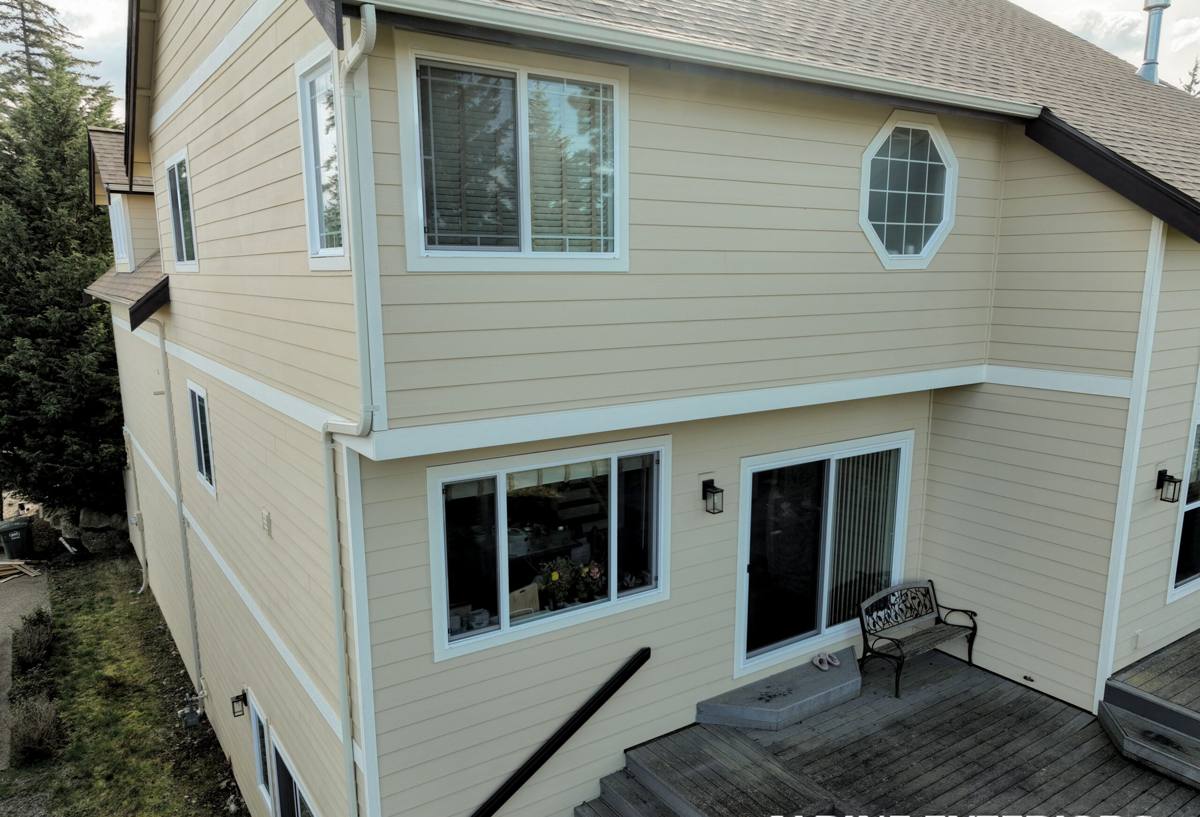
What a Correct Composite Decking Job Actually Involves
Composite decking gets marketed around the board itself — color, texture, brand name — but the board is the easiest part to get right. The substructure, fastening, and water management underneath it are what determine whether the deck holds up in a coastal environment like Bayshore Gardens. A correct install includes:
- A framing layout with joist spacing matched to the specific composite board's span rating — composite typically needs tighter joist spacing than solid wood decking, and manufacturers vary on this
- Corrosion-resistant fasteners and hardware throughout — coated or stainless-grade hardware rated for coastal/salt-air exposure, not standard interior-grade fasteners
- A hidden fastener or clip system sized correctly for board expansion and contraction, since composite moves more with heat than solid wood
- Proper gapping between boards and at the framing to let water drain and air move underneath instead of pooling
- Ledger board flashing that ties into the house's existing water management correctly, so the deck doesn't become the point where water starts getting behind siding or trim
- Ventilation underneath the deck so humidity and trapped moisture don't sit against the substructure year-round
Skip any one of these and the deck will still look fine on install day. The problems show up in year two or three, usually after the first real storm season.
Choosing the Right Composite Board for This Climate
Not all composite decking behaves the same way in heat, humidity, and salt exposure, and this is where an honest conversation with a homeowner matters more than a sales pitch. The biggest distinction is capped versus uncapped composite.
Capped composite
Capped boards have a polymer shell wrapped around a wood-plastic composite core. That shell is what resists moisture absorption, staining, and UV fading — all three of which are constant pressures in a Bradenton-area yard. We install capped composite as our default recommendation for coastal jobs because the core is protected from the moisture cycling that salt-air humidity causes.
Uncapped composite
Older-style uncapped composite absorbs more moisture at the surface and is more prone to mold and mildew growth in a humid environment, along with more visible fading over time. It's a legitimate product and costs less, but it's a maintenance trade-off we walk through with homeowners rather than just install without discussion — uncapped boards need more regular cleaning to stay ahead of mildew in this climate.
Color and heat
Darker composite boards run noticeably hotter underfoot in direct Florida sun than lighter or variegated colors. For a deck that gets full afternoon sun, that's worth factoring into the color choice — not because darker boards perform worse structurally, just because comfort matters if the deck actually gets used in summer.
| Decking Option | Salt-Air / Humidity Behavior | Maintenance Level | Typical Lifespan |
|---|---|---|---|
| Capped composite | Strong resistance to moisture absorption and staining | Low — periodic washing | 25-30+ years |
| Uncapped composite | More prone to surface mildew in humid air | Moderate — regular cleaning needed | 15-25 years |
| Pressure-treated wood | Absorbs moisture, prone to cupping/splitting near water | High — sealing/staining every 1-2 years | 10-15 years |
Framing and Substructure: Where Salt Air Does the Most Damage
In a waterfront-adjacent community, the substructure is usually the first thing to fail — long before the deck boards themselves show wear. Standard fasteners and connector hardware corrode faster here than they would twenty miles inland, and once corrosion starts at a joist hanger or ledger bolt, it's a structural issue, not a cosmetic one. We spec coated or stainless connector hardware for coastal installs specifically because replacing a deck board is a minor job, but replacing a corroded structural connection means partially tearing the deck apart. Pressure-treated framing lumber is still standard under composite decking, but the fasteners tying it together are where the real decision gets made.
Water Management and Elevation Near the Bay
Bayshore Gardens' proximity to the water means many yards deal with higher water tables, poor drainage after heavy rain, or decks positioned close to grade. That changes how a deck should be built — ledger flashing needs to correctly shed water away from the house rather than trap it, footings need to be set to the depth the soil and drainage conditions actually require, and in some cases the deck height itself needs adjusting so water doesn't sit against the substructure after a downpour. Wind-driven rain during tropical systems also finds its way sideways into gaps that would never be a problem in a drier climate, which is another reason flashing detail at the house connection matters more here than in most parts of the country.
Permitting and Wind Requirements
Manatee County requires permits for deck construction, and the Florida Building Code's wind provisions apply to decking just like any other exterior structure — connection hardware, footing depth, and attachment to the home all get reviewed against local wind load requirements. This isn't paperwork for its own sake; it's the same code that determines whether a deck's railing posts and ledger connections can actually take a hurricane-force gust without pulling loose. A contractor who pulls the permit and builds to that inspection standard is building a deck that's been checked by someone other than the crew that installed it.
Our Process for Bayshore Gardens Decking Projects
- On-site assessment — we look at drainage, sun exposure, existing grade, and how close the deck will sit to the water table or any existing hardscape
- Design and material selection — board type, color, and layout chosen with the specific site's sun and moisture exposure in mind, not a one-size answer
- Permitting — we handle the Manatee County permit and build to the Florida Building Code wind and structural requirements that apply to the job
- Framing and installation — coastal-rated hardware, correct joist spacing for the board chosen, proper gapping and ventilation
- Final walkthrough — we go over the finished deck and what maintenance (if any) it actually needs going forward
Maintenance Realities in a Salt-Air Environment
Even the best composite board isn't maintenance-free in this climate — it's low-maintenance, which is a different claim. Salt residue and organic debris build up on any exterior surface near the water, and a periodic rinse or wash keeps composite boards looking new and prevents the kind of surface buildup that can eventually stain or feed mildew growth. Fastener heads and any exposed metal hardware are worth a visual check once or twice a year, particularly after storm season, since that's where corrosion shows up first if it's going to. None of this is heavy work — it's the difference between a deck that still looks good in year ten and one that needs board replacement because dirt and salt were left to sit.
What to Ask Before Hiring a Composite Decking Contractor
- Will they pull the Manatee County permit, and is the design built to current Florida Building Code wind requirements?
- What fastener and hardware grade do they use, and is it rated for coastal/salt-air exposure?
- What joist spacing will they frame to, and does it match the composite board manufacturer's span rating?
- How do they handle ledger flashing where the deck ties into the house?
- Do they offer both capped and uncapped composite options, and can they explain the maintenance trade-off honestly?
- Have they worked on decks in Bayshore Gardens or comparable waterfront-adjacent neighborhoods before?
Why Local Experience in Bayshore Gardens Matters
A crew that already works in Bayshore Gardens has already run into the specific combination of conditions this neighborhood presents — the soil and drainage behavior, the wind exposure off the water, the way salt air accelerates hardware corrosion faster than it would a few miles inland. That's not something a contractor picks up from a manual; it's something they learn by building decks in this exact area and seeing how they hold up a few years later. It shows up in small decisions — hardware grade, footing depth, flashing detail — that don't get noticed on install day but decide whether the deck is still solid a decade out.
If you're planning a composite deck in Bayshore Gardens, we're glad to walk the site, talk through board options honestly, and put together a free estimate — no pressure, no obligation. The form below gets you started.