 Bradenton Window
 Bayshore Gardens is one of those Manatee County neighborhoods where the outdoors is the whole point of living there — canal lots, mature shade trees, and easy access to Sarasota Bay make a deck one of the most-used parts of the house. But a deck built without accounting for Bradenton's climate doesn't stay that way for long. Between salt-laden air off the bay, intense year-round UV, wind-driven rain, and the occasional hurricane-force gust, this part of Florida is hard on outdoor structures. A deck built the way it would be built inland — standard fasteners, off-the-shelf framing choices, no real attention to drainage or corrosion — will show its age within a few years here. We build decks specifically for this environment, for homeowners in this neighborhood, and that difference shows up in how the deck looks and holds up ten years from now, not just on the day it's finished.
What Bayshore Gardens Homes Need From a Deck
Most homes in this part of Bradenton were built decades ago, and many sit close to canals or open water. That means decks here often have to deal with a few things at once: proximity to salt air, older home framing that a new deck has to tie into safely, and yards where drainage doesn't always cooperate. A deck that works well in Bayshore Gardens needs to resist corrosion, shed water instead of trapping it, and be attached to the house in a way that respects both the age of the structure and current wind-load requirements for Manatee County.
It also needs to handle heavy, regular use. Decks here aren't seasonal features — they get used year-round, which means more cumulative UV exposure, more foot traffic, and more exposure to the salt air that drifts in off the water. We design and build with that reality in mind rather than treating a deck as a one-season project.
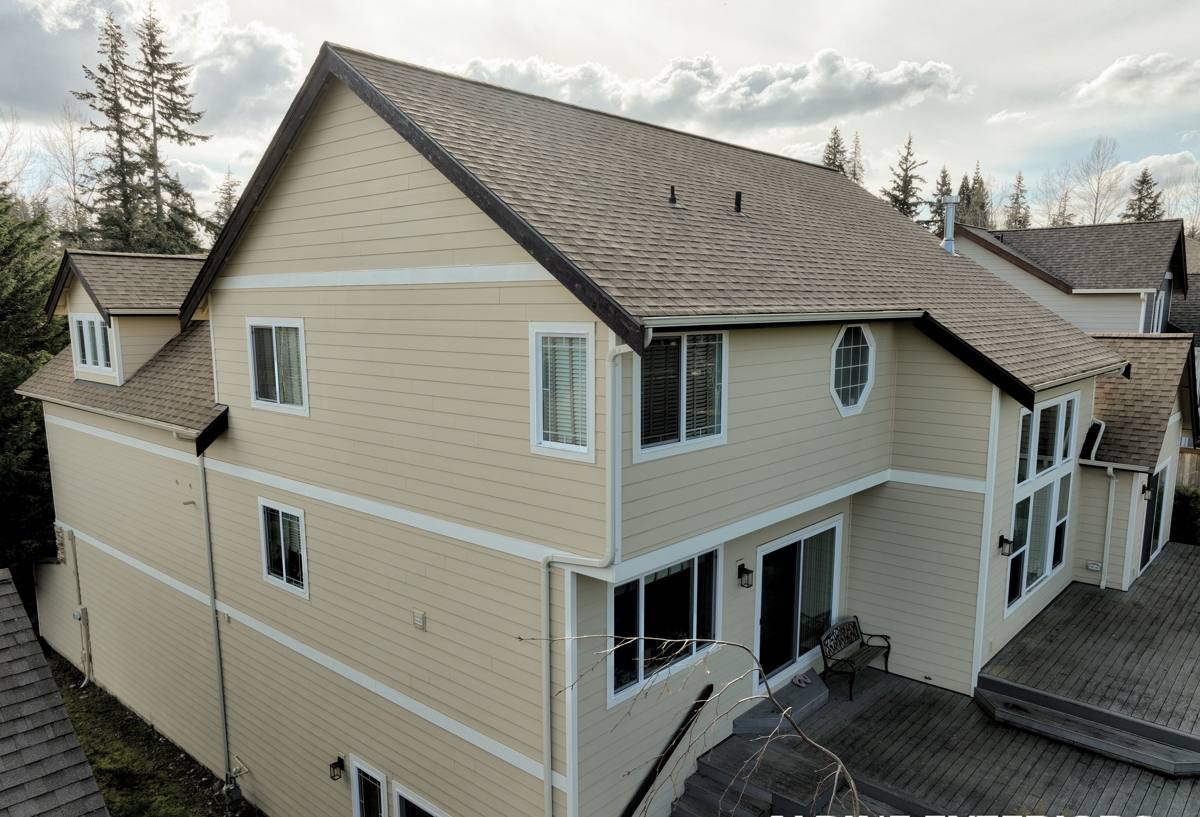
How Bradenton's Climate Attacks a Deck
Salt Air and Corrosion
Anywhere close to Sarasota Bay, airborne salt accelerates corrosion on anything metal. Standard hardware store fasteners and hangers will rust and stain a deck's surface within a couple of years, and rusted fasteners are a structural problem, not just a cosmetic one — a corroded joist hanger or screw loses holding strength long before it looks obviously bad.
UV Exposure
Florida sun is relentless on decking material year-round, not just in summer. UV breaks down wood fibers, fades color, and dries out the natural oils in lumber, which is what leads to splitting, graying, and surface checking. Composite and PVC products handle UV differently than wood, and that difference matters when you're choosing materials.
Wind-Driven Rain and Moisture
Rain in this region rarely falls straight down — it comes in sideways with the wind, which means water gets driven into joints, ledger connections, and fastener holes that a calm-weather rain would never reach. Decks need proper flashing and gapping to let that water escape instead of pooling and soaking into the wood or framing.
Hurricane-Force Wind
A deck attached to the house is only as strong as its weakest connection point. During a tropical system, wind doesn't just push on a deck — it can pull on the ledger board attachment and railing posts with real uplift force. Framing and fastening choices that would be fine in a low-wind climate aren't adequate here.
Choosing the Right Decking Material
There's no single "best" decking material for every homeowner — it comes down to how much maintenance you're willing to do, your budget, and how close you are to the water. Here's how the common options compare for a Bayshore Gardens property specifically.
| Material | Salt Air / Moisture Behavior | Maintenance | Typical Lifespan Here |
|---|---|---|---|
| Pressure-treated wood | Needs sealing to resist moisture and salt exposure; untreated fasteners will corrode faster | Annual cleaning and re-sealing recommended | 10-15 years with upkeep |
| Composite decking | Resists moisture absorption well; doesn't rot, but surface can still fade under constant UV | Periodic cleaning, no sealing or staining | 20-25+ years |
| PVC / capped polymer | Fully resists moisture and salt staining; most stable option near the water | Lowest maintenance of the three | 25+ years |
| Tropical hardwoods (e.g., ipe) | Naturally dense and rot-resistant, but still needs oil treatment to prevent graying | Regular oiling to maintain color and moisture resistance | 20-30 years with diligent upkeep |
We'll walk through these trade-offs honestly during an estimate. A lot of homeowners in this neighborhood land on composite or PVC because they don't want a re-sealing project every year, but wood still has a place for homeowners who want that specific look and don't mind the maintenance schedule that comes with it.
Framing, Footings, and Ledger Attachment
The part of a deck nobody sees is the part that determines whether it lasts. In this climate, we pay particular attention to three things:
- Footings sized for local soil and moisture conditions — many Bayshore Gardens lots have higher water tables given the proximity to the bay and canals, which affects how footings are set.
- Ledger board attachment — this is the connection point that takes the most stress during high wind, and it needs proper flashing to keep wind-driven rain from getting behind it and rotting the house's rim joist.
- Corrosion-resistant structural hardware — joist hangers, structural screws, and post bases rated for coastal exposure, not standard interior-grade hardware.
On canal-front or water-adjacent lots, we also look at deck height and drainage path relative to the yard's grading, since standing water at the base of posts accelerates rot and corrosion over time.
Permits and Manatee County Requirements
Deck construction in unincorporated Manatee County, which includes Bayshore Gardens, requires a building permit, and inspections are done at key stages — typically footings, framing, and final. Setback requirements also apply, and they can matter more on the smaller, older lots common in this neighborhood, especially for properties near canals where there may be additional considerations tied to the waterway. We handle the permit application and coordinate inspections as part of the job, so you're not the one tracking down inspectors or deciphering code requirements.
Our Deck Building Process
- On-site assessment — we look at your existing structure (if replacing a deck), the ledger attachment point, soil conditions, and how the space will actually be used.
- Design and material selection — sizing, layout, railing style, and decking material chosen based on your budget and maintenance preference.
- Permitting — we prepare and submit what Manatee County requires and schedule inspections at each stage.
- Demolition (if applicable) — removal of an old or failing deck, checking the house's rim joist and framing underneath for hidden rot or corrosion before rebuilding.
- Footings and framing — footings set to code depth, ledger properly flashed, framing built with corrosion-resistant hardware throughout.
- Decking and railing installation — boards and railing installed with proper gapping for drainage and expansion.
- Final inspection and walkthrough — we confirm everything passes inspection and walk the finished deck with you before calling the job done.
Railings, Fasteners, and Hardware That Actually Hold Up
A deck can have the right decking material and still fail early if the hardware underneath isn't suited to this environment. We use structural fasteners and connectors rated for coastal or high-corrosion exposure rather than standard galvanized hardware, which tends to show rust streaking and lose strength faster this close to the water. The same logic applies to railing systems — post connections and baluster fasteners take constant exposure and need to be corrosion-resistant, not just weather-resistant.
This is one of the areas where cutting corners doesn't show up right away. A deck built with the wrong hardware can look fine for a year or two before rust stains appear and connections start to loosen — which is why we don't treat fastener selection as an afterthought.
Maintaining Your Deck in a Bayshore Gardens Environment
Even the most durable materials benefit from a basic maintenance routine given the salt air, UV, and rain this area sees. A short checklist we give homeowners after a build:
- Rinse the deck surface periodically to remove salt residue, especially after storms or high winds off the bay.
- Check railing posts and stair connections once or twice a year for loose fasteners or early rust staining.
- Keep gutters and downspouts clear so water isn't dumping onto or near the deck structure.
- For wood decks, plan on re-sealing or re-oiling on the schedule recommended for your specific product — skipping this is the single biggest reason wood decks fail early here.
- Clear debris from between boards and around footings so moisture doesn't sit trapped against the structure.
- After any major storm, do a quick visual check of the ledger attachment and railing posts before resuming normal use.
Why Hire a Crew That Already Works in This Neighborhood
A deck builder who works all over the region, without much focus on any one area, isn't necessarily thinking about how a specific neighborhood's lots, soil, and exposure differ from the next town over. Working regularly in Bayshore Gardens means we already understand the typical lot conditions, the county's inspection process for this area, and the kind of hardware and material choices that hold up given how close these homes sit to the water. That familiarity shortens the guesswork on your project — we're not learning the neighborhood on your job.
It also means we're accountable locally. We're not a crew that shows up once and disappears — we're based in Bradenton, working this same area on an ongoing basis, which matters if a warranty issue or a maintenance question comes up down the road.
Get a Free, No-Pressure Estimate
If you're planning a new deck or need to replace one that's showing its age, we're happy to take a look and give you an honest assessment — what your lot and home actually need, what materials make sense for your budget and maintenance preference, and a straightforward estimate with no pressure attached. Use the form below to get started.