 Bradenton Window
 Building Decks for Lakewood Ranch Homes
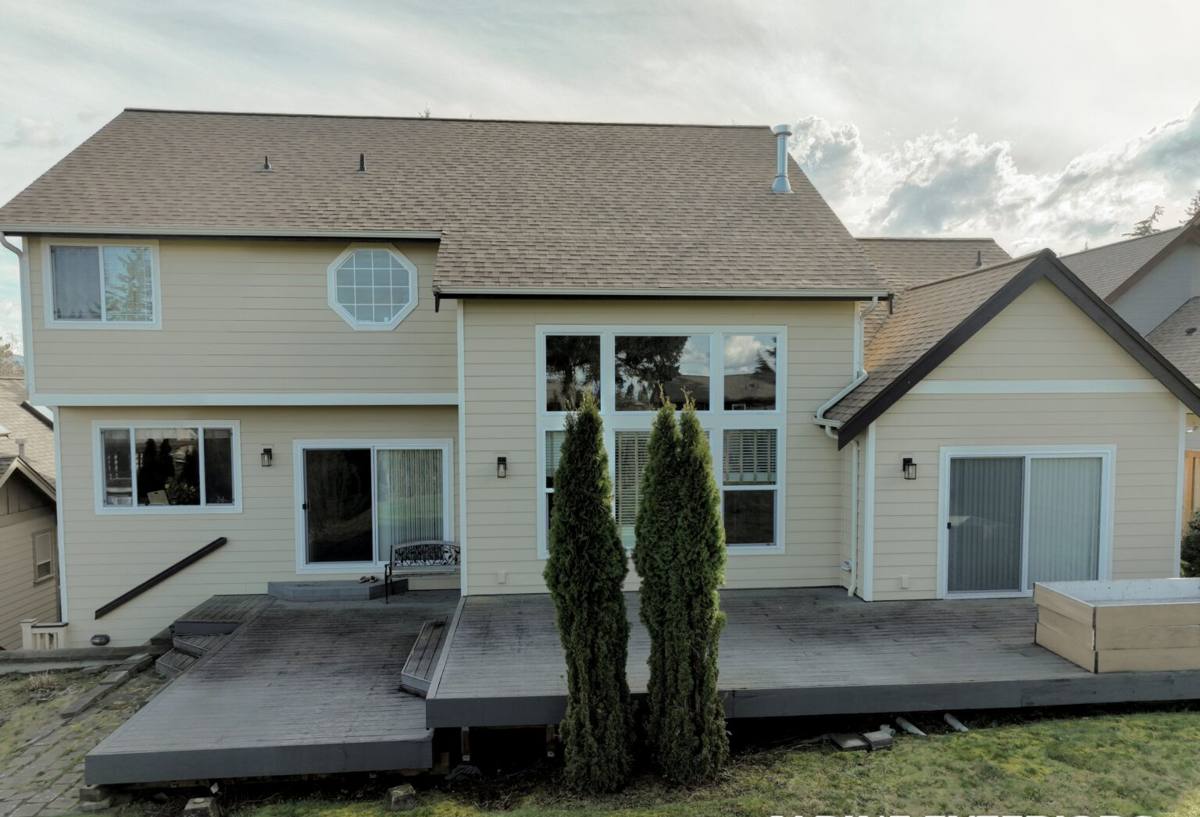
Lakewood Ranch is one of the largest master-planned communities in the region, spanning the Manatee and Sarasota county line east of Bradenton. It's a mix of newer construction, deed-restricted neighborhoods, and lots that often back onto ponds, preserves, or golf course frontage as part of the community's stormwater and green-space design. A deck built here has to do two jobs at once: hold up to genuine Gulf Coast weather, and clear the design review most Lakewood Ranch communities require before a shovel goes in the ground.
Bradenton Window Company builds and installs custom decks across Manatee County, including Lakewood Ranch, and we also handle windows, siding, and roofing, because exterior work in this climate rarely stays in one lane. A deck ties into the house at the ledger board, sits exposed to the same sun and rain as everything else on the exterior, and often gets built alongside a covered lanai or screen enclosure. We build decks to hold up against hurricane-force wind, intense year-round UV, wind-driven rain, and the salt-tinged air that reaches inland communities like Lakewood Ranch on a Gulf breeze, even well away from the immediate coastline.
What This Climate Actually Does to a Deck
Hurricane-Force Wind Loads
Manatee County sits inside a wind zone that requires structures, including decks, to be engineered for real uplift and lateral load, not just gravity. A deck that's only built to hold weight standing still can still fail in a storm if the ledger connection, post anchors, or joist hangers weren't sized for wind. This is the single biggest difference between a deck built for a mild climate and one built for ours.
Wind-Driven Rain and Ledger Flashing
Florida rain doesn't fall straight down during a squall or a tropical system; it drives sideways into whatever it hits. Where a deck attaches to the house at the ledger board, that means water gets pushed up and behind the connection if it isn't flashed correctly. A ledger board without proper flashing is one of the most common sources of hidden rot we find on older decks, because the leak happens behind the board where nobody sees it until the wood is already soft.
Year-Round UV Exposure
Bradenton doesn't get a real off-season from sun. UV breaks down wood fibers, dries out finishes, and fades color on almost every decking material to some degree, and it does it faster here than in most of the country because there's no winter lull to slow the process down. Material choice and finish maintenance matter more here than they would somewhere with four real seasons.
Humidity, Mildew, and Inland Salt Air
Lakewood Ranch sits a good distance inland compared to our beachfront service areas, so it doesn't take direct salt spray. It still sits inside the same humid, salt-tinged air mass that moves across this whole stretch of the Gulf Coast, and combined with regular afternoon humidity, that's enough to accelerate corrosion on lower-grade fasteners and hardware and to feed mildew growth on any decking surface that stays shaded or damp.
Decking Material Options for This Climate
There's no single correct material for every home. Budget, how much sun the deck gets, and how much upkeep you actually want to do all factor into the decision. Here's how the common options actually perform under Manatee County conditions.
| Material | UV & Fade Behavior | Moisture Behavior | Typical Maintenance |
|---|---|---|---|
| Pressure-treated wood | Grays and can splinter without regular finish upkeep | Resists rot when treated correctly, but end cuts and fastener holes are vulnerable | Sealing or staining every 1-2 years |
| Capped composite | Fade-resistant cap layer; higher-grade products handle Florida sun better than uncapped boards | Won't rot; core can still absorb moisture at cut ends if not sealed | Low; periodic washing |
| Uncapped composite (older-style) | More prone to fading and surface wear under sustained UV | More moisture-sensitive than capped products | Low to moderate |
| PVC / cellular vinyl decking | Strong UV and fade resistance | Fully moisture-resistant; won't rot or absorb water | Very low |
| Aluminum decking | Doesn't fade in the traditional sense; finish can chalk over many years | Fully moisture-resistant, drains well, stays cooler-adjacent under a covered structure | Very low |
We'll walk you through the real trade-offs for your specific lot rather than defaulting to whatever's easiest to install. A deck under heavy tree shade near a pond doesn't have the same needs as one sitting in full sun on an open lot, and the right material can differ even between two homes on the same street.
Permits and HOA Approval in Lakewood Ranch
Manatee County Permitting
A new deck, or a significant rebuild of an existing one, requires a permit through Manatee County, and the structural plans have to meet Florida Building Code wind requirements for our zone. That typically means engineered footing sizes, specified post-to-beam and beam-to-ledger connections, and inspections at set points during construction. Skipping this step, or hiring someone who does, is how homeowners end up with a deck that can't legally be sold or insured without being torn out and redone.
HOA and Deed Restriction Review
Most communities within Lakewood Ranch are deed-restricted and require architectural review before exterior construction, including decks. That review usually covers things like footprint, height, materials, railing style, and how the structure reads from neighboring lots or common areas. Submitting a design that hasn't been checked against your specific community's guidelines is one of the most common causes of delay we see, because it means going back for a resubmission instead of moving straight to permitting and construction.
Structural Details We Don't Treat as Optional
Most deck failures in this climate aren't failures of the decking material on top, they're shortcuts in the structure underneath that don't show up until a storm or a few humid seasons later. On every job, that includes:
- Ledger board flashing installed correctly at the house connection, not just caulked and hoped for
- Post bases and joist hangers rated for wind uplift, sized to the engineered plan rather than "close enough"
- Stainless steel or coated, corrosion-resistant fasteners appropriate for humid, salt-tinged coastal air
- Footings sized and set to meet Florida Building Code requirements for our wind zone and local soil conditions
- Proper board spacing and drainage so standing water doesn't sit on the deck surface after afternoon storms
- Railing and stair connections built to code, not just to look right
None of these add meaningfully to the overall project cost, but skipping them is exactly what turns a deck that should last decades into one with hidden rot, loose railings, or a failed inspection.
Footings and Framing on Manatee County Soil
Florida doesn't have a frost line to dig below, which simplifies footing depth compared to colder climates, but it introduces its own considerations. Much of Lakewood Ranch sits on sandy soil with a water table that can run high, especially on lots near ponds or preserve areas built into the community's stormwater design. Footings need to be sized for the soil's actual bearing capacity, not just poured to a standard depth and assumed adequate. On lots with a higher water table, that can mean larger footings, different concrete placement, or additional engineering review before the permit is approved. This is one of the areas where a generic, one-size-fits-all approach causes real problems down the line, whether that's settling, movement, or a failed inspection.
Open Deck, Covered Deck, or Screened Lanai?
Given how much direct sun and how many wind-driven afternoon storms this area gets, a lot of Lakewood Ranch homeowners end up asking whether a fully open deck is even the right call. An open deck is the simplest and most affordable option, and it works well for smaller footprints or homes that already get good natural shade. A covered deck adds a roof structure that cuts UV exposure and keeps the space usable during a rain shower, but it adds its own engineering requirements since a roof changes the wind load calculation. A screened lanai goes a step further, keeping out insects and wind-blown debris while still letting in light and air. We'll talk through how you actually plan to use the space before recommending one over the other, since the right answer depends as much on lifestyle as it does on budget.
Maintaining a Deck in This Climate
Even a well-built deck needs some ongoing attention in a climate this demanding. A short seasonal routine goes a long way toward protecting the investment:
- Rinse the deck surface periodically to clear pollen, salt residue, and organic buildup before it feeds mildew
- Check for standing water after heavy rain, which can signal a drainage or board-spacing issue worth addressing
- Inspect fasteners and hardware once or twice a year for early signs of corrosion, especially near the ledger connection
- Reseal or restain wood decking on the schedule appropriate for the product, rather than waiting until it's visibly gray or cracked
- Trim back overhanging vegetation that keeps sections of the deck shaded and damp longer than the rest
- After any named storm, walk the structure and check railings, stairs, and post connections before assuming everything's fine
Why a Local Bradenton-Area Crew Matters
A crew that builds decks across Manatee County through hurricane season, dry season, and everything between sees how wind, UV, and humidity actually behave on real structures over years, not just how a material performs on a spec sheet. In Lakewood Ranch specifically, that means already knowing the general shape of the HOA architectural review process, understanding how footing requirements can shift lot to lot depending on proximity to a pond or preserve, and building connections that are sized for our actual wind zone rather than a generic national standard. It also means being available if a storm causes damage and you need someone who already knows the structure, not a stranger starting from scratch.
Beyond Decks: Windows, Siding, and Roofing
Decks are one part of what we do in Lakewood Ranch. The same wind, rain, and UV that a deck has to withstand affects windows, siding, and roofing on the same house, and a deck project often surfaces issues nearby, like a ledger connection that reveals siding damage, or a covered structure that changes how water sheds off an adjacent roofline. We can address that as part of the same project instead of sending you to find a second contractor for something we already saw while we were there.
Get a Free, No-Pressure Estimate
If you're planning a new deck in Lakewood Ranch, replacing an aging one, or just want an honest read on whether your current deck is holding up the way it should, we're glad to take a look. Reach out using the form below to schedule a free estimate, no pressure, no upsell script.