 Bradenton Window
 Why Board & Batten Fits Longboat Key
Board and batten has been a staple of Florida coastal architecture for generations, and it's easy to see why it works so well on Longboat Key. The vertical lines and crisp shadow reveals give homes that classic "Old Florida" cottage look, or they can be dressed up to suit a more contemporary coastal build. It pairs naturally with the barrier island's mix of low-country cottages, modern coastal builds, and mid-century Gulf-front homes. But the appeal isn't only visual. Done correctly, the vertical batten pattern sheds wind-driven rain efficiently and holds up to the kind of sustained coastal exposure that flat, unprotected wall assemblies struggle with.
The catch is that "board and batten" describes a look, not a material. The battens and boards can be cut from real wood, engineered wood, vinyl, or fiber cement — and on a barrier island like Longboat Key, that material choice is what separates siding that lasts fifteen years from siding that lasts fifty.
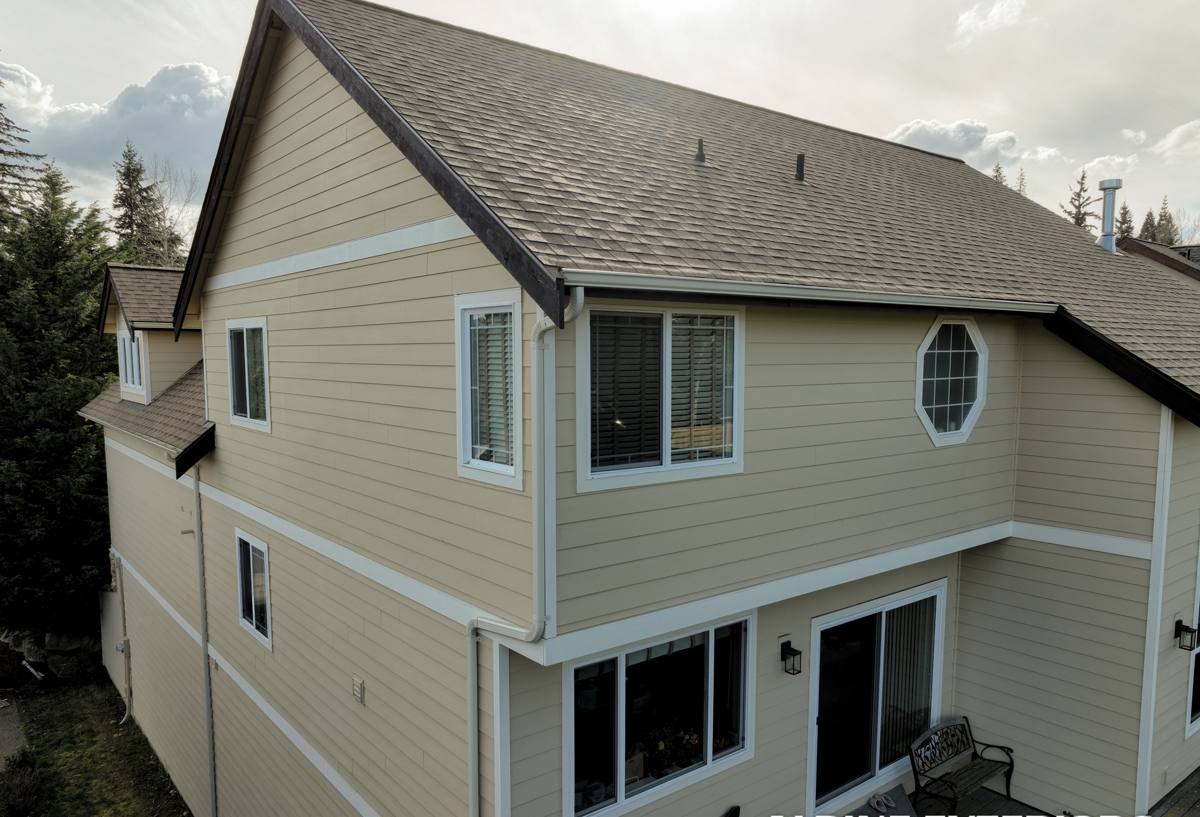
What Longboat Key's Climate Actually Demands
Longboat Key sits directly on the Gulf, which means every wall assembly on the island deals with a combination of stresses that inland Manatee County homes simply don't face to the same degree:
- Hurricane-force wind: Sustained storm winds and wind-driven debris put real pressure on siding attachment points, not just the surface material.
- Constant, intense UV: Year-round Florida sun fades and degrades unprotected finishes faster than almost anywhere else in the country.
- Wind-driven rain: Rain on the island rarely falls straight down — it's pushed sideways into wall assemblies, which stresses every seam, joint, and batten edge.
- Salt air: Airborne salt accelerates corrosion of fasteners and hardware and slowly breaks down materials that aren't engineered to resist it.
Any one of these is manageable. All four, working on a home continuously, is what separates a coastal install from a standard one. Board and batten siding has more linear seams and butt joints than plain lap siding, which means more places for wind-driven rain to find a way in if the material or the installation isn't right for the exposure.
Board & Batten Materials: A Coastal Comparison
Homeowners on Longboat Key are often comparing several board and batten materials at once. Here's an honest look at how they hold up under the conditions described above.
| Material | UV / Fade Resistance | Moisture Behavior | Wind & Impact Resistance | Long-Term Maintenance |
|---|---|---|---|---|
| Real wood (cedar, spruce) | Poor without frequent refinishing | Absorbs moisture; prone to swelling, rot, and insect damage near salt air | Moderate; splits under wind stress over time | High — recurring painting, caulking, and repair |
| Vinyl board & batten | Fades and becomes brittle under sustained UV | Doesn't rot, but seams can allow water intrusion; can warp in heat | Lower impact resistance; can crack or blow off in high wind | Low upfront, but limited lifespan and no refinishing option |
| Engineered wood (LP-type) | Better than raw wood with factory coating | Wood-based core is still moisture-sensitive at cut edges | Good when installed to spec | Moderate — edge sealing and coating maintenance matter |
| James Hardie fiber cement | ColorPlus factory finish engineered for UV exposure | Non-combustible, moisture- and rot-resistant core | Engineered and rated for high-wind coastal regions | Low — no repainting cycle when ColorPlus finish is used |
Every material on that list can be installed correctly or incorrectly. But some materials give an installer far less margin for error in a climate like this one — and that's a large part of why we standardized on one product system rather than offering all of them.
James Hardie Board & Batten: The System We Install
We only install James Hardie fiber cement siding, and for board and batten specifically that means either HardiePanel vertical siding fitted with matching battens, or Hardie's purpose-built Artisan Board & Batten collection for a more refined, tighter-reveal look. Both are manufactured from fiber cement — a mix of cellulose fiber, sand, and cement that doesn't feed insects, doesn't rot, and won't ignite.
Why the HZ product line matters here
James Hardie engineers its HZ5 and HZ10 formulations specifically for humid, high-moisture climates like Gulf Coast Florida. For a barrier island property, that engineering isn't a marketing detail — it's the difference between siding that's designed for this exposure and siding that's merely tolerating it.
Why ColorPlus finish matters here
Standard field-applied paint is one of the first things to fail under constant Florida UV and salt air. Hardie's ColorPlus finish is baked on in a controlled factory environment, which gives it better fade resistance and a longer service life than site-applied paint — and it comes backed by its own finish warranty, separate from the substrate warranty on the board itself.
What a Correct Board & Batten Installation Involves
Board and batten looks simple from the curb, but it has more seams, joints, and fastening points than a standard lap profile, so the installation details matter more, not less. A correct install on a coastal home should include:
- A properly lapped and sealed weather-resistive barrier behind the entire assembly, not just behind the seams
- A rainscreen or furring gap where conditions call for it, so any moisture that does get behind the boards can drain and dry instead of sitting against the wall
- Corrosion-resistant fasteners — this matters more within reach of salt air, where standard fasteners corrode and streak the siding over time
- Battens fastened into structural framing or proper backing, not just into the panel below them
- Correctly sized gaps at butt joints and trim to allow for expansion without trapping water
- Flashing at every horizontal transition — window and door heads, roof-to-wall intersections, and the base of the wall
- Factory-cut and factory-primed edges used wherever possible, with any field cuts properly sealed per manufacturer spec
Skipping any one of these doesn't usually cause a visible problem in year one. It shows up two, five, or ten years later as a soft spot behind a batten, a streaked fastener head, or a seam that's let water track behind the wall — which is exactly the kind of damage that's expensive to find and expensive to fix once it's hidden behind finished siding.
Our Process for a Longboat Key Board & Batten Project
- On-site assessment: We look at your current siding, wall assembly, wind exposure, and any moisture or rot already present before recommending a scope of work.
- Product and layout selection: We help you choose between HardiePanel with battens and Artisan Board & Batten, along with reveal spacing, trim details, and ColorPlus color.
- Tear-off and inspection: Old siding comes off and the sheathing underneath gets inspected — this is often the first real look anyone's had at the wall assembly in years.
- Weather barrier and flashing: Housewrap, flashing, and drainage details go in before a single board is hung.
- Installation to manufacturer spec: Panels and battens are installed with the fastening pattern, spacing, and sealing that James Hardie specifies for this climate zone.
- Final detailing and walkthrough: Trim, caulking, and touch-up are finished, and we walk the job with you before calling it complete.
Permitting and Barrier Island Considerations
Longboat Key work often comes with a layer of process that inland Manatee County jobs don't: wind load requirements tied to coastal exposure, building permit review, and in many cases HOA or architectural review board approval before work can start. None of that should be a surprise mid-project. Part of doing this work correctly on the island is building the permitting and any association review into the timeline up front, with documentation that matches what Longboat Key's building department and local associations expect to see for exterior work.
Why a Crew That Already Works Longboat Key Matters
Siding installation on a Gulf-front barrier island isn't identical to siding installation five miles inland, even within the same county. A crew that regularly works Longboat Key already understands the wind exposure differences between a bayside lot and a Gulf-front lot, knows what local permitting review typically expects, and has seen firsthand how salt air treats different fastener and trim choices over time. That experience shows up in the small decisions — fastener selection, flashing details, where to add a drainage gap — that don't appear on a spec sheet but determine how the siding performs a decade from now.
We stand behind board and batten installations with the manufacturer's product warranty plus our own workmanship warranty, so you're covered on both the material and the labor.
If you're weighing board and batten siding for a Longboat Key home, we're happy to walk the property, look at your current siding and wall condition, and give you a straightforward, no-pressure estimate — just fill out the form below.