 Bradenton Window
 Why Bayshore Gardens Roofs Wear Out Faster Than the Warranty Suggests
Bayshore Gardens sits close enough to Sarasota Bay that salt-laden air is a daily fact of life, not an occasional weather event. Combine that with Manatee County's intense year-round UV load, frequent wind-driven rain off the Gulf, and the real possibility of hurricane-force gusts during storm season, and you have a climate that ages roofing materials on a compressed timeline compared to inland Florida, let alone the rest of the country. A roof rated for 20-25 years elsewhere may realistically deliver less here if it wasn't installed with this specific environment in mind.
That's the core issue with a lot of roof replacements in this area: the materials and workmanship might meet minimum code, but "minimum code" and "built for a barrier-adjacent Gulf Coast neighborhood" aren't the same standard. A new roof installation in Bayshore Gardens needs to account for salt-air corrosion on fasteners and flashing, UV degradation of shingle mat and sealant, and wind uplift resistance that holds up under real storm conditions, not just a spec sheet.
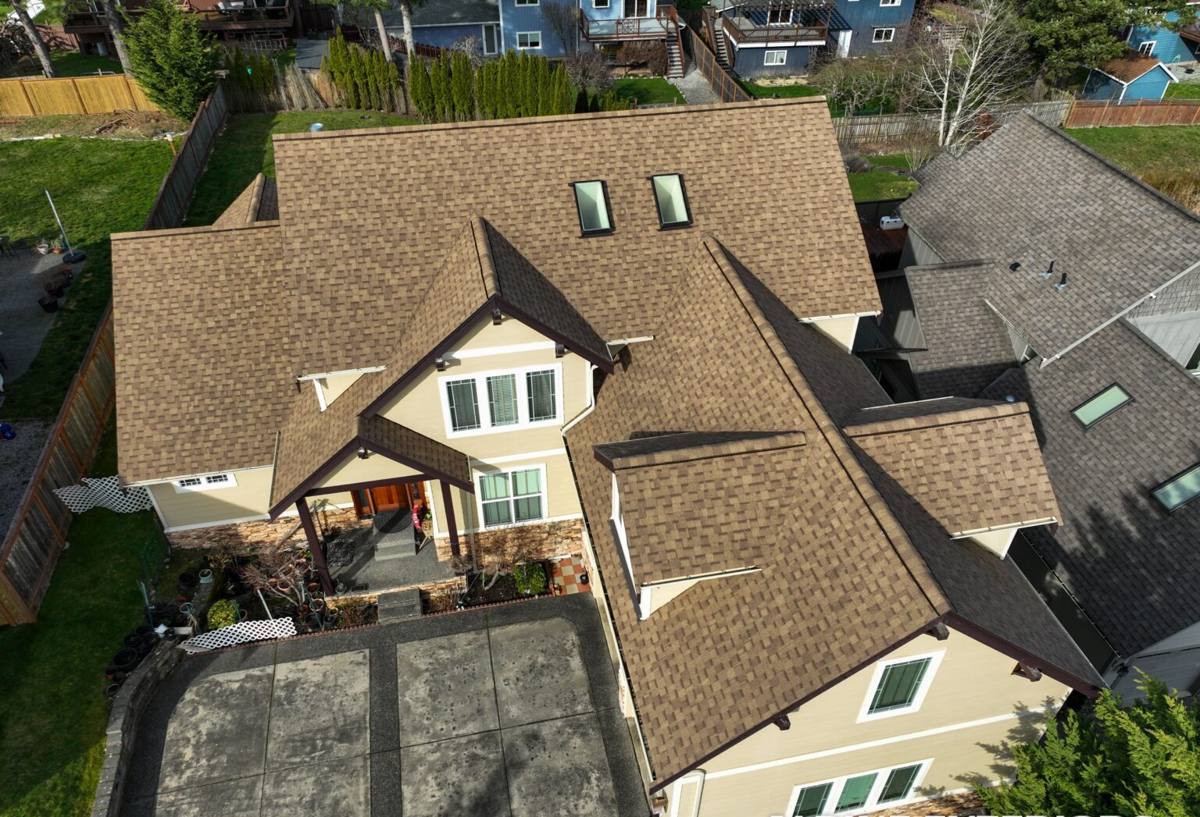
Signs Your Bayshore Gardens Home Actually Needs a New Roof
Not every roof problem calls for full replacement, but there's a point where repairs stop making financial sense and a new roof becomes the honest recommendation. Here's what we look for during an inspection:
- Shingles that are curling, cupping, or losing granules in patches, especially on south- and west-facing slopes that take the most UV exposure
- Soft or spongy spots in the roof deck when walked, which usually means water has already gotten past the surface layer
- Visible sagging along the ridge line or roof edges
- Interior ceiling stains, especially ones that appear or worsen after wind-driven rain rather than straight-down rain
- Flashing around chimneys, vents, and skylights that's rusted, lifted, or loosely sealed
- A roof approaching or past 15-18 years old with no wind mitigation upgrades, which can also affect your insurance premium
- Multiple past repairs in different areas, a sign the whole roof system is reaching the end of its service life rather than having isolated damage
If you're seeing two or more of these, it's worth getting an honest assessment before the next named storm rather than after.
Roofing Materials That Actually Hold Up in a Coastal Manatee County Climate
There's no single "best" roofing material for every home, but some perform noticeably better than others under Bayshore Gardens conditions. The table below reflects how each option typically holds up against the specific stresses this area produces.
| Material | Wind Performance | UV / Heat Durability | Salt Air Resistance | Typical Lifespan Here |
|---|---|---|---|---|
| Architectural asphalt shingle | Good, when rated and installed for high wind (130+ mph) | Moderate — quality of granule and mat matters a lot | Good with proper fasteners and flashing | 15-22 years |
| Concrete or clay tile | Very good when properly fastened and battened | Excellent — tile itself doesn't degrade from UV | Very good; underlayment is the weak point, not the tile | 30-50 years (underlayment usually needs replacement sooner) |
| Standing seam metal | Excellent, especially with concealed fasteners | Excellent, especially with reflective coatings | Good with marine-grade or coated fasteners; lesser hardware corrodes faster | 30-50 years |
The honest trade-off: tile and metal cost more upfront but spread that cost over a much longer service life and generally hold up better to both wind and salt exposure. Asphalt shingle remains a solid, budget-conscious choice as long as it's a high-wind-rated product installed correctly — the installation quality matters as much as the material choice.
Underlayment Is Where a Lot of Roofs Actually Fail First
On tile and metal roofs especially, the underlayment beneath the surface material is doing most of the actual waterproofing work. In this climate, we don't cut corners here — a self-adhered, high-temperature underlayment holds up far better against Florida's heat cycling and wind-driven rain than older felt products, which is why we treat it as a non-negotiable part of any new roof installation here.
What a Correct Roof Installation Involves — Not Just the Shingles
A roof is a system, not a single layer. Skipping or shortcutting any of these components is the difference between a roof that survives its first serious storm and one that doesn't.
- Deck inspection and repair: Any soft, rotted, or delaminated plywood gets replaced before anything goes on top of it — covering bad decking just hides the problem.
- Secondary water barrier: A fully sealed underlayment system so that if wind ever lifts the surface material during a storm, water still can't reach the deck.
- Correct fastening pattern: Nail or fastener count and placement matched to the wind rating required for this zone, not the manufacturer's minimum for a calmer climate.
- Flashing at every penetration: Chimneys, vents, skylights, and wall intersections properly flashed and sealed, since these are the most common leak points on any roof.
- Ventilation: Balanced intake and exhaust ventilation so heat and moisture don't build up in the attic, which shortens roof life and drives up cooling costs.
- Drip edge and gutter integration: Correctly installed edge metal so wind-driven rain sheds properly instead of finding its way under the fascia.
Permits, Wind Mitigation, and What It Means for Your Insurance
Any new roof installation in Manatee County requires a permit and inspection through the county building department — that's not optional, and it shouldn't be skipped even for a "simple" job. Beyond code compliance, a properly documented wind mitigation inspection after the new roof is installed can meaningfully lower your homeowner's insurance premium, since insurers price coastal Florida policies heavily around roof age and wind-resistance features.
We handle the permitting process as part of the job and make sure the completed roof is ready for a wind mitigation inspection, so you're not left chasing paperwork after the fact.
Our Roof Installation Process, Start to Finish
- On-site inspection and honest assessment — we look at the deck, existing flashing, ventilation, and any storm or moisture damage before recommending replacement over repair.
- Material and system recommendation — based on your home's exposure, budget, and how long you plan to stay in the house.
- Permitting — filed with Manatee County before work begins.
- Tear-off and deck inspection — old roofing removed down to the deck, with any damaged plywood replaced.
- Underlayment and flashing installation — the waterproofing layer that does the real work of keeping your home dry.
- Roofing material installation — installed to the fastening and wind-rating specs appropriate for this area, not just manufacturer minimums.
- Ventilation check and adjustment — confirming intake and exhaust are balanced for the new roof system.
- Final walkthrough and county inspection — so you have documentation for warranty and insurance purposes.
Cost Factors Worth Understanding Before You Get Quotes
Roof pricing varies by home size, pitch, material, and how much deck repair is needed, so any quote you get should reflect your actual home, not a generic estimate. That said, a few factors consistently move the price:
| Factor | Why It Affects Cost |
|---|---|
| Roof pitch and complexity | Steep or multi-plane roofs take longer to work safely and use more material per square foot |
| Deck condition | Rotted or delaminated plywood found during tear-off adds material and labor |
| Material choice | Tile and metal cost more upfront than asphalt shingle but last significantly longer |
| Layers of existing roofing | Multiple existing layers require full tear-off, which adds labor and disposal cost |
| Wind rating and fastening spec | Higher wind-rated installations use more fasteners and higher-spec underlayment |
We give straightforward, itemized estimates so you can see what you're actually paying for, not just a bottom-line number.
Why Local Experience in Bayshore Gardens Actually Matters
A roofing crew that regularly works in Bayshore Gardens and the surrounding Bradenton area already understands the exposure this specific neighborhood deals with — how close it sits to open water, how salt air behaves on fasteners and flashing over time, and what Manatee County's permitting and inspection process actually requires. That's different from a crew that mostly works inland and treats every job the same way. Local experience means fewer surprises during permitting, a roof spec matched to real conditions instead of a generic template, and a crew that's still around and reachable if a question comes up after a storm.
If your roof is aging, showing damage, or you just want an honest opinion on whether repair or replacement makes more sense, we're glad to take a look. Reach out for a free, no-pressure estimate using the form below.