 Bradenton Window
 Composite Decking in Parrish: Why the Material Choice Matters Here
Parrish sits in unincorporated Manatee County, and like the rest of the Bradenton area, it gets the full range of what Gulf Coast weather can throw at an outdoor structure: long stretches of intense summer sun, sudden downpours that drive rain sideways under eaves and railings, and the real possibility of hurricane-force wind loading a deck has to survive without pulling away from the house. A deck built here isn't just a place to put a grill and some chairs — it's an exterior structure that has to perform through humidity, UV exposure, and storm season year after year. Composite decking, when specified and installed correctly for this climate, holds up to that combination far better than untreated wood, but "composite" isn't one product — the quality, core construction, and capping all affect how a board actually behaves in Florida conditions.
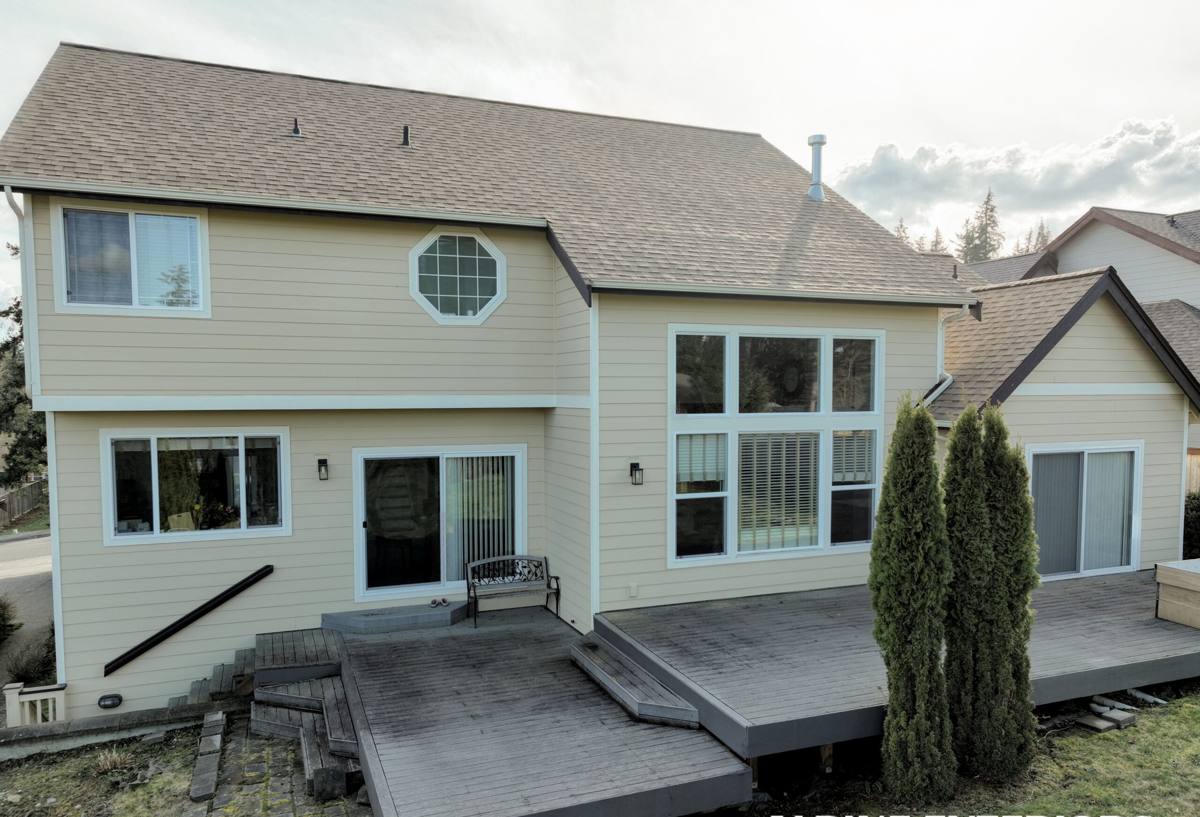
What Parrish Homes Need From a Deck
Most homes in and around Parrish are relatively newer construction with concrete block or engineered-frame construction, often on lots with some tree cover and enough humidity to keep wood decks damp longer than they'd like. That combination — humidity plus heat plus periodic heavy wind — creates a specific set of demands for any decking material:
- Resistance to moisture absorption so boards don't cup, swell, or host mold in shaded or low-airflow areas
- Color and surface stability under sustained UV exposure, not just for the first year or two
- A fastening and framing system rated for the wind uplift and lateral loads this region can see
- Proper flashing where the deck ties into the house, since wind-driven rain finds gaps that a calm-day rain never would
- Enough ventilation beneath the deck surface to let moisture escape instead of getting trapped against joists
A deck that ignores any one of these tends to show it within a few seasons — not through catastrophic failure, but through soft spots, discoloration, fastener staining, or a ledger connection that's slowly working loose.
Capped vs. Uncapped Composite: What Actually Holds Up
Composite decking varies more than most homeowners expect. The core difference that matters most in a climate like ours is whether the board has a full polymer cap around the wood-plastic composite core, or whether the composite is exposed on some or all faces.
| Factor | Capped Composite | Uncapped / Partially Capped Composite |
|---|---|---|
| UV & fade resistance | Cap layer is engineered specifically to resist fading and chalking | Surface color fades and can chalk faster under sustained sun |
| Moisture absorption | Cap seals the core from direct water contact | Exposed composite can absorb more moisture at cut ends and open faces |
| Mold/mildew resistance | Smoother, sealed surface resists staining and growth | More porous surface can hold moisture and organic staining |
| Upfront cost | Higher material cost | Lower material cost |
| Long-term maintenance | Occasional washing | May need more frequent cleaning and closer monitoring over time |
We don't refuse to install uncapped or budget composite products — some homeowners have valid reasons to choose them, and plenty of manufacturers make a reasonable product at that tier. But for a deck that's going to sit in Manatee County heat and humidity for fifteen-plus years, we walk every client through this trade-off honestly before they commit, because the difference shows up in year five, not year one.
Board Color and Heat
Darker composite boards look great in photos but run noticeably hotter underfoot in direct Florida sun — sometimes uncomfortably so by mid-afternoon. Lighter and mid-tone colors stay more walkable and also tend to show less surface heat cycling stress over time. We'll talk through color choice as part of the design conversation, not just as an aesthetic pick.
Framing and Fastening: Where Wind Resistance Actually Comes From
The composite boards get the attention, but the framing underneath them is what keeps a deck attached to the house during a wind event. Correct construction for this region includes:
- Ledger board attachment with proper flashing and through-bolting into structural framing — never just lag screws into siding
- Joist hangers and structural connectors rated for the load path, not just nailed framing
- Post bases and footings sized for both vertical load and wind uplift, not just weight-bearing
- Hidden fastener systems or approved face-screw patterns matched to the specific composite product's expansion tolerances
- Proper joist spacing — composite often requires tighter on-center spacing than wood to prevent long-term sagging in heat
This is the part of a deck build that isn't visible once the project is done, and it's also the part most likely to be shortcut on a low-bid job. A deck can look finished and still be under-attached at the ledger or under-spaced at the joists — problems that don't show up until a storm tests them.
Wind-Driven Rain and the Ledger Connection
The single most common failure point we see on older or poorly built decks in this area isn't the decking surface — it's water intrusion at the ledger board, where the deck attaches to the house. Wind-driven rain doesn't fall straight down; it gets pushed sideways and upward into any gap in flashing, and over time that moisture works into the rim joist and wall framing behind it. Correct ledger flashing — with proper step flashing, a drainage gap, and sealant detailing sized for this climate rather than a drier one — is not optional in Parrish. It's one of the details we check first on both new builds and any deck we're asked to repair or replace.
Ventilation and Moisture Beneath the Deck
Composite decking resists moisture far better than wood, but the framing underneath it is usually still wood or wood-based, and it needs airflow to dry out between rain events. Decks built low to the ground, decks with dense skirting, or decks in shaded, low-airflow spots on the lot need deliberate ventilation planning — gaps in skirting, joist spacing that allows air movement, and grading that keeps water from pooling underneath. Skipping this step is a common reason a deck that looks fine on top develops a musty smell or soft framing within a few years.
Our Process for a Parrish Composite Deck
Every project starts with an on-site visit, not a phone quote. Deck work depends too much on site-specific factors — grade, drainage, existing structure condition, sun exposure — to price accurately without seeing it. From there, our process generally runs:
- Site evaluation and measurements, including a look at drainage patterns and existing structural condition if this is a replacement
- Design and material selection, walking through composite board options, color, and railing systems against your budget and how you'll actually use the space
- Permitting through Manatee County, since deck construction and any structural attachment to the home typically requires a permit and inspection
- Demolition of any existing deck, done carefully to check the condition of ledger framing and connections underneath
- Framing and ledger installation, built to the wind and moisture standards this region requires
- Composite decking installation with correct fastening, gapping for thermal expansion, and railing/stair installation
- Final walkthrough and county inspection sign-off where required
We don't skip the permitting step, even on smaller projects, because an unpermitted deck attachment can become a real problem at resale or during an insurance claim after a storm.
Maintaining a Composite Deck in This Climate
Composite decking is genuinely lower-maintenance than wood, but "low-maintenance" doesn't mean "no maintenance" in a climate this humid and sun-heavy. A simple seasonal routine keeps a composite deck looking and performing the way it should:
- Rinse or sweep off organic debris (leaves, pollen, tree litter) regularly so it doesn't hold moisture against the surface
- Wash the deck with mild soap and water a few times a year to prevent mildew film, especially in shaded sections
- Check railing posts and stair connections annually for any looseness
- Inspect the ledger flashing area after major storms for any signs of water staining on the siding above
- Keep skirting vents and gaps clear of debris so airflow underneath isn't blocked
Why Hiring a Crew That Works Parrish Regularly Matters
A deck built to a generic national spec sheet isn't automatically wrong, but it's often missing the details that matter for this specific stretch of Florida — the flashing detail that accounts for wind-driven rain, the fastener spacing that accounts for sustained heat cycling, the footing depth appropriate for local soil, and the permitting process specific to Manatee County. A crew that regularly works in and around Bradenton and Parrish already knows the inspection expectations, has already seen how different composite products hold up locally over several years, and isn't learning those lessons on your project. That local experience is less visible than a nice-looking board, but it's the difference between a deck that looks good on install day and one that still looks good in year eight.
If you're planning a new composite deck or replacing an aging one in Parrish, we're happy to walk the site with you and put together an honest, no-pressure estimate — just fill out the form below to get started.