 Bradenton Window
 Samoset's Siding Challenge: Wind, Sun, Rain, and Salt Air All at Once
Samoset sits inland from Tampa Bay, but "inland" in this part of Manatee County still means real coastal weather exposure. Homes here deal with hurricane-force wind loads during storm season, intense sun for most of the year, wind-driven rain that gets pushed sideways into every lap joint and seam, and salt-laden air that drifts in off the Bay and doesn't stop working on a house just because it isn't waterfront. No single one of those four factors is unusual on its own. Together, over ten or twenty years, they're a harder test on exterior siding than most product marketing is written to survive.
Hurricane-Force Wind Loads
Manatee County sits in a hurricane-exposed wind zone, which means siding on a Samoset home has to be rated and fastened to hold up under sustained high wind and the pressure swings that come with a passing storm, not just perform well on a calm day. Wind doesn't just push against a wall — it pulls at panel edges and fastener points, and that's where an under-rated or poorly installed product fails first.
Year-Round, High-Intensity UV
Florida sun is strong essentially twelve months a year, not just in summer. That steady UV load breaks down weaker coatings faster than a more moderate climate would, leading to fading, chalking, and brittle caulk joints well before a homeowner expects to think about re-siding.
Wind-Driven Rain
Storms in this part of Florida rarely deliver rain straight down. Wind pushes it sideways into lap joints, under trim, and into any seam where flashing or caulk detailing isn't right. That's a much tougher test for a siding system than an annual rainfall total suggests, and it's where a lot of long-term moisture problems actually start.
Salt Air Off Tampa Bay
Salt-laden air travels well beyond the immediate waterfront, and Samoset's proximity to Tampa Bay means most properties here get some real exposure, not just the homes directly on the water. Salt accelerates the breakdown of factory finishes and speeds up corrosion on fasteners and trim hardware, and that damage tends to show up slowly, over years, rather than all at once.
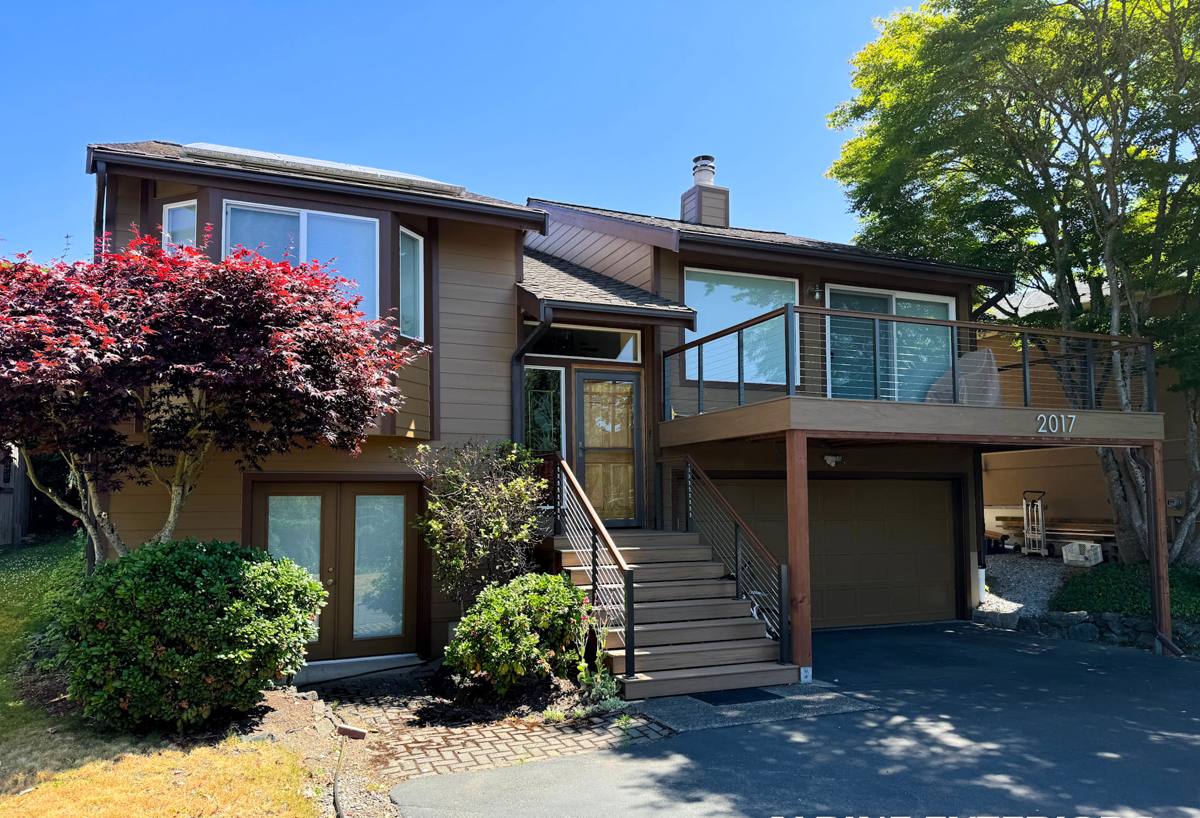
Why James Hardie Is the Only Siding We Install in Samoset
We install James Hardie fiber cement siding exclusively. We don't offer vinyl, LP SmartSide, cedar, primed spruce, Cemplank, or Allura, and that's a deliberate standard, not a limitation in what we're capable of installing. Fiber cement as a category is the right direction for a climate like this one, and we standardized on James Hardie specifically for its climate-engineered product lines, its factory-applied ColorPlus finish, and the strength of its transferable warranty. Hardie siding is a blend of Portland cement, sand, and cellulose fiber, cured into rigid boards and panels. Because it's inorganic, it doesn't have a wood-based core that can absorb water, swell, rot, or feed insects the way organic siding materials can, and it's non-combustible, which matters in its own right regardless of climate.
That doesn't mean every other siding material is without merit — vinyl is inexpensive, engineered wood has real appeal for some homeowners, and cedar has genuine traditional character. What it means is that after years of installing and servicing exteriors in this part of Manatee County, we decided we could only fully stand behind one system, and this is the one we chose.
Matching the Right Hardie System to This Climate
HZ10 Engineering for Florida
James Hardie engineers its siding differently by climate zone, and the HZ10 product line is built specifically for hot, humid, high-UV regions like Florida's Gulf Coast, rather than for areas dealing primarily with freeze-thaw cycles. That distinction matters more than it sounds like on a spec sheet — a board engineered for a colder, drier climate isn't optimized for the sustained heat, humidity, and UV load a Samoset home actually faces. Specifying the correct HZ line is one of the concrete reasons we standardized on this manufacturer rather than fiber cement as a generic category.
ColorPlus Factory Finish
Instead of relying on field-applied paint, Hardie's ColorPlus finish is baked on in multiple coats in a controlled factory environment before the boards ever reach a job site. That finish carries its own warranty, separate from the substrate warranty, and it's formulated to resist the fading and chalking that constant Florida UV causes on lower-quality or site-painted finishes. For a homeowner, that translates into color that holds up longer without a repaint cycle.
What a Correct James Hardie Installation Involves Here
Fiber cement's real-world performance depends heavily on installation quality, and that's especially true in a climate that combines wind, rain, sun, and salt. A rushed or out-of-spec install can undercut even the best siding material on the market.
| Installation Detail | Why It Matters in Samoset |
|---|---|
| Manufacturer-specified fastening pattern and fastener type | Holds the siding in place under sustained hurricane-force wind pressure and uplift |
| Correct clearances at grade, roofline, and deck | Keeps splash-back and standing moisture away from board edges during wind-driven rain events |
| Proper flashing at windows, doors, and penetrations | Directs sideways-driven rain away from seams instead of trapping it behind the siding |
| Factory-cut edges used wherever possible; field cuts sealed to spec | Preserves the ColorPlus finish's UV and moisture protection at every edge |
| Rain screen or drainage plane behind the siding | Lets any moisture that gets past the surface drain and dry instead of sitting against the wall in humid conditions |
| Corrosion-resistant trim and fastener hardware | Slows the deterioration that salt air off Tampa Bay causes to standard-grade hardware |
This is why we send certified installers to every Samoset job rather than treating fiber cement as an interchangeable swap for whatever material a crew is used to hanging. The product's core resistance to moisture and combustion only holds up if the details around it are done correctly.
The Kind of Siding Situations We See in Samoset
Samoset is an established, unincorporated community in Manatee County with a mix of home ages and construction styles, and the siding work we see reflects that variety rather than one single type of project. We evaluate each property's actual exposure and existing wall condition during the estimate rather than assuming every home needs identical treatment.
- Full re-sides on older homes where existing siding is sun-faded, chalking, or showing moisture damage at seams and trim
- Storm-related repairs and replacement after wind or wind-driven rain has damaged a section of exterior wall
- Siding replacement paired with window or door replacement, where opening flashing gets addressed at the same time
- Accent siding on gables or sections of homes that are otherwise stucco or block construction
- Re-siding as part of a broader exterior update ahead of selling or refinancing a home
Our Process, Start to Finish
- On-site assessment — we walk the property, look at the existing siding and wall condition, and evaluate the home's specific wind and moisture exposure
- Honest recommendation — a straight answer on what needs to happen, which Hardie product and profile fits the home, and why, with no upsell script
- Written estimate — a clear scope and price before any work is scheduled
- Tear-off and substrate check — old siding comes off carefully, and any hidden sheathing rot or prior water damage gets addressed before new material goes up
- Installation to manufacturer spec — correct fastening, flashing, clearances, and drainage plane, installed by certified crews
- Final walkthrough — we go over the finished job with you before we consider it done
Cost Factors for a Hardie Siding Job in Samoset
| Factor | What Changes the Price |
|---|---|
| Square footage and home shape | More wall area and more corners, gables, and trim transitions add material and labor time |
| Substrate condition | Rot or prior moisture damage found under the old siding adds repair work before new siding goes on |
| Product profile and color | Lap siding, shingle-style panels, and board-and-batten accents carry different material and installation costs |
| Trim and accessory scope | Full trim replacement versus reusing sound existing trim changes both cost and long-term performance |
| Site access and home height | Multi-story sections or tight lot access can add equipment and labor time |
Warranty and Long-Term Maintenance
James Hardie backs its siding with a transferable, non-prorated limited warranty on the substrate, plus a separate finish warranty covering ColorPlus color retention. Transferability is worth taking seriously in a market where buyers increasingly ask direct questions about a home's exterior materials and their remaining service life — if you sell before the warranty period ends, that coverage generally moves with the house. On the maintenance side, fiber cement doesn't need the periodic repainting or recaulking that a wood-based product does, which matters in a climate where UV and humidity would otherwise keep that maintenance cycle running constantly.
Why Hiring a Crew That Already Works Samoset Matters
Manufacturer installation instructions are written for average conditions, and a lot of what Samoset homes face — sustained hurricane-force wind exposure, near-constant UV, wind-driven rain, and steady salt air off Tampa Bay — isn't average. A crew that hasn't worked this specific combination of conditions regularly can follow the spec sheet and still miss the calls that actually keep water and wind out over time: how much a flashing lap needs to overlap on this kind of wall, which fastening pattern actually holds up to real storm-season wind versus the code minimum, when a sealant joint needs extra attention because of constant sun and salt cycling. Those are judgment calls made on the job, not decisions a spec sheet makes for you. We work in Samoset and the surrounding Bradenton area regularly, and that experience shows up in the small details that decide whether a siding job is still performing well after several hurricane seasons or starting to show problems within a couple of years.
- Ask whether the crew is manufacturer-certified for James Hardie specifically, not just experienced with siding generally
- Ask what HZ product line they're specifying and whether it's engineered for Florida's climate
- Ask to see the manufacturer's installation spec sheet and compare it to what's actually planned for your home
- Ask what the warranty covers, whether it's prorated, and whether it transfers if you sell the home
- Ask how they handle hidden substrate damage discovered once old siding comes off
- Confirm current licensing and liability insurance before any work begins
If you're weighing a re-side in Samoset or anywhere else around Bradenton, we're glad to walk the property, look at what's on the walls now, and give you a straight answer about what we'd recommend and why. Use the form below to schedule a free, no-pressure estimate.