 Bradenton Window
 Bayshore Gardens sits close to the water on the Manatee County side of the Bradenton area, and that proximity changes how siding ages here compared to homes further inland. A repair call in this neighborhood is rarely just "one board came loose in the last storm." More often it's the tail end of a slower process — moisture that's been working behind a panel for a season or two, fasteners that corroded faster than they should have, or a sun-facing wall that took more UV exposure than the shaded side of the same house. Doing siding repair right here means understanding why the damage happened, not just patching what's visible.
Why Siding Damage Shows Up Differently This Close to the Water
Homes near the bay in Manatee County deal with a combination of stressors that inland properties see in a milder form. Hurricane-force wind events put direct lateral pressure on siding and test every fastening point and seam. Year-round, intense Florida UV breaks down lower-grade materials, caulk, and factory finishes faster than in a more temperate climate. Wind-driven rain during storms and even routine afternoon squalls pushes water sideways into joints and laps that were never designed to handle water moving in that direction. And salt air off the bay adds a slow, constant corrosive load on fasteners, trim, and hardware that never really lets up, storm or no storm.
None of that means siding here is doomed to fail — it means the margin for a sloppy install or a cheap patch is smaller. A repair that would hold up fine on a house twenty miles inland can come apart within a season or two on a bay-adjacent property if it wasn't done with this exposure in mind.
The Bay-Water Factor
Direct water proximity does two things most homeowners don't think about until repair time. First, it keeps humidity levels around the house consistently higher, which means any moisture that gets behind siding has less chance to dry out between rain events. Second, it carries salt onto every exterior surface, which accelerates corrosion on nails, screws, and any exposed metal trim or flashing. A repair that only addresses the visible damage and ignores what's happening at the fastener and flashing level tends to fail again, often in the same spot.
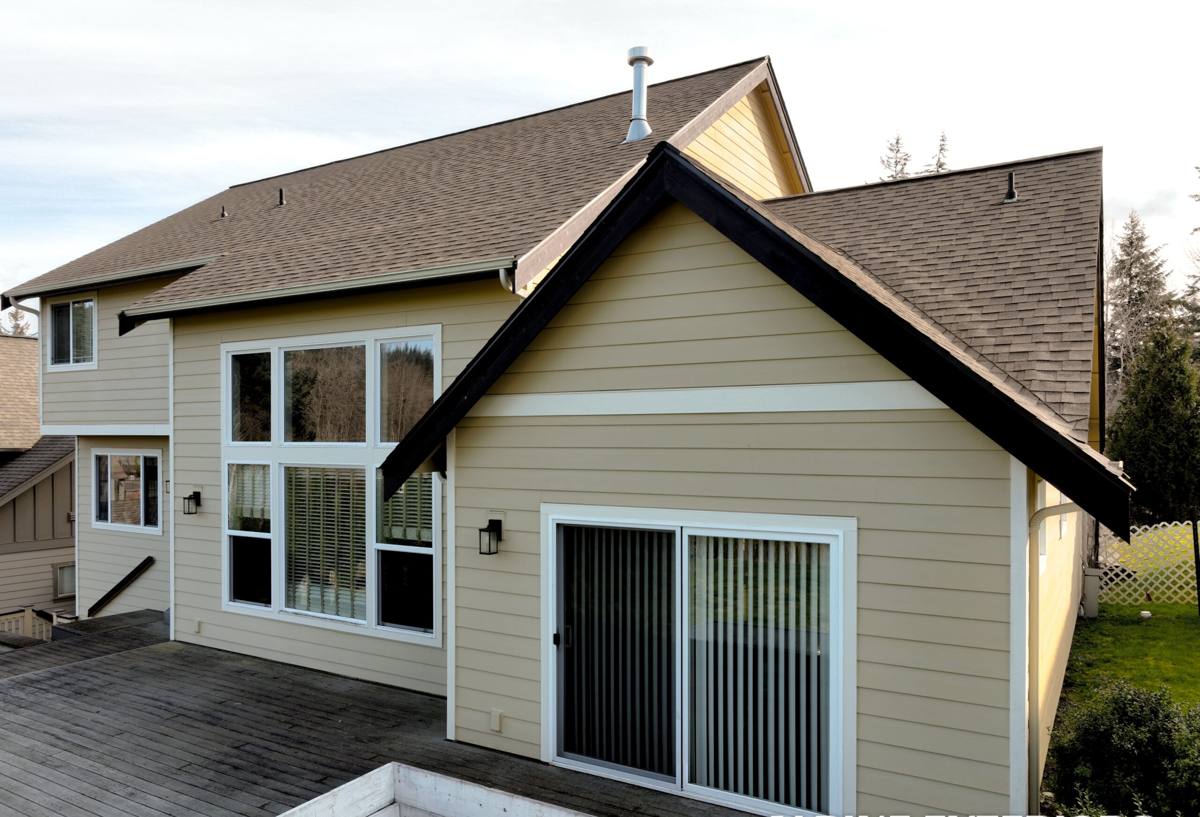
What's Actually Failing When Siding Needs Repair
Moisture Behind the Panel
By the time a homeowner notices a soft spot, discoloration, or a panel that's started to bow, water has usually been getting behind the siding for a while. The entry point is often small — a gap where caulk failed, a lap joint that wasn't sealed correctly during the original install, or flashing around a window or door that's no longer doing its job. The visible damage is a symptom; the entry point is the actual problem, and a repair that doesn't find and correct it just delays the next failure.
Fastener and Trim Corrosion
Salt air works on exposed metal continuously, not just during storms. Nails and screws that weren't rated for coastal-adjacent exposure can corrode enough to lose their holding strength years before the siding itself would otherwise need attention. When that happens, panels loosen, gaps open up, and wind gets a place to grab during the next hurricane-force event.
UV and Sun-Facing Wear
The side of a house that takes the most direct sun over the years often shows fading, chalking, or finish breakdown well before the shaded sides do. On lower-quality siding materials, sustained UV can also lead to warping or cracking, especially at panel edges and seams where the material is thinnest.
Signs Your Siding Needs Repair Now
- Soft, spongy, or bowing sections when pressed — usually a sign of trapped moisture
- Visible gaps or separation at panel seams and corners
- Cracking, chipping, or crumbling at panel edges
- Rust streaking below fasteners or trim pieces
- Caulk that's cracked, shrunk, or pulled away from joints
- Noticeably faded or chalky finish on sun-exposed walls compared to the rest of the house
- Panels that shift or flex more than they used to when the wind picks up
Repair or Replace? How We Make That Call
Not every damaged section needs a full re-side, and we don't push a full replacement when a targeted repair will hold up. The decision usually comes down to how contained the damage is, what's causing it, and how much of the underlying material and structure has been affected.
| Factor | Favors Repair | Favors Replacement |
|---|---|---|
| Extent of damage | Isolated to one section or elevation | Spread across multiple walls or the whole house |
| Underlying moisture | Caught early, minimal water intrusion | Long-term water damage to sheathing or framing |
| Age of existing siding | Newer material still within its useful life | Siding nearing or past its expected service life |
| Material match | Matching material or profile is available | Original material discontinued or a poor long-term match |
| Fastener condition | Fasteners elsewhere are sound | Widespread corrosion found during inspection |
When damage is contained and the rest of the siding is sound, a repair is the honest recommendation, and that's what we'll tell you. When an inspection turns up moisture damage behind multiple sections, or fastener corrosion that's clearly not isolated to one spot, we'll say so plainly rather than patching over a problem that's going to resurface.
What a Correct Repair Actually Involves
Assessment First
Before any panel comes off, a proper repair starts with figuring out why the damage happened. That means checking behind and around the affected area, not just at the visible spot — looking at flashing, checking for moisture in the sheathing, and confirming whether nearby fasteners and seams are still sound. Skipping this step is how a "quick patch" ends up being redone within a year.
Matching Material and Finish
A repair patch that doesn't match the surrounding siding in profile, thickness, and finish stands out and can create its own water-management issues at the seam. Getting a clean match matters as much for function as it does for appearance.
Sealing, Flashing, and Fastening
The repair itself needs correct flashing at any disturbed joint, sealant rated for this climate rather than a generic caulk, and fasteners suited to coastal-adjacent exposure. This is the step that determines whether the repair actually holds through the next few storm seasons or just buys a little time.
Why We Repair With James Hardie Fiber Cement
We install and repair with James Hardie fiber cement exclusively — we don't install vinyl, LP SmartSide, Cemplank, Allura, or primed wood siding, and that standard carries into repair work too. There are practical reasons for that beyond preference. Hardie's factory-applied ColorPlus finish is engineered for UV exposure like Manatee County gets year-round, which means a patch section holds its color and finish consistency with the rest of the wall far better than a field-painted repair on a different material would. Fiber cement is non-combustible and doesn't absorb and swell with moisture the way some wood-based and composite products can, which matters directly for a repair meant to solve a moisture problem rather than reintroduce one. And because Hardie's product lines and profiles are consistent and well-documented, matching an existing installation with the correct panel style is far more reliable than trying to source a match for a discontinued vinyl profile or an off-brand composite.
If your home currently has a different siding material, we'll still give you an honest assessment of what a repair on that material would involve — but our recommendation, especially for a section that's failing due to moisture or storm damage, is going to be fiber cement, and we'll explain why rather than just assuming you want to hear it.
Common Repair Situations We See in Bayshore Gardens
Bay-adjacent homes here tend to show a fairly consistent pattern of repair needs: storm-damaged sections after high-wind events, corner and trim boards where salt-air corrosion has loosened fasteners, water staining and soft panels near ground-level splash zones, and sun-facing walls with finish breakdown well ahead of the rest of the house. Older homes in the neighborhood sometimes carry siding installed under different code and material standards than what's used today, which is part of why a proper assessment matters before assuming a patch will match cleanly.
Our Repair Process
- On-site inspection of the damaged area and surrounding sections, checking behind panels where needed
- Honest repair-versus-replace recommendation based on what we actually find
- Written estimate that separates material, labor, and any flashing or sealant work needed
- Removal of damaged material and inspection of the sheathing underneath
- Installation of matching fiber cement material with correct flashing, fastening, and sealant for this climate
- Final check of the surrounding seams and fasteners to confirm the rest of the wall is sound
Why Hiring a Crew That Already Works Bayshore Gardens Matters
A repair crew that mostly works inland properties can get the visible patch right and still miss the details that matter this close to the bay — the fastener spec that actually holds up to salt air, the flashing detail that accounts for wind-driven rain coming in sideways rather than straight down, the difference between a sun-faded panel that just needs replacing and one that's structurally compromised underneath. We work this part of Manatee County regularly, so we're not guessing at how a particular wall orientation or exposure tends to behave over time — that shows up in whether a repair is still solid two or three hurricane seasons later, or needs to be redone.
If you're seeing soft spots, gaps, corrosion staining, or storm damage on your siding, it's worth having someone look at the actual cause before deciding between a patch and a bigger project. We offer free, no-pressure estimates for siding repair in Bayshore Gardens and the surrounding Bradenton area — use the form below to get a time on the schedule.