 Bradenton Window
 Village of the Arts: A Different Kind of Bradenton Neighborhood
Village of the Arts sits close to downtown Bradenton, and it's not a typical subdivision. The housing stock here tends to be older — small bungalows and cottages, many converted or expanded over the decades into working studios, galleries, and mixed residential-creative spaces. That mix means a lot of these homes have exterior walls that have been patched, re-sided, or added onto more than once, sometimes by different owners with different standards. When we come out for a siding installation in this neighborhood, we're rarely looking at a simple, uniform wall. We're looking at a structure with history, and that history matters for how the job gets done correctly.
Because these homes are close together, walkable, and visually part of an arts district that people actually notice, exterior appearance carries more weight here than in a lot of newer Bradenton subdivisions. Homeowners in this area tend to care about how the siding looks up close, not just from the street — which is one more reason to get the installation details right the first time.
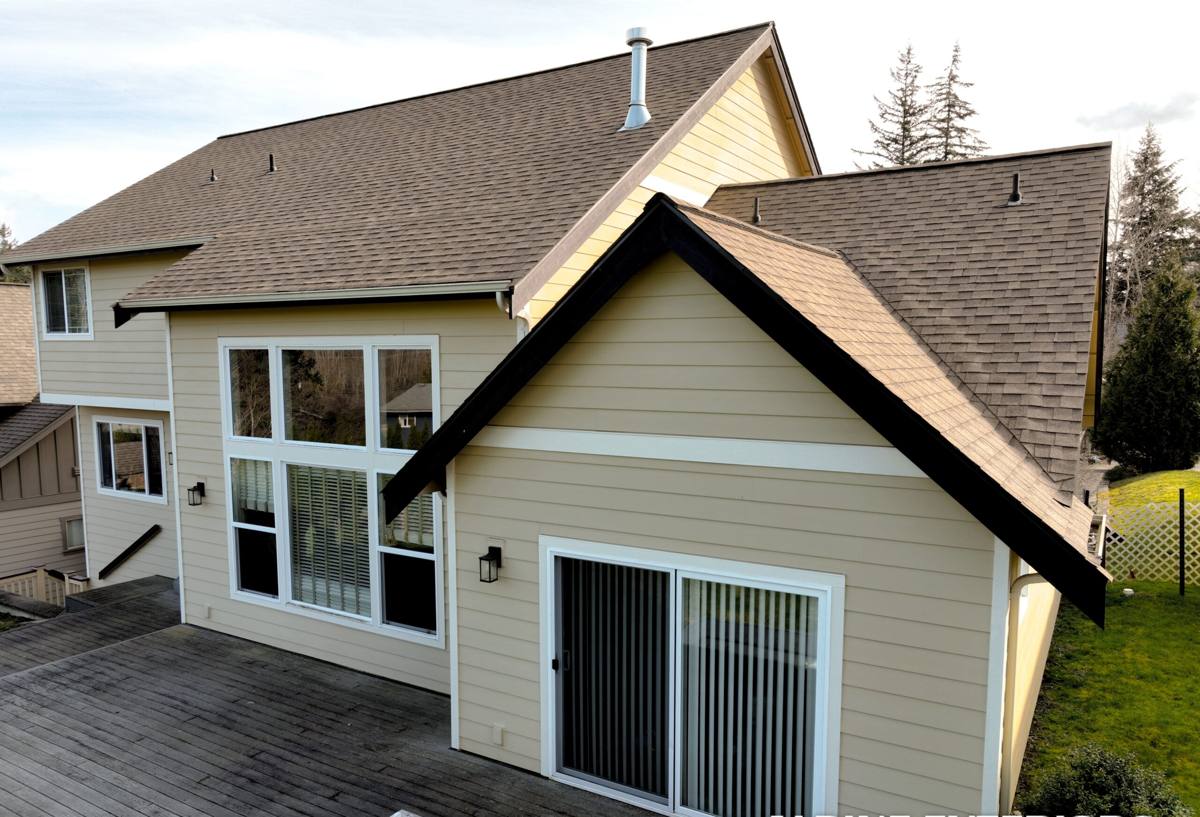
What Manatee County's Climate Does to Siding Over Time
Every siding installation we do in this part of Florida has to answer to the same set of stresses. Hurricane-force wind gusts test every fastener, every panel edge, and every piece of flashing on a house — siding that isn't installed to spec doesn't fail gradually, it fails suddenly, in the middle of a storm. Intense, near year-round UV breaks down materials and finishes that weren't engineered to handle it, fading colors and drying out anything that depends on field-applied paint. Wind-driven rain doesn't fall straight down here; during storms it gets pushed sideways into seams, laps, and penetrations, which means a weather barrier and flashing detail that would be fine in a milder climate can let water behind the siding in Manatee County. And salt air, carried inland off the water, works on fasteners, trim, and metal flashing year after year, corroding anything that wasn't specified for a coastal environment.
None of these stresses are unique to Village of the Arts — they apply across Bradenton and the surrounding coastal counties. What's unique to older, close-set neighborhoods like this one is that the homes have often already absorbed decades of that punishment with siding and detailing that predates current best practices.
Why the Siding Material Choice Matters More Here Than People Think
Vinyl siding is inexpensive and easy to find, but it's also a plastic product — it softens and can warp in sustained heat, it's vulnerable to impact damage, and its color is baked into a thin material that fades under heavy UV exposure over time. Wood and wood-composite products look great when they're new, but they depend on paint and caulk to keep moisture out, and in a climate with this much sun and rain, that maintenance schedule is relentless. Both categories can be installed well, but both also ask the homeowner to accept a maintenance burden or a shorter realistic lifespan in exchange for a lower upfront cost.
We made the decision to install only James Hardie fiber cement siding because it's the product we trust to hold up under this specific combination of hurricane wind, UV, wind-driven rain, and salt air without asking the homeowner to fight the climate every year. It's non-combustible, it's manufactured with a factory-applied finish rather than relying on field paint, and Hardie engineers specific product lines for high-humidity, high-UV climate zones like ours. That's not marketing — it's the reason we stopped installing anything else.
What This Means for an Older Home
On a home in a neighborhood like Village of the Arts, where the wall assembly may already include multiple generations of repair work, choosing a siding product that's less sensitive to moisture intrusion and doesn't rely on constant repainting takes one long-term variable off the table.
What a Correct Siding Installation Actually Involves
A siding job looks simple from the curb — panels go up, the house looks new. What determines whether that installation lasts fifteen years or thirty happens underneath, before a single piece of finished siding goes on.
- Inspecting and repairing the sheathing underneath the old siding before anything new goes up
- Installing a continuous, properly lapped weather-resistive barrier — water management starts here, not at the surface
- Flashing every window, door, and wall penetration so water is directed out and down, never inward
- Using the fastener type, length, and spacing the manufacturer specifies — not a generic nail schedule
- Maintaining correct clearances from the roofline, deck surfaces, and grade so siding never sits in standing water or trapped moisture
- Leaving proper expansion gaps and using manufacturer-specified joint treatment, rather than relying on a bead of caulk to do a flashing detail's job
Manufacturer Instructions Aren't Optional
James Hardie publishes detailed installation instructions for a reason — following them is what keeps the product warranty valid and what keeps the siding performing the way it's designed to. Skipping steps to save time on a job is the single most common reason a siding installation underperforms in a climate like this one.
Where Rushed Jobs Go Wrong
The failures we get called out to fix are rarely dramatic. They're small — a missed flashing detail at a window head, fasteners driven at the wrong depth, panels butted tight with no expansion gap. Any one of those is a minor oversight in a mild climate. Under Manatee County's wind and rain, they're the difference between siding that lasts and siding that fails early.
Our Process for Village of the Arts Homes
- Walkthrough and assessment — we look at the existing siding, trim, and visible wall condition, and talk through what we expect to find once removal starts
- Site protection — landscaping, walkways, and adjacent structures get protected before demolition begins, which matters on tighter lots common in this neighborhood
- Removal of existing siding — done carefully so we can inspect the sheathing as we go, not just at the end
- Substrate inspection and repair — any rot, soft sheathing, or prior water damage gets addressed before new material goes up; this step is non-negotiable
- Weather barrier installation — a continuous, correctly lapped barrier goes on before any siding
- James Hardie installation — panels installed to manufacturer spec, with correct fastening, flashing, and clearances at every transition
- Trim and detail work — corners, window and door surrounds, and transitions finished to match the home
- Final inspection and cleanup — we walk the whole exterior before we call it done, and the site gets cleared of debris
James Hardie Products We Install
Not every part of a home calls for the same product. We select from Hardie's engineered lines based on the wall, the architectural style, and the exposure the surface sees.
| Product | Typical Use | Why We'd Choose It |
|---|---|---|
| HardiePlank lap siding | Primary wall siding, most common application | Classic horizontal look, engineered for the climate zone, factory ColorPlus finish available |
| HardiePanel vertical siding | Accent walls, gables, board-and-batten style details | Fits the more architectural, artistic character common on homes in this neighborhood |
| HardieTrim boards | Corners, window and door surrounds, fascia | Matches the siding's durability so trim doesn't become the weak point of the system |
Where we can, we specify Hardie's ColorPlus factory finish rather than field-applied paint. It's baked on under controlled conditions and backed by its own finish warranty, which matters directly in a climate where UV breaks down field-applied color faster than most homeowners expect.
Cost Factors for Siding Installation in This Area
We don't quote a number without seeing the house, but the same handful of factors drive most of the variation we see from project to project.
| Factor | Why It Affects Cost |
|---|---|
| Home size and wall area | More square footage means more material and labor, in a fairly direct relationship |
| Condition of the existing sheathing | Rot or water damage found during removal has to be repaired before new siding goes on |
| Trim and architectural complexity | Homes with more corners, gables, and window surrounds take more labor per square foot |
| Finish selection | ColorPlus factory-finished product versus field-painted trim changes both material cost and long-term maintenance |
| Access and site conditions | Tighter lots and older landscaping, common in a dense neighborhood, can add time to removal and protection steps |
Why a Crew That Already Works Village of the Arts Matters
Older homes in a neighborhood like this one aren't built like new construction, and a crew that mostly works newer subdivisions can be caught off guard by what's behind the existing siding — older framing methods, board sheathing instead of modern panel sheathing, or additions that were never properly tied into the original structure. A crew that has already worked on homes of this vintage in this part of Bradenton knows to expect that going in, rather than discovering it mid-project and improvising.
There's also a practical side to being local: familiarity with how permitting and inspection work in Manatee County and the City of Bradenton, and the ability to respond quickly if a storm damages siding mid-project or shortly after installation. That responsiveness isn't something an out-of-town crew can offer in the same way.
After Installation: Keeping Your Siding Right
James Hardie siding installed to spec is low-maintenance, not no-maintenance. A little attention keeps it performing the way it's designed to for the long haul.
- Rinse accumulated salt residue off the siding periodically, especially after long dry stretches
- Inspect caulking and sealant at windows, doors, and penetrations once a year for cracking or separation
- Keep gutters clear so water sheets away from the wall instead of running down the siding face
- If any trim was field-painted rather than factory-finished, follow the recommended repaint schedule to keep it protected
- Do a visual walk-around after major storms to catch any impact damage or loosened panels early
If you own a home in Village of the Arts and your siding is showing its age — or you're planning ahead of the next storm season — we're happy to come take a look and give you a straight answer about what your home actually needs. The form below gets you a free, no-pressure estimate with no obligation attached.