 Bradenton Window
 Custom Windows for Whitfield Estates Homes
Whitfield Estates sits in the Bradenton/Sarasota area of Manatee County, close enough to Tampa Bay and the Gulf that its homes take on weather most inland Florida properties never have to deal with. It's an established neighborhood with a real mix of home ages and styles — older Florida homes with original window openings sitting next to newer construction already built to current code. That mix is exactly why "custom" matters here more than it would in a brand-new subdivision where every house shares the same floor plan and the same window sizes.
On a lot of Whitfield Estates homes, a stock window simply won't fit the opening that's there, or won't fit it correctly without compromising the flashing and structural attachment that keeps it performing in a storm. This page covers custom window work specifically for this neighborhood: what the climate does to a window over time, what a correct installation actually involves, how our process runs from first visit to final inspection, and why it's worth hiring a crew that already has hands-on experience in Whitfield Estates rather than one learning the neighborhood on your project.
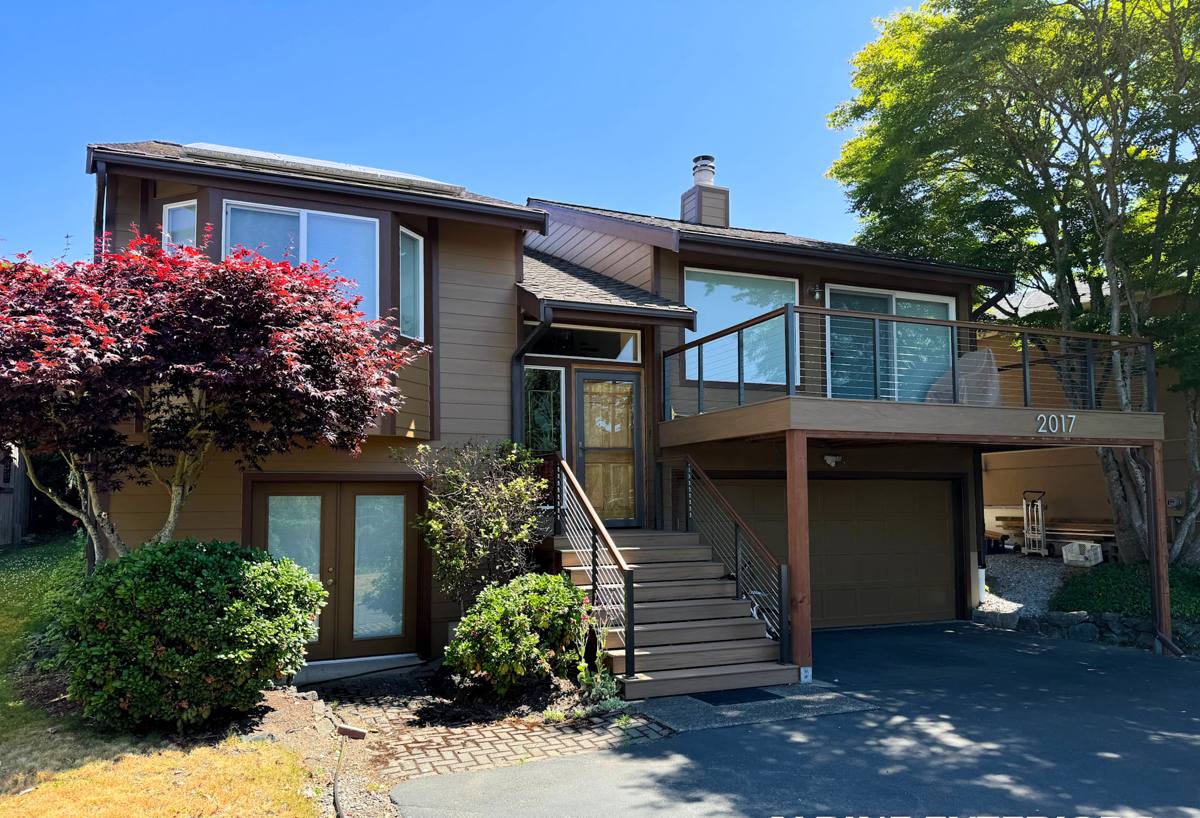
What Bradenton's Climate Actually Does to a Window
Manatee County sits inside Florida's wind-borne debris region, which means climate isn't a side consideration in window selection — it's the main design constraint. Four things do most of the long-term damage to windows in this part of Florida.
Hurricane-Force Wind and Pressure
During a storm, a window has to resist both direct wind pressure and impact from wind-borne debris, while also handling rapid pressure changes if a nearby opening fails. A window that isn't rated and anchored for this load doesn't just risk breaking — a failed window lets pressure build inside the house, which can damage the roof structure from the inside out. This is why product approval and correct anchoring matter as much as the glass itself.
Year-Round UV
Bradenton gets strong, direct sun essentially all year, not just in summer. UV breaks down vinyl frames, weatherstripping, and low-quality seals faster here than in most of the country, and it fades interior furnishings through unprotected glass. Frame material and glass coatings both need to be chosen with that year-round exposure in mind, not just the two or three hottest months.
Wind-Driven Rain
Rain in this region rarely falls straight down during the storms that matter most. It gets driven sideways into flashing, head trim, and the sill beneath the frame. That sideways load is a bigger test of installation quality than of the window product itself — a well-made window installed with sloppy flashing will still leak, while a modest window installed with a correctly pitched sill pan and proper flashing usually won't.
Salt Air
Even set back from the immediate waterfront, homes in this part of Manatee County get a steady dose of salt-carrying air. Over years, that accelerates corrosion on hardware, hinges, and lower-grade fasteners, and it can degrade cheaper frame finishes and screens faster than manufacturers' general climate ratings assume. Hardware and fastener choice matter as much here as the glass package.
What "Custom" Means for a Whitfield Estates Window
Custom doesn't mean expensive for its own sake. It means the window is built and installed to fit what's actually there, rather than forcing an off-the-shelf size into an opening it wasn't made for. On older homes in this neighborhood, that commonly involves non-standard rough opening sizes, masonry or block wall construction that changes how the frame gets anchored, and trim or architectural details worth matching rather than covering over. Some properties in established neighborhoods like this also carry deed restrictions or architectural guidelines that affect exterior color, grid pattern, or frame profile — we check for that before anything gets ordered, not after.
Custom also means the glass package and frame material get matched to each elevation of the house individually. A west-facing wall taking direct afternoon sun and wind-driven rain doesn't need the same glass coating or frame reinforcement as a shaded, protected elevation on the same house. Treating every window on a home identically is usually a sign of a standardized process, not a custom one.
Frame and Glass Options for This Climate
There's no single correct material for every home. Budget, sun exposure on a given wall, and how long you plan to stay in the house all factor into the right answer. What matters is understanding the honest trade-offs before deciding.
| Frame Material | Wind & Impact Performance | Salt Air & UV Behavior | Typical Maintenance |
|---|---|---|---|
| Impact vinyl | Good when properly rated and anchored; widely used and budget-friendly | Won't rot or corrode; UV-stable formulations hold up well if quality is good | Low; occasional track and weep-hole cleaning |
| Impact fiberglass | Strong, dimensionally stable under pressure and heat cycling | Excellent resistance to salt air and UV; holds paint and finish well | Low |
| Aluminum, impact-rated | Strong strength-to-frame-thickness ratio, common on larger openings | Can corrode over time in salt air unless well-finished; conducts heat | Moderate |
| Wood, clad or protected | Can be built to impact standards but less common in this climate | Vulnerable at joints and sills without diligent upkeep and good cladding | Higher; regular finish maintenance |
We'll walk through which frame material and glass package fit your home's exposure, your budget, and the look you're going for, rather than defaulting to whatever is easiest to sell. Impact-rated glass with a laminated interlayer is the baseline we build from in this area; from there the conversation is really about frame material, tint or coating, and how the grid pattern and color fit the house.
What Drives the Cost of a Custom Window Project
| Cost Factor | Why It Matters |
|---|---|
| Number and size of openings | More glass and larger units mean more material and more structural anchoring per window |
| Frame material | Fiberglass and higher-end aluminum typically cost more upfront than vinyl; each has different long-term maintenance |
| Full-frame vs. insert replacement | Full-frame costs more and takes longer, but is the honest call when the existing opening has damage or was never flashed correctly |
| Non-standard sizing | Custom-fabricated units for irregular or historic openings cost more than stock sizes |
| Impact rating vs. shutters | Impact glass costs more per window but removes the labor of installing and removing shutters before every storm |
We give straightforward, itemized estimates rather than a single vague number, so you can see exactly what's driving the total and where there's room to adjust if the budget's tight.
Our Process, Start to Finish
The process for a custom window project doesn't change much from house to house, but the details inside each step do — especially on older Whitfield Estates homes where the existing opening isn't always what the original plans say it should be.
- On-site evaluation and measurement. We measure every opening individually, check the condition of the existing framing and sill, and look at how each elevation is exposed to sun, wind, and driving rain before recommending a product.
- Product selection and permitting. We help you choose frame material, glass package, and color, then handle the permit application through Manatee County using the manufacturer's Florida product approval documentation for each unit specified.
- Fabrication. Custom units are built to the exact measured opening rather than a stock size, which is what makes correct flashing and a tight, code-compliant fit possible on non-standard openings.
- Installation. Old windows come out, the opening gets inspected for hidden rot or damage before anything new goes in, and the new unit is set, flashed, sealed, and anchored to the load ratings the product is rated for.
- Final walkthrough and inspection. We walk every opening with you, operate each window and lock, and coordinate the county inspection required to close out the permit.
Why a Local Whitfield Estates Crew Matters
Window work in an established Bradenton neighborhood rewards familiarity. A crew that has already worked this area knows the kinds of framing and openings common to homes of this vintage, has already been through the Manatee County permitting process enough times to move it along without unnecessary delays, and can often spot the difference between a cosmetic issue and a real structural or moisture problem behind a window before it becomes a bigger job. That familiarity shows up as fewer surprises mid-project, not just faster scheduling.
Bradenton Window Company works this area regularly, which means we're not learning your neighborhood's quirks on your project. We handle the permitting, the product approval documentation, and the inspection coordination as a normal part of the job, not an extra step we have to figure out as we go.
Installation Details We Don't Treat as Optional
Most window failures in coastal Florida aren't failures of the window itself — they're shortcuts taken in the flashing, sealing, and anchoring that don't show up until the next big storm. On every job, that means:
- A properly pitched sill pan that sheds water outward instead of letting it pool under the frame
- Head flashing integrated with the wall's water-resistive barrier, lapped correctly so water sheds down and out
- Anchoring into structural framing or masonry to the fastener schedule the product approval requires, not just enough screws to hold the window in place
- Sealant and backer rod used correctly at the frame perimeter, not as a substitute for proper flashing
- Weep holes and drainage paths left clear and functional, never sealed shut during installation
- Corrosion-resistant fasteners and hardware appropriate for a salt-influenced, high-UV climate
Signs Your Current Windows Need Attention
A lot of window problems in this climate develop slowly enough that homeowners get used to them before recognizing they're actually problems. Worth a look if you notice:
- Fogging or a permanent haze between panes, which usually means a failed seal on double-pane glass
- Visible daylight, drafts, or road noise around a closed and locked window
- Soft, discolored, or bubbling material at the sill or lower frame corners
- Difficulty opening, closing, or locking a window that used to operate smoothly
- Chalky, pitted, or stiff hardware and screen frames
- Rattling or visible flexing in the frame during heavy wind
None of these are emergencies by themselves, but they're worth having looked at before the next storm season rather than after.
If you're weighing custom windows for a Whitfield Estates home, we're glad to walk the property, measure what's actually there, and put together a clear, no-pressure estimate. There's a form below — reach out and we'll set up a time to come take a look.