 Bradenton Window
 Deck Repair Built for Bayshore Gardens Conditions
Bayshore Gardens sits close to the water on the west side of Manatee County, and that location shapes what a deck needs to survive here. Between hurricane-force wind gusts, wind-driven rain that gets pushed sideways under railings and decking boards, near-constant UV exposure, and salt-laden air drifting in off the coast, decks in this neighborhood age differently than decks fifty miles inland. A repair that would hold up fine in a dry, mild climate can fail here within a season or two if it's not built with these specific stresses in mind.
We repair decks throughout Bradenton and Manatee County, and Bayshore Gardens jobs follow a pattern we recognize quickly: corrosion at fastener points, soft or delaminating boards near ground contact, and structural connections that were fine when installed but were never upgraded to current wind-load standards. Good deck repair here isn't just about making the deck look presentable again — it's about making sure the structure underneath can actually take another decade of Gulf Coast weather.
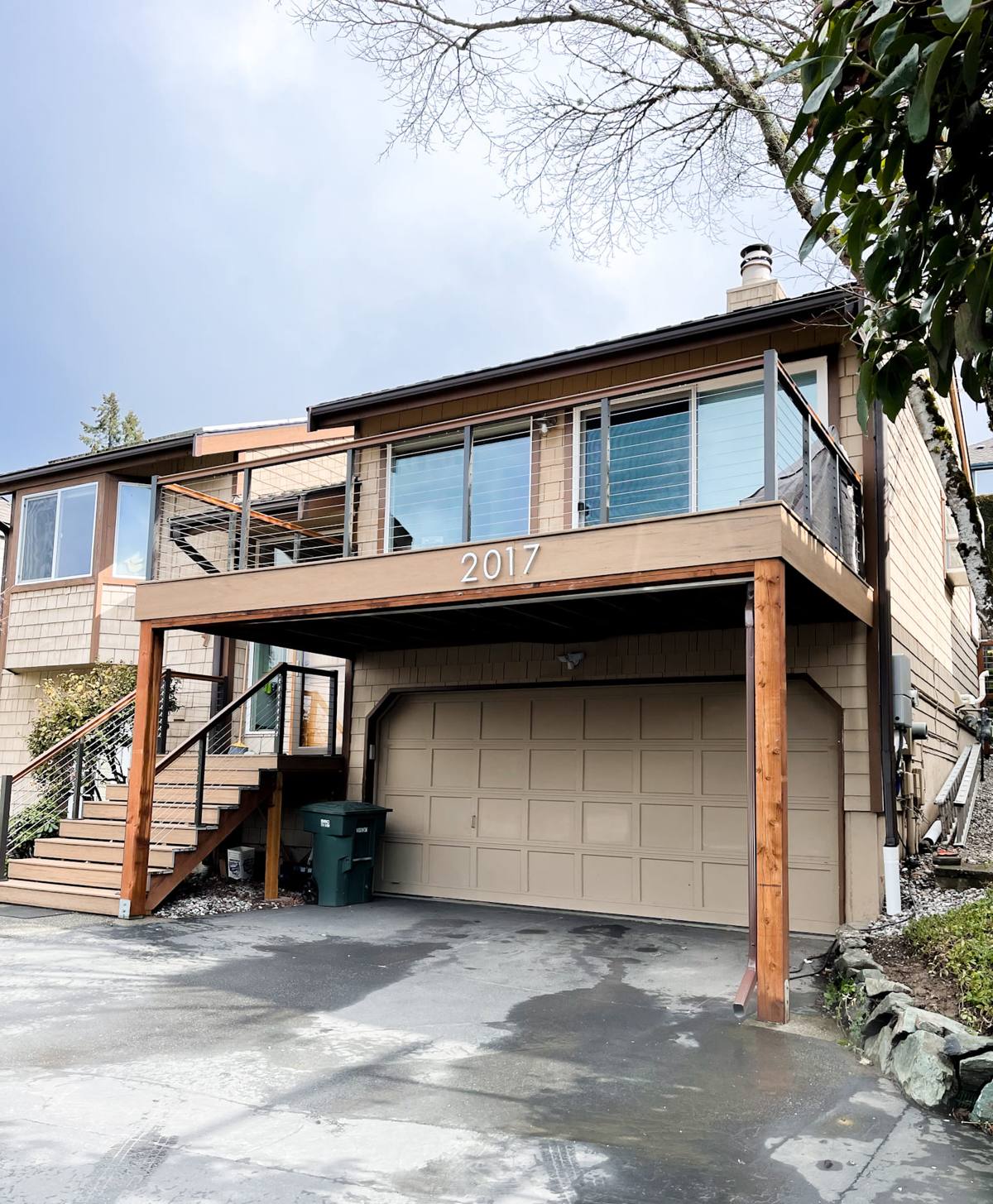
How Local Climate Attacks a Deck
Salt Air and Metal Fasteners
Salt air doesn't need to blow in off the beach directly to cause damage — it travels well inland on regular breezes, and Bayshore Gardens' proximity to open water and canals puts it squarely in that path. Salt accelerates corrosion on any fastener, bracket, or connector that isn't rated for coastal exposure. Once a nail or screw starts corroding, it loses holding strength long before it looks obviously rusted, which is why "it still looks fine" is not a reliable test for deck hardware in this area.
UV and Board Degradation
Florida sun is intense and consistent nearly year-round. UV breaks down the lignin in wood fibers and the surface resins in composite boards, leading to graying, splintering, or surface chalking. UV damage is mostly cosmetic on its own, but it opens the door for moisture to get into the wood grain, which is where real structural rot begins.
Wind-Driven Rain and Hurricane Loads
Wind-driven rain gets forced into joints, under flashing, and behind ledger boards in ways that vertical rainfall never would. And when a named storm or tropical system pushes through, deck railings and stair connections take real lateral load — the kind of load that exposes any connection that was under-fastened or corroded before the storm ever arrived.
Signs a Bayshore Gardens Deck Needs Repair
Some deck problems are obvious. Others hide beneath the surface until someone puts real weight on the wrong spot. Homeowners in this neighborhood should watch for:
- Soft, spongy, or bouncy spots in the decking surface, especially near the house or stair landing
- Rust streaking below screw or bolt heads, or visible corrosion on joist hangers and post brackets
- Gaps opening up where the deck meets the house (ledger board separation)
- Railings or posts that wiggle, lean, or feel loose when pushed
- Board edges that are cracking, cupping, or splintering more than the surface finish alone would explain
- Visible daylight or gapping between deck boards that's grown wider than the original installation
- A musty smell or dark staining underneath the deck near grade level
Any one of these on its own might be a minor fix. Several together, especially combined with the deck's age, usually means it's time for a proper structural inspection rather than a surface patch.
What a Correct Deck Repair Actually Involves
A repair that only replaces the boards you can see is a cosmetic fix, not a structural one. We evaluate every layer of the deck before deciding what needs to be touched:
Ledger Board Connection
This is the board that ties the deck to the house, and it's the single most important structural connection on the entire structure. We check for proper flashing, correct fastening pattern, and any moisture intrusion where the ledger meets the home's exterior wall. A failing ledger connection is a life-safety issue, not a cosmetic one.
Framing, Joists, and Posts
We inspect joists and support posts for rot, insect damage, and undersized or corroded hardware. In a lot of older Bayshore Gardens decks, we find joist hangers that were installed with standard fasteners instead of coastal-rated hardware — that mismatch is one of the most common hidden failure points we come across.
Decking Surface
Whether it's wood or composite, individual boards get assessed for soft spots, splitting, and fastener pull-through. We replace board by board where possible rather than tearing out sections that are still sound, which keeps repair costs proportional to the actual damage.
Railings and Stairs
Railings and stair stringers take direct wind and impact load and are also where most fall-related injuries happen when a deck is neglected. We treat railing post connections as a structural item, not a finishing touch.
Wood vs. Composite Repair: Different Problems, Different Fixes
The right repair approach depends heavily on what the deck is built from. Both materials fail differently in this climate, and treating them the same way leads to repeat repairs.
| Factor | Wood Decking | Composite Decking |
|---|---|---|
| Common failure mode | Rot, splitting, fastener pull-through | Surface fading, board-end swelling, fastener pop-through |
| UV effect | Grays and dries out; needs sealing/staining upkeep | Chalking or fading depending on product age and quality |
| Repair approach | Board-by-board replacement with matching treated lumber | Match-brand replacement boards where available; hidden fastener systems reset |
| Fastener sensitivity | High — needs coastal-rated screws to avoid staining and pull-out | Moderate — but improper fasteners still void warranties |
| Typical repair lifespan after proper fix | 8–15 years with maintenance | 10–20+ years, material dependent |
Neither material is maintenance-free in a coastal Florida climate — the difference is what kind of maintenance each one demands.
Our Deck Repair Process
- On-site structural assessment. We check the ledger, framing, posts, and surface separately, not just the parts visible from the yard.
- Written scope and honest options. We tell you plainly whether you're looking at a targeted repair or a full section rebuild, and why.
- Correct hardware selection. Fasteners, hangers, and brackets are matched to coastal exposure requirements, not whatever is cheapest at a big-box store.
- Repair work. Rot and damaged framing removed and replaced; ledger flashing corrected if compromised; boards and railings reset to current fastening standards.
- Final structural check. Railings, stairs, and connection points are tested under load before we consider the job finished.
Hardware Standards We Hold To
Florida Building Code sets baseline requirements for deck framing and connections, and Manatee County permitting reflects those standards for good reason — this region gets tested by real wind events. We use fasteners and connectors rated for coastal, high-moisture exposure as a standard practice, not an upgrade option, because standard-grade hardware is one of the most common causes of early repair failure we see on Gulf Coast decks. That includes stainless or coated structural screws, corrosion-resistant joist hangers, and properly rated post-to-beam connectors rather than whatever generic hardware happens to be on a shelf.
Maintenance Checklist to Extend Your Repair
A repair is only as good as the upkeep that follows it. After a repair, we recommend homeowners keep an eye on:
- Annual visual check of fastener heads for early rust staining
- Re-sealing or staining wood decking on the manufacturer's recommended schedule, typically every 1–2 years in this climate
- Keeping gutters and downspouts directed away from the deck's ledger connection
- Clearing debris from under the deck so moisture doesn't sit against framing
- Checking railing posts for movement after any major storm
- Rinsing salt residue off the deck surface periodically, especially after windy weather off the water
What Deck Repair Typically Costs
Deck repair pricing depends heavily on scope, and we'd rather explain the cost drivers honestly than throw out a number that doesn't apply to your deck.
| Cost Factor | Why It Matters |
|---|---|
| Extent of rot or damage | Surface board swaps cost far less than structural framing replacement |
| Ledger board condition | Ledger repair often requires opening up siding or trim, adding labor |
| Material match | Matching an existing composite line can cost more than standard treated lumber |
| Deck size and height | Larger and elevated decks require more scaffolding, time, and hardware |
| Code upgrades needed | Bringing older railings or stairs up to current code adds scope but improves safety |
Small repairs can run a few hundred dollars; structural rebuilds of framing or ledger sections run considerably more. We'll always give you the real number after seeing the deck in person, not before.
Why Hiring a Crew That Already Works Bayshore Gardens Matters
A contractor who works this specific area regularly already knows what to expect before they climb under the deck. They know which hardware corrodes fastest given the salt exposure typical this close to the water, they know what Manatee County permitting and inspection expects for structural repairs, and they've already seen how wind-driven storms from past seasons have tested decks just like yours. That local track record matters more than it sounds — it's the difference between a repair that's guessing at what might fail next and one that's built specifically to outlast the next storm season.
If your deck in Bayshore Gardens has soft spots, loose railings, corroding hardware, or you just want an honest read on what shape it's really in, we're happy to take a look. Request a free, no-pressure estimate using the form below and we'll walk the deck with you before recommending anything.