 Bradenton Window
 Bayshore Gardens Homes Face a Tough Climate for Roofing
Bayshore Gardens sits close to the water in Manatee County, which means the roof over your head is doing more work than a roof would in most inland parts of Florida. Homes here take on salt-laden air off the bay, long stretches of intense summer UV, sudden wind-driven downpours, and the real possibility of hurricane-force gusts during storm season. A roofing material that holds up fine in a drier, more sheltered part of the state can wear out faster here. That's the backdrop for every metal roofing job we do in this neighborhood — we're not designing for average Florida weather, we're designing for what actually hits homes near Sarasota Bay.
Metal roofing, done correctly, is one of the strongest answers to that combination of stresses. But "done correctly" is doing a lot of work in that sentence, and it's the part homeowners often don't get a straight answer on. This page covers what a metal roof needs to do in Bayshore Gardens specifically, what a proper installation looks like, and how we approach these projects.
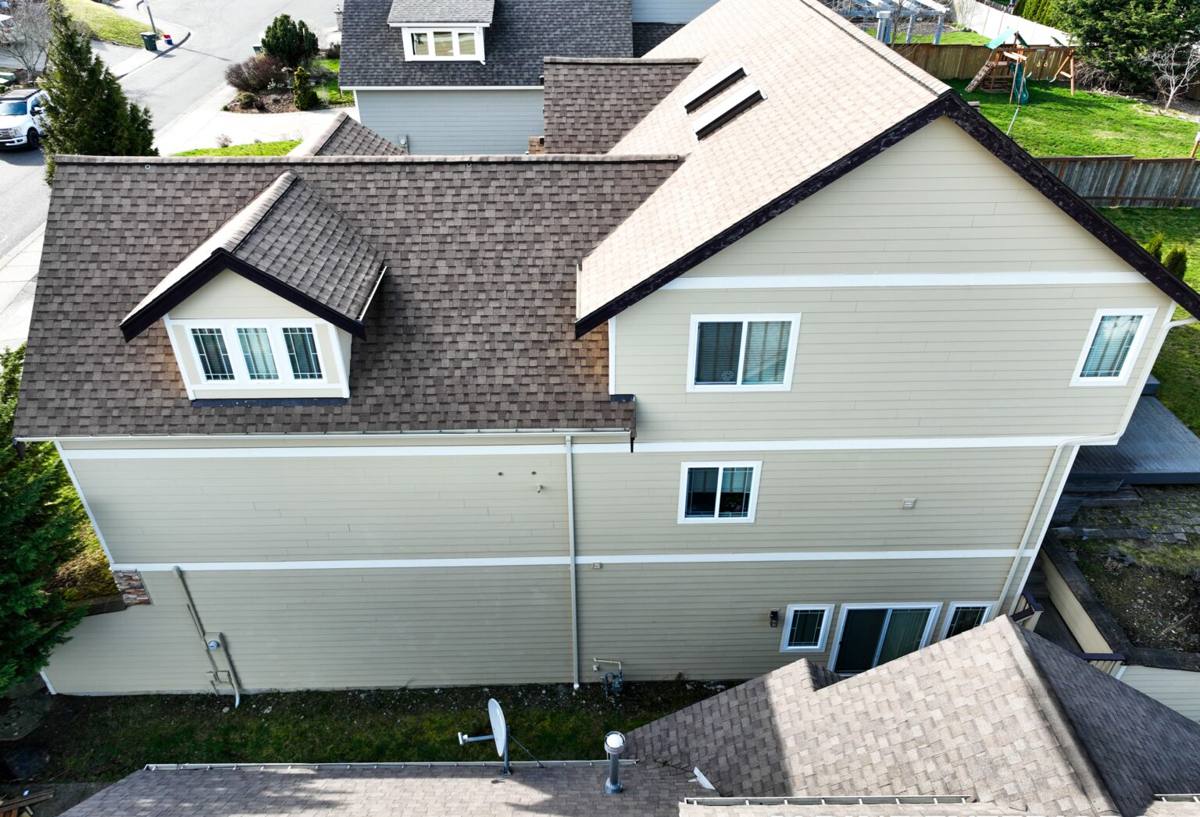
Why Metal Roofing Fits Coastal Manatee County Homes
Wind Performance
A metal roofing system, properly fastened to a sound deck, resists wind uplift far better than aging shingles whose seal strips have already broken down from years of heat cycling. In a wind event, the failure point is rarely the metal panel itself — it's the fastening pattern, the edge detailing, and the deck underneath. We treat those as the real engineering problem, not the panel choice alone.
UV and Heat
Bradenton gets sun exposure nearly year-round, and roofing materials that rely on granules or asphalt oils to stay flexible degrade faster under that kind of constant UV load. Factory-applied metal coatings are formulated to resist that kind of breakdown for decades rather than years, which matters when your roof spends every single day of the year in direct Florida sun.
Wind-Driven Rain
Straight-down rain is easy for almost any roof to shed. Wind-driven rain — the kind that comes in sideways during a tropical system — finds every weak lap, fastener penetration, and flashing detail. Metal roofing's continuous panel runs and interlocking seams give water fewer places to get a foothold, but only when the underlayment and flashing details underneath are installed to match.
Salt Air Corrosion
Being near Sarasota Bay means airborne salt is a constant, low-level presence, even on days with no storm at all. Salt accelerates corrosion on the wrong metals and fasteners, which is why material selection and hardware choice matter more here than they would twenty miles inland.
Choosing the Right Metal Roofing System
"Metal roofing" isn't one product — it's a category, and the right choice depends on your home's roof pitch, budget, and how long you want to go before any maintenance is needed. Here's how the common options compare for a coastal Manatee County home:
| System | Best For | Coastal Durability | Maintenance |
|---|---|---|---|
| Standing seam (concealed fastener) | Most roof shapes, longer-term ownership | Excellent — no exposed fasteners to corrode | Low |
| Exposed-fastener metal panel | Budget-conscious projects, some outbuildings | Good, if stainless or coated fasteners are used and re-checked periodically | Moderate — fastener washers age faster near salt air |
| Stone-coated steel (shake or tile profile) | Homeowners who want a traditional look with metal's wind performance | Very good | Low |
For most Bayshore Gardens homes, we lean toward standing seam or stone-coated steel because the fastener corrosion question is largely designed out of the system rather than something you have to stay on top of every year.
What a Correct Metal Roof Installation Involves
Deck and Underlayment
Metal roofing is only as good as what's underneath it. We check the decking for soft spots, delamination, and moisture damage before anything goes down, and we use an underlayment rated for high heat and full water-holdout, not a builder-grade product meant for a shingle roof. This layer is your backup protection if wind ever drives water past the metal itself.
Fastening and Flashing
Fastening pattern and spacing are set to meet wind-uplift requirements for this region, not just "what usually works." Flashing at valleys, walls, chimneys, and penetrations is formed and installed to shed water in every direction wind can push it — this is where most roof leaks actually originate, on any roofing type.
Ventilation
Attic ventilation gets overlooked constantly, but it directly affects how well a metal roof performs in Florida heat and how long the deck underneath lasts. We check and correct ventilation as part of the job, not as an upsell afterward.
Wind Ratings, Permitting, and Florida Building Code
Roofing work in Manatee County has to meet Florida Building Code wind-uplift and attachment standards, and a permit and inspection are part of any legitimate roofing project here — not a formality to skip. We pull permits, schedule required inspections, and install to the wind-rating specifications the code calls for in this area. If a contractor offers to "skip the permit to save time," that's a red flag, not a favor — it usually means the work won't hold up to scrutiny if you ever need to file an insurance claim or sell the home.
Protecting Against Salt Air and Coastal Corrosion
This is the detail that separates a metal roof that looks great for thirty years from one that shows rust streaks at the fasteners within a handful of years. Near the bay, we specify coatings and fastener hardware rated for coastal/marine exposure, and we pay attention to dissimilar-metal contact — mixing the wrong metals together accelerates corrosion at the contact point, even when each metal is fine on its own. It's a small detail on paper and a big deal over the life of the roof.
Our Process for Bayshore Gardens Metal Roof Projects
- On-site assessment of your existing roof, deck condition, and any problem areas specific to your home
- A written estimate that spells out material, fastening approach, flashing plan, and timeline — no vague line items
- Permit pulled with Manatee County before work begins
- Tear-off (or in some cases overlay, when the existing deck and structure allow it) and deck inspection
- Underlayment, flashing, and panel installation to wind-rating specs for this area
- Final walkthrough and required inspection sign-off
- Job-site cleanup, including magnetic sweep for stray fasteners and debris
We work this neighborhood regularly, which means we're not learning the local permitting process or typical roof conditions for the first time on your project — we already know what Manatee County inspectors look for and what these homes tend to need.
Cost Factors for Metal Roofing in This Area
Metal roofing costs more upfront than asphalt shingles, but the honest way to evaluate it is against how long it lasts and what it saves you in repairs and replacements over time. Rough cost drivers for a Bayshore Gardens project include:
| Factor | Why It Matters |
|---|---|
| Panel system chosen | Standing seam typically costs more than exposed-fastener panel, less maintenance long-term |
| Roof pitch and complexity | Multiple valleys, dormers, and penetrations add labor and flashing work |
| Existing deck condition | Rot or soft decking found during tear-off needs repair before installation continues |
| Coating and fastener grade | Marine-grade coatings and hardware cost more but matter near the bay |
| Full tear-off vs. overlay | Overlay (where code and structure allow it) can lower cost but isn't right for every roof |
We walk through these factors with you before any work starts, so the estimate reflects your actual roof rather than a generic number.
Maintaining a Metal Roof in Bayshore Gardens
Metal roofing is genuinely low-maintenance compared to most alternatives, but "low" isn't "none," especially this close to the water. A quick homeowner checklist worth running through once or twice a year:
- Look for any rust streaking at fastener heads or flashing joints
- Check that gutters and downspouts are clear so water isn't backing up under edge flashing
- After any major storm, do a visual check for lifted panels, dented flashing, or debris impact
- Keep an eye on sealant at penetrations (vents, pipe boots) — sealant ages faster under constant UV than the metal does
- Have a professional inspection after any named storm that produced sustained high winds in your area
None of this requires a ladder and a Saturday every month — it's mostly about catching small issues before salt air and sun turn them into bigger ones.
Why Local Experience in Bayshore Gardens Matters
A roofing crew that only occasionally works this close to the coast may not default to marine-grade fasteners, may not know what Manatee County inspectors flag, and may size up wind-uplift needs generically rather than for this specific exposure. Working this area regularly means those decisions are already built into how we quote and install a job, not something we're figuring out as we go. That's the real value of hiring local — not a slogan, just fewer surprises during and after the install.
If you're weighing a metal roof for your Bayshore Gardens home, we're happy to take a look and walk you through what your roof specifically needs — no pressure, no obligation. Use the form below to request a free estimate.