 Bradenton Window
 Board & Batten Siding for Whitfield Estates Homes
Whitfield Estates is one of the older, established residential pockets on the Bradenton side of Manatee County, and it shows in the housing stock — mature tree canopy, generous lots, and a mix of architectural styles where a clean vertical board and batten profile looks right at home. It's a popular choice here for both full siding jobs and accent applications: gables, dormers, porch surrounds, and single-story additions where homeowners want texture and shadow lines instead of a flat wall or another run of horizontal lap.
The look is simple. What's underneath it is not. Board and batten puts more seams, more fastener penetrations, and more vertical joints into a wall than standard lap siding, and every one of those details is a potential entry point for water if the installation is done casually. In a neighborhood that sits close enough to Sarasota Bay and the Gulf to catch salt-laden air on a regular basis, and squarely in the path of Florida's summer storm pattern, that's not a detail worth getting wrong.
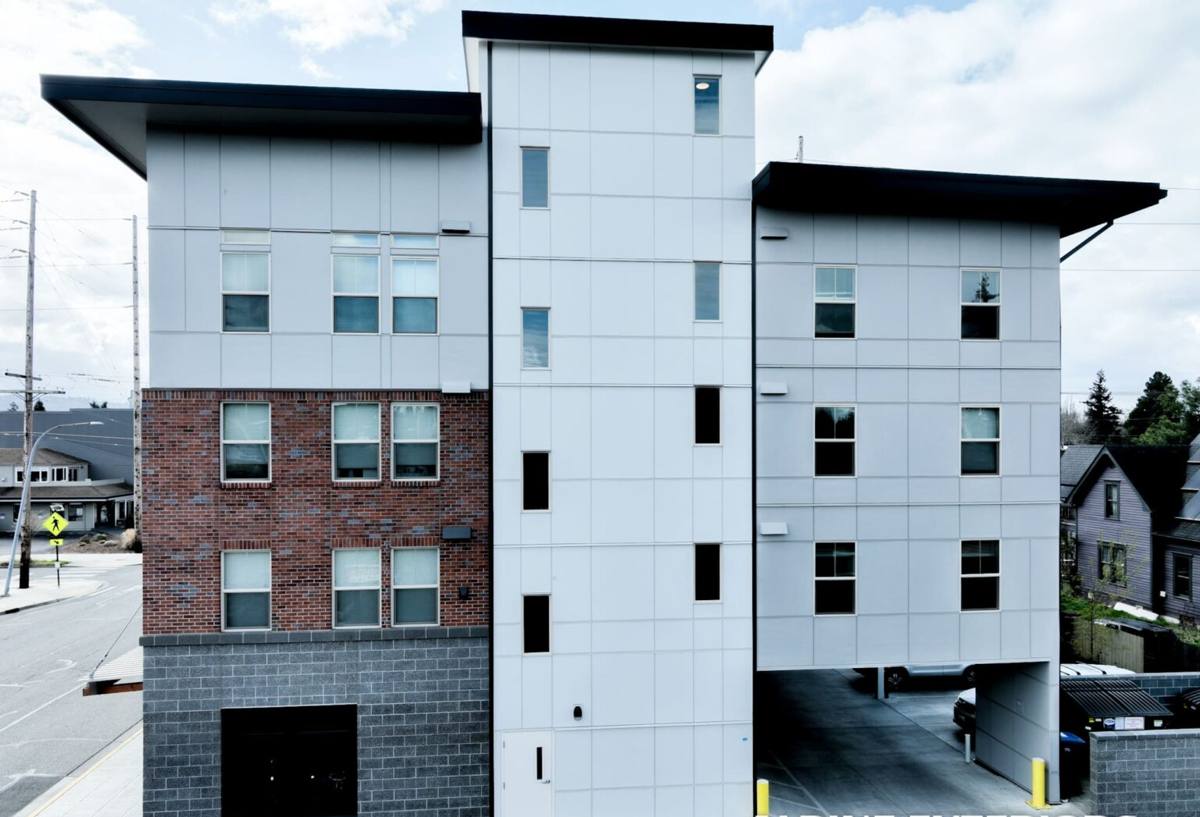
What This Climate Does to Vertical Siding
Manatee County doesn't give siding an easy life. Board and batten siding on a Whitfield Estates home is dealing with several stresses at once, year-round:
- Hurricane-force wind events that put uplift and lateral pressure on every board, batten, and fastener line, especially at corners and eaves.
- Wind-driven rain that gets pushed sideways and upward under battens and around trim if flashing and water-resistive barriers aren't detailed correctly.
- Intense, near-constant UV exposure that breaks down paint films and unstabilized coatings faster than in milder climates, leading to premature fading and chalking.
- Salt air drifting inland from the bay and Gulf, which accelerates corrosion on fasteners, trim accessories, and any hardware that isn't rated for a coastal environment.
- High ambient humidity that keeps wood-based products damp longer after rain, encouraging swelling, rot, and paint failure at the very joints board and batten depends on.
None of these are hypothetical. They're the same forces that shorten the lifespan of the wrong siding choice on almost every home in this part of Florida, and they're why the material and the installation both matter more here than they would somewhere with milder weather.
Why Board & Batten Is Less Forgiving Than Lap Siding
Vertical board and batten siding relies on the battens to shed water off the face of the boards and off the joints beneath them. That works well when the batten spacing, fastening, and flashing are done to spec. It works poorly when corners are cut, because:
More seams mean more risk points
Every vertical joint between boards is a place water can find its way behind the cladding if the underlying barrier isn't continuous and properly lapped. Horizontal lap siding sheds water almost by geometry alone; board and batten needs the installer to build that water management in.
Fastening has to account for uplift
In a wind zone like ours, fastener spacing and placement aren't cosmetic choices — they're what keeps the siding on the wall in a strong storm. Battens fastened only for appearance, without regard to the wind load the wall will actually see, are a known weak point.
The wrong substrate fails faster here
Board and batten has traditionally been done in wood, and wood board and batten is especially exposed in this climate — it swells, cups, and rots at the joints where moisture collects, and repainting on a humid, sun-baked coastal schedule becomes a recurring cost rather than a one-time job.
James Hardie Board & Batten: What We Install
We install James Hardie fiber cement exclusively, and board and batten is one of the applications where that decision matters most. Hardie's vertical siding products are engineered for exactly the stresses described above — non-combustible, dimensionally stable in heat and humidity, and finished with a factory-applied ColorPlus finish that's baked on and UV-cured rather than field-painted. That finish is a big part of why we don't recommend site-painted wood or engineered wood alternatives for this application in this climate: a factory finish holds its color and its bond far longer under constant Florida sun than anything applied with a brush on-site.
Hardie's HZ10 product line, used throughout our Gulf Coast service area, is specifically formulated for high-humidity, moisture-prone climates — which describes Whitfield Estates and the rest of coastal Manatee County precisely. The boards resist moisture-related swelling and cracking, and the material won't rot, delaminate, or attract termites the way wood and some engineered wood products can.
Comparing Board & Batten Material Options
| Material | Moisture & Humidity Behavior | Wind/Impact Resistance | Maintenance | Fire Classification |
|---|---|---|---|---|
| James Hardie fiber cement | Engineered for high-humidity climates; resists swelling and rot | Rated for high-wind installations when installed to spec | Low — factory finish, periodic caulk/gutter checks | Non-combustible |
| Primed wood/spruce | Prone to swelling, cupping, and rot at joints in humid climates | Adequate if properly fastened, but joints are vulnerable | High — regular repainting and joint maintenance | Combustible |
| Vinyl board and batten | Doesn't rot, but can warp or distort in intense, sustained heat | Can crack or blow off in high wind if under-fastened | Low, but color fades and can't be repainted easily | Combustible |
| LP SmartSide (engineered wood) | Better than raw wood but still moisture-sensitive at cut edges and joints | Good when installed correctly | Moderate — field-applied finish needs upkeep | Combustible |
We only install the first row of that table. Each of the alternatives has legitimate uses elsewhere, but for board and batten specifically — with its higher seam count and its dependence on getting water management right — we've standardized on fiber cement because it removes the moisture-and-maintenance variables that cause the most trouble in this climate.
What a Correct Board & Batten Installation Involves
The material is only half the equation. A Hardie board and batten job done to manufacturer spec, in a coastal wind zone, includes:
- A continuous, properly lapped water-resistive barrier behind the siding, with every seam and penetration sealed before the first board goes up.
- Correct starter strip and first-course setup so the bottom edge sheds water instead of wicking it up into the wall.
- Batten spacing and fastening patterns that match Hardie's published wind-load fastening schedules, not a generic spacing chosen for looks.
- Flashing integrated at every window, door, and roofline intersection — the points where most siding leaks actually originate.
- Corrosion-resistant fasteners and trim hardware suited to a salt-air environment, not standard interior-grade hardware.
- Proper clearance between the bottom edge of the siding and grade, decking, or roofing to keep splashback and standing moisture away from the material.
- Factory-finished ColorPlus boards with color-matched caulk at joints, so the finish is consistent and doesn't need field painting to look complete.
Skip any one of these and the siding may still look right on installation day — the failures show up later, usually after the first storm season or two, in the form of streaking, soft spots, or fastener corrosion.
Our Process for Whitfield Estates Projects
Every job starts with an on-site assessment of the specific wall or walls in question — sun exposure, proximity to irrigation and landscaping, existing moisture damage, and how the home's current siding or substrate is holding up. From there we walk through:
- Inspection and scope — identifying what's driving the need for new siding (age, storm damage, moisture issues, or a straight aesthetic upgrade) and whether board and batten is being used across the whole home or as an accent.
- Product and color selection — choosing the right Hardie panel profile, batten width, and ColorPlus finish for the home's style and the neighborhood's character.
- Substrate prep and moisture barrier work — the step that determines whether the job holds up, done before a single board is hung.
- Installation to Hardie's coastal wind-zone fastening spec — not a generic national spec, the one that accounts for Manatee County's wind requirements.
- Final detailing — trim, caulking, and a walk-through so the homeowner knows what maintenance (if any) is actually needed going forward.
Why a Crew That Already Works This Area Matters
Board and batten siding installed by a crew unfamiliar with coastal Florida conditions tends to fail in predictable ways — under-flashed window returns, fastener schedules borrowed from calmer climates, and caulking choices that don't hold up to the UV load. A crew that regularly works Bradenton and the surrounding Manatee County neighborhoods already knows the wind-zone fastening requirements, already sources corrosion-resistant hardware as a default rather than an upsell, and already accounts for the humidity and salt exposure that Whitfield Estates homes deal with every day. That local familiarity shows up in fewer callbacks, not in anything you'd notice on installation day.
Maintenance and Long-Term Performance
One advantage of a correctly installed Hardie board and batten system is how little upkeep it needs. There's no repainting cycle to plan around, and the factory finish is engineered to resist the fading and chalking that Florida sun causes on field-applied paint. Reasonable upkeep is limited to:
- Rinsing off salt residue and dust periodically, especially after storms.
- Keeping gutters clear so water isn't running down the wall face.
- Checking caulking at joints and trim every couple of years and touching it up if it's worn.
- Trimming back landscaping so vegetation and irrigation spray aren't holding moisture against the siding.
Compare that to the recurring repainting and joint repair that wood and some engineered wood products require in this climate, and the maintenance difference alone tends to justify the material choice over the life of the siding.
If you're weighing board and batten siding for a home in Whitfield Estates, we're glad to walk the property, look at what's there now, and give you a straightforward, no-pressure estimate on what a correctly installed James Hardie system would involve — just fill out the form below.