 Bradenton Window
 Bradenton Beach Decks Work Harder Than Most
A deck a few blocks from the water in Bradenton Beach lives a different life than one in an inland subdivision. It's within reach of salt spray carried in on the breeze, it takes a direct hit from Gulf-facing UV nearly every day of the year, and during storm season it has to shrug off wind-driven rain that finds its way into every gap a builder left behind. Add in Manatee County's hurricane exposure, and a deck out here needs to be engineered and installed with all of that in mind from day one — not treated like a generic backyard project.
We build and replace decks for homeowners throughout the Bradenton Beach area, and this page is specifically about composite decking done right for this environment: what the climate actually does to a deck, what a correct installation looks like, and why the details matter more here than they do fifteen miles inland.
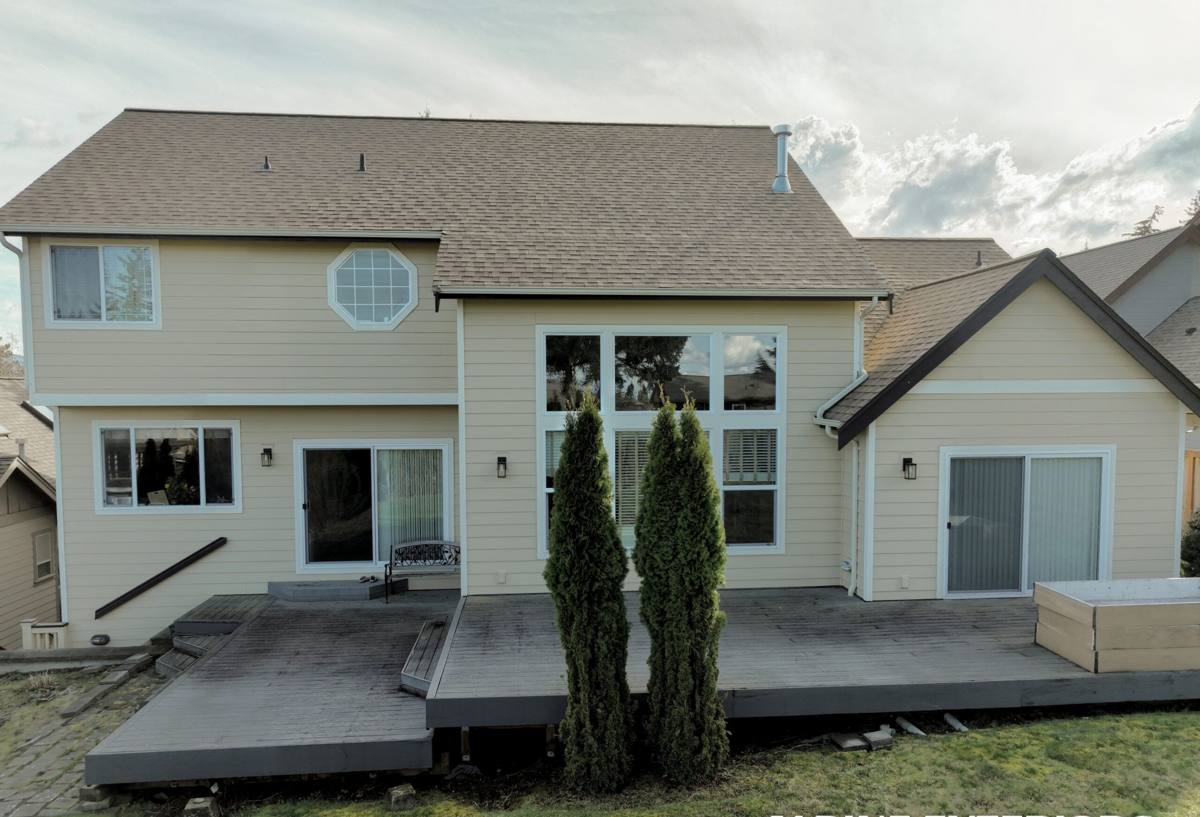
What Salt Air, UV, and Humidity Actually Do to a Deck
It helps to understand the failure modes before talking about the fix. Near the coast, a deck is fighting three things at once, continuously:
- Salt air corrosion — airborne salt settles on any exposed metal and accelerates rust. Fasteners, brackets, and hardware that would last decades inland can start showing corrosion in a fraction of that time if they're not rated for coastal exposure.
- UV degradation — Florida sun bleaches color, dries out organic material, and breaks down surface fibers on wood decking faster than most homeowners expect. It also softens and warps lower-grade composites that weren't formulated for this much direct sun.
- Moisture cycling — humidity, sudden downpours, and wind-driven rain mean deck boards are constantly swelling and drying out. Wood expands, contracts, cups, and splits. Poorly capped composite can absorb moisture at cut ends and joints if it isn't detailed correctly during install.
None of this means a deck can't hold up out here — it means the material choice and the installation both have to account for it, rather than assuming a standard build will do fine.
Why Composite Makes Sense for This Location
We're not going to tell you wood decking is a bad product — plenty of homeowners like the look and are willing to keep up with it. What we will say honestly is that in a salt-air, high-UV, high-humidity environment like Bradenton Beach, wood asks a lot more of the owner: annual sanding and sealing, watching for splinters and soft spots, and replacing boards as sun and moisture take their toll. Composite decking, when it's a quality capped product installed correctly, shifts that maintenance burden way down without giving up the deck experience.
The Trade-Off, Stated Plainly
Composite costs more upfront than pressure-treated wood. That's real, and we'll never pretend otherwise. What you're buying with that difference is dramatically less annual upkeep, better resistance to the specific things this climate throws at a deck, and a more predictable lifespan. For a lot of Bradenton Beach homeowners — especially second-home owners or anyone who doesn't want a recurring maintenance chore — that math works out in composite's favor.
Not All Composite Is Built the Same
This is where a lot of decks go wrong before the first board is even ordered. "Composite decking" covers a wide range of products, and the difference between a capped composite board and an older uncapped one is significant in a coastal environment.
| Factor | Capped Composite | Uncapped Composite | Pressure-Treated Wood |
|---|---|---|---|
| Moisture resistance | High — polymer shell resists absorption | Moderate — core can absorb moisture at exposed areas | Low — absorbs and releases moisture constantly |
| UV/fade resistance | High, with manufacturer warranty backing | Moderate — fades and can chalk over time | Low — grays and dries out without regular sealing |
| Maintenance | Occasional wash-down | Periodic cleaning, some sealing | Annual sanding/staining/sealing |
| Upfront cost | Highest | Mid-range | Lowest |
| Best fit near salt air | Yes | Workable, with care | Requires diligent upkeep |
We install quality capped composite products because we've seen how they perform in exactly this kind of coastal exposure. If a homeowner wants a lower-cost uncapped option or is set on wood, we'll install it correctly and tell you honestly what maintenance schedule to expect — we're not going to talk anyone out of a product they've already decided on, but we are going to be straight about the trade-offs before you commit.
What a Correct Composite Deck Installation Actually Involves
The board you pick matters, but most deck failures we get called out to fix trace back to installation shortcuts, not the decking material itself. A correct build in this climate includes:
The Substructure
Joists and framing need proper spacing for the specific composite board being used — composite typically requires tighter joist spacing than wood, especially on diagonal or picture-frame layouts. Skipping this is one of the most common causes of bounce and sag down the road.
Ledger Attachment and Flashing
Where a deck attaches to the house is the single most important waterproofing detail on the whole project. Proper ledger flashing keeps wind-driven rain — which this area gets plenty of — from working its way behind the siding and into the structure. This is not a place to cut corners.
Fasteners and Hardware
Coastal exposure calls for corrosion-resistant fasteners and connectors rated for that environment, not standard interior-grade hardware. This is one of the clearest examples of where a "correct" job and a "cheap" job diverge — the fasteners are largely invisible once the deck is finished, but they determine whether the structure is still sound in ten years.
Hidden Fastening Systems
Most quality composite boards use a hidden clip system rather than face-screwing. Done correctly, this gives a clean surface and even board spacing that also allows for proper expansion and contraction as temperatures and humidity swing.
Ventilation Underneath
Airflow beneath the deck matters more here than in a dry inland climate. Trapped moisture under a deck with poor ventilation accelerates corrosion of hardware and can shorten the life of the substructure, composite or not.
Our Process for a Bradenton Beach Deck Project
- On-site assessment — we look at the existing structure (if there is one), the home's elevation, drainage, and how exposed the location is to wind and salt.
- Material walkthrough — we go over composite options honestly, including what each tier of product costs and what it actually buys you in this climate.
- Design and layout — board direction, railing, stairs, and any picture-frame or border details, sized to the home.
- Permitting — Manatee County and local jurisdiction permitting, handled as part of the project rather than left to the homeowner.
- Build — proper substructure, flashing, corrosion-resistant hardware, and hidden fastening, in that order of priority.
- Final walkthrough — we go over the finished deck with you and explain what little maintenance it does need.
Permits and Wind Considerations in Manatee County
Deck construction in Manatee County is subject to local permitting and building code requirements, and coastal wind exposure is a real factor in how a deck's structure and railings need to be engineered — this isn't optional paperwork, it's what keeps a deck attached to the house during a bad storm. We handle the permitting process as part of the job so homeowners aren't left navigating it alone, and we build to the wind and structural requirements that apply to this area rather than treating it as a generic build.
What Maintenance Actually Looks Like Afterward
One of the biggest reasons homeowners choose composite in a coastal setting is how little it asks of them afterward. That said, "low-maintenance" doesn't mean "no-maintenance" — a few simple habits keep a composite deck performing the way it should for years:
- Rinse off salt residue and debris with a garden hose every few weeks, more often right after storms
- Wash the surface periodically with mild soap and water to prevent mildew buildup in humid stretches
- Sweep off leaves, pollen, and organic debris rather than letting it sit and stain the surface
- Check railings and stair connections once or twice a year for looseness
- Keep gutters and downspouts near the deck clear so runoff isn't dumping directly onto or under it
- Have hardware and substructure inspected periodically, especially on older decks near the water
Why It Matters to Hire a Crew That Already Works This Area
Decking installation isn't identical everywhere, and a crew that mostly builds inland doesn't always account for what salt air and coastal wind do differently. Working regularly in and around Bradenton Beach means we're already familiar with the fastener and hardware standards this exposure calls for, the flashing details that keep wind-driven rain out, and the county's permitting process — instead of learning it on your project. That local familiarity is a big part of why the install holds up years later, not just on installation day.
If you're weighing a new deck or a replacement for an aging one, we're glad to come take a look and give you a straightforward, no-pressure estimate — just fill out the form below to get started.