 Bradenton Window
 Holmes Beach sits right on the Gulf side of Anna Maria Island, which means every deck out here is doing a harder job than a deck in a typical Bradenton subdivision. Between the salt air rolling off the water, sun that doesn't let up for most of the year, wind-driven rain, and the occasional direct hit from a tropical system, wood and hardware age faster on this stretch of Manatee County coastline than almost anywhere inland. When a deck starts failing — soft spots, rust bleeding through the boards, railings that flex when you lean on them — patching it usually buys a little time and not much else. A proper replacement, built for what this island actually throws at it, is often the more honest and more affordable answer in the long run.
Why Decks Take a Beating on Anna Maria Island
Four things work against a deck here, and they work on it every single day, not just during storm season.
Salt air is the most relentless. It doesn't just sit on the surface — it works into every metal fastener, joist hanger, and screw head, and it doesn't stop at the parts of the deck you can see. Corrosion usually starts in the framing underneath, out of sight, long before it shows up in a board on top.
Year-round UV breaks down the lignin in wood fibers and dries out the oils and sealants that keep boards flexible. On a barrier island with very little shade, that process runs faster than it would a few miles inland in Bradenton.
Wind-driven rain doesn't fall straight down here — it comes in sideways, gets pushed under railings, into fastener holes, and behind ledger boards where it can sit and rot framing from the inside out. This is one of the most common reasons a deck fails structurally while still looking fine on the surface.
Hurricane-force wind, even from storms that never make a direct hit, puts repeated stress on every connection point — ledger attachments, post bases, railing posts. Over years, that cyclic loading loosens fasteners and fatigues framing that was already weakened by moisture and corrosion.
None of these forces are unique to Holmes Beach, but the combination — direct Gulf exposure, minimal windbreak, and a long, intense sun season — is more concentrated here than in most of Bradenton or the mainland parts of Manatee County.
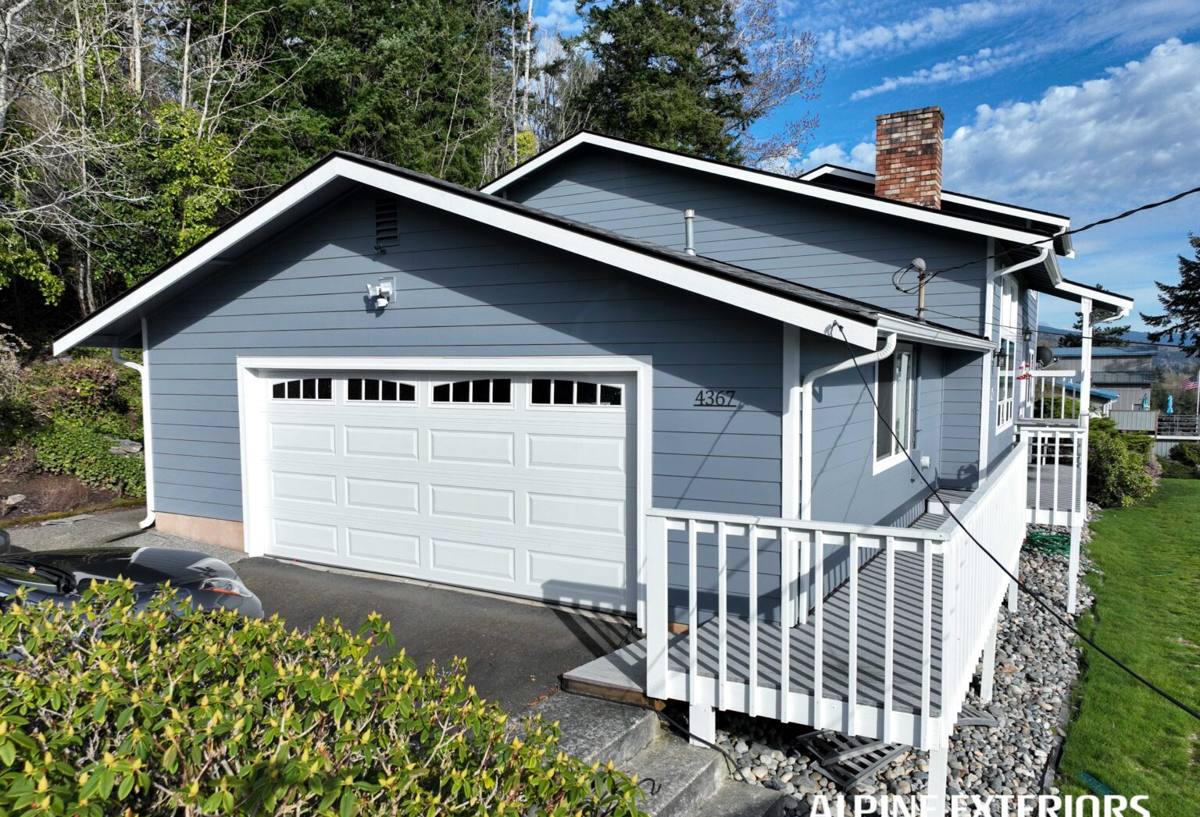
Signs Your Deck Needs Replacement, Not Another Repair
Not every problem deck needs a full teardown. But certain signs point to failure that has gone past the point where swapping a few boards will fix it:
- Soft, spongy, or springy spots when you walk across the deck
- Rust stains bleeding through boards around fastener heads
- Railings or posts that wobble or flex under normal pressure
- Visible gaps, splitting, or cupping across multiple boards, not just one or two
- Ledger board (where the deck attaches to the house) showing water staining or separation
- Support posts with soft or spongy wood near or below grade
- A deck over 15-20 years old that has never had its substructure inspected
If more than one or two of these apply, or if the problem is in the framing rather than just the surface boards, replacement is usually the safer and more cost-effective call. Framing repairs done piecemeal on a deck this exposed tend to fail again within a season or two, and you end up paying for the same repair twice.
What a Proper Deck Replacement Actually Involves
Substructure First
The part of a deck that fails first on this coastline is almost never the part you can see. We start every replacement at the substructure — the framing, ledger connection, posts, and footings — because that is what determines whether the new deck lasts five years or twenty-five.
On elevated homes, which are common throughout Holmes Beach because of flood zone construction, the substructure often has to support more height and more wind exposure than a ground-level deck on the mainland. Post spacing, bracing, and footing depth all matter more here, not less.
Fasteners and Connectors
Standard hot-dip galvanized fasteners hold up fine in most of the country. On a Gulf-front island, they corrode faster than the wood around them. We use stainless steel or coastal-rated fasteners and connectors throughout — not just on the visible top boards, but in the joist hangers, post bases, and structural screws that never see daylight once the decking goes down. It costs more up front. It is also the single biggest factor in whether a deck's frame survives to see its next hurricane season without hidden failure.
Ledger Attachment and Flashing
Where the deck meets the house is the single most common failure point on any deck, coastal or not — and it is also the hardest to inspect once it is covered up. Proper flashing that sheds water away from the house framing, combined with correctly spaced and rated ledger bolts, is not optional on a job done right. We treat this connection as structural, not cosmetic, because a failure here can mean the deck pulling away from the house.
Choosing a Decking Material That Can Handle Salt Air and Sun
There is no single "right" decking material for Holmes Beach — the right choice depends on budget, how much upkeep you want to take on, and how much direct sun and salt exposure your specific deck gets.
| Material | How It Handles Salt Air & Sun | Maintenance | Trade-offs |
|---|---|---|---|
| Pressure-treated wood | Needs regular sealing to resist salt and UV; without it, grays and splits faster on the coast | Annual cleaning and resealing recommended | Lowest upfront cost, shortest lifespan in this climate, ongoing upkeep |
| Capped composite | Cap layer resists salt staining and UV fading better than uncapped wood-composite blends | Occasional washing; no sealing or staining needed | Higher upfront cost than wood; core can still absorb moisture if the cap is damaged |
| PVC / cellular decking | Fully synthetic, does not absorb moisture, very stable in salt air and heat | Lowest maintenance of the three; occasional washing | Highest upfront cost; can run hotter underfoot in direct sun |
We do not push one material as the automatic best choice. What we will not do is install a material that is not rated for coastal exposure and call it a long-term fix. That is a decision that shows up as a warranty claim or a failed board in two or three years, not twenty.
Railings and Hardware Built for the Conditions
Railings take as much punishment as the decking itself, if not more — they are the first thing salt spray and wind-driven rain hit, and they take direct sun with no relief from above. Aluminum railing systems with a marine-grade or powder-coat finish tend to hold up well here without the rust streaking that plain steel develops within a couple of seasons. Cable and glass railing systems can work too, but the hardware — turnbuckles, posts, standoffs — needs to be rated for coastal use, or it becomes the weak point in an otherwise solid deck.
Every fastener, hinge, and bracket on the finished deck should meet the same standard as the framing underneath: rated for salt air, not just generic "exterior-grade." That distinction matters more here than it would a few miles inland.
Permits and Local Building Requirements
Deck replacement on Anna Maria Island generally requires a permit through the applicable local building department, and Florida's building code sets wind-load and connection standards that are stricter than what many homeowners expect from a "simple" deck project. On elevated homes, and on any deck attached to the primary structure, inspectors check the same things we start with — ledger attachment, post-to-footing connections, and railing height and load capacity.
We handle the permitting and inspection process as part of the job, not as a separate hassle for the homeowner. Skipping a permit on a deck replacement is not a shortcut worth taking here — beyond the legal exposure, an unpermitted deck can complicate a home sale or an insurance claim down the road, which matters in a coastal market where both come up often.
What Affects the Cost of a Deck Replacement
We do not quote deck replacements off a flat per-square-foot number, because the same size deck can cost very differently depending on a handful of factors:
| Factor | Why It Affects Cost |
|---|---|
| Deck size and height | Elevated decks on stilt homes need more framing, bracing, and labor time than ground-level decks |
| Substructure condition | Hidden rot or corrosion found during demo can require additional framing repair beyond the original scope |
| Decking material | Wood, capped composite, and PVC carry different material costs and installation labor |
| Railing system | Aluminum, cable, and glass systems vary widely in material and hardware cost |
| Access and site conditions | Tight lots and elevated work, both common on the island, can affect labor time |
We give a written estimate after actually looking at the deck and, where possible, the substructure underneath it. On older decks, we flag anywhere we suspect hidden framing damage before we start, so there are no surprise change orders once demolition begins.
Our Deck Replacement Process
Every job follows the same sequence, whether it is a small ground-level deck or a large elevated deck on a stilt home:
- On-site assessment of the existing deck, including the substructure and ledger connection where accessible
- Written estimate covering materials, structural work, railing, and permitting
- Permit application and submission to the applicable local building department
- Demolition and removal of the old deck
- Framing inspection and repair or replacement of any compromised substructure
- Installation of decking, railing, and stairs to code
- Final inspection and walkthrough with the homeowner
We do not skip the inspection step between demolition and rebuild, even when the old framing looks fine at a glance. On this coastline, the damage that matters most is usually the damage you cannot see from the top.
Why It Matters to Hire a Crew That Already Works Holmes Beach
A contractor who mostly works inland jobs will size and build a deck the same way they would in a neighborhood thirty miles from the water — and that mismatch is exactly what leads to premature failure out here. A crew that regularly works Holmes Beach and the rest of Anna Maria Island already knows which fasteners hold up, which framing details fail first on elevated coastal homes, and what the local permitting process actually requires before the first board goes down.
What to Ask Before You Hire
- Do they use stainless or coastal-rated fasteners and connectors as standard, not an upgrade?
- Do they inspect and, if needed, repair the substructure, not just the visible decking?
- Do they pull permits and handle inspections as part of the job?
- Can they explain the trade-offs between decking materials honestly, without pushing one product?
- Do they have direct experience with elevated, flood-zone-construction homes?
That local familiarity also shows up in smaller, practical ways: a realistic sense of timeline and access on a barrier island, an understanding of how flood zone elevation requirements affect a deck's design, and a working relationship with the same building department from having gone through the inspection process before. None of that is complicated, but it adds up to fewer surprises and a deck that is actually built for where it sits, not just built.
If your deck in Holmes Beach is showing its age — soft boards, rusting hardware, a railing that does not feel as solid as it used to — we are happy to take a look and give you an honest read on whether it needs a full replacement or just targeted repair. Fill out the form below for a free, no-pressure estimate.