 Bradenton Window
 Why Decks in Lakewood Ranch Need More Than a Quick Patch
Lakewood Ranch sits inland from the coast, but that doesn't mean decks here get an easy ride. The same conditions that wear down homes across Manatee County — long stretches of intense UV, humid air that barely lets wood dry out between rain events, and the wind loads that come with our hurricane season — hit an exposed, horizontal wood or composite structure harder than almost any other part of a house. A roof sheds water fast and is angled away from direct sun for part of the day. A deck sits flat, soaks up rain, and bakes in full sun for hours, often with water pooling in low spots or against the house where the deck meets the ledger board.
Add in Florida's summer thunderstorm pattern — short, heavy downpours almost daily from June through September — and you get a cycle of swelling and drying that loosens fasteners, opens up wood grain, and stresses joints faster than in drier climates. When a named storm brings sustained wind, that cycle accelerates. A deck that's been quietly losing structural integrity for a few years is exactly the kind of thing that fails suddenly under storm-force gusts or extra foot traffic during a backyard gathering. Repairing it correctly, before that happens, is the whole point of this page.
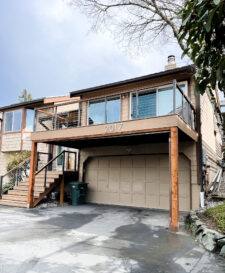
Signs Your Deck Needs Repair, Not Just a Face-Lift
Some deck problems are cosmetic and can wait. Others are structural and shouldn't. Knowing the difference is the first step in figuring out what kind of work you actually need.
Structural warning signs — address these promptly
- Soft, spongy, or springy sections of decking when you walk across them
- Any wobble or movement in the railing when you lean on it
- Visible gaps, rust streaks, or movement where the ledger board attaches to the house
- Posts or support beams that look tilted, cracked, or separated from footings
- Fasteners that have backed out, sheared off, or left dark rust stains in the wood
- Stair stringers that flex or feel uneven underfoot
Cosmetic and early-stage signs — still worth addressing
- Graying, splintering, or checking (surface cracking) on wood boards
- Fading or chalking on composite decking
- Small areas of soft wood near planters, grills, or spots that stay shaded and damp
- Peeling or bubbling finish/sealant
The cosmetic list matters because it's usually the early warning for the structural list. A board that's just starting to gray and check is still sound. Left alone through another wet season, that same board can start absorbing water at the cracks and begin to rot from the inside.
Common Deck Materials in Lakewood Ranch and How They Actually Fail
Pressure-treated wood
Most decks in this area use pressure-treated pine framing, sometimes with a different species or composite for the visible decking boards. Treated lumber resists insects and fungal decay reasonably well, but the treatment doesn't stop water absorption. In our climate, that means repeated wet-dry cycling that eventually opens the wood's grain, and it means the copper-based preservatives in modern treated lumber are chemically corrosive to the wrong type of fastener. We see a lot of repair calls where the actual root cause isn't the wood at all — it's fasteners that were never rated for treated lumber corroding from the inside out.
Composite and PVC decking
Composite decking doesn't rot, but it isn't maintenance-free either. Boards can fade unevenly with sun exposure, and moisture that gets trapped underneath — especially in low-airflow areas — can lead to warping or a spongy feel at butt joints. Composite repair is often less about the board itself and more about the substructure underneath it, which in nearly every case is still framed in wood.
Railings, stairs, and fasteners
Railings take direct wind load and constant hand contact, so loose posts and failed connections show up here first. Screws and nails, not the boards themselves, are the most common point of failure we find — the wrong fastener, installed in the wrong spot, corrodes years before the lumber around it would have failed on its own.
Repair vs. Replace: How We Make the Call
Not every deck problem calls for a full rebuild, and not every deck is worth patching. We look at the framing, the ledger connection, and the extent of the damage before recommending either path. Here's a general framework for how the decision usually breaks down.
| Factor | Leans Toward Repair | Leans Toward Replacement |
|---|---|---|
| Extent of damage | Isolated boards, one section, or a single railing run | Rot or corrosion spread across multiple framing members |
| Ledger board condition | Solid connection, no water intrusion at the house | Soft wood or rot where deck meets the house structure |
| Age of the deck | Under 10-12 years, built to a reasonable code standard | Original construction is older or was never permitted correctly |
| Framing/post condition | Support posts and beams are sound underneath surface wear | Posts, beams, or footings show movement or structural failure |
| Budget goal | Extend usable life for a lower upfront cost | Address recurring problems once instead of repeatedly |
As a general rule, if the framing and ledger connection are sound, targeted repair is the more cost-effective path. If the damage has reached the structural framing in more than one area, repeated patching usually ends up costing more over time than doing the job once, correctly.
What a Correct Deck Repair Involves
A repair that only replaces what's visibly damaged, without checking what's underneath, tends to fail again within a season or two. Our process is built around finding the actual cause, not just the symptom.
- Full inspection — we check decking boards, framing, the ledger board connection to the house, posts, footings, stairs, and railings, not just the area you called about.
- Moisture and fastener check — we probe suspect wood for soft spots and look specifically at fastener type and condition, since corroded or mismatched hardware is behind a large share of the failures we see.
- Scope confirmation — before any work starts, we tell you exactly what's being repaired, what's structural versus cosmetic, and why.
- Removal of compromised material — damaged boards, framing members, or connections are cut back to sound material, not just covered over.
- Rebuild with corrosion-appropriate hardware — fasteners and connectors matched to the lumber and to Florida's humidity and coastal-influenced air, so the repair doesn't fail again from the same cause.
- Ledger and flashing check — since this connection point is the most common source of hidden water damage, we confirm it's properly flashed and sealed against the house.
- Final walk-through — we test the repaired area under load and walk the whole deck with you before calling the job done.
Permits and Manatee County Considerations
Deck work in Manatee County, including Lakewood Ranch, can require a permit depending on the scope of the repair — structural framing, footing, and railing work is treated differently than a simple board swap. Lakewood Ranch is also a heavily deed-restricted community, and many neighborhoods within it have their own HOA or architectural review requirements on top of county rules. We factor permit requirements into the scope of the job up front rather than leaving you to sort that out after the fact, and we build repairs to hold up to inspection, not just to look finished.
Why Hiring a Crew That Already Works in Lakewood Ranch Matters
A deck repair contractor who works this area regularly already knows which framing shortcuts show up in local builds, which fastener types hold up against our humidity and which don't, and what Manatee County inspectors and Lakewood Ranch's architectural review process actually expect. That local familiarity shortens the guesswork on your job — less time spent diagnosing, more time spent fixing the right thing the first time. It also means we're not disappearing after the invoice is paid; we're a local crew that will still be servicing homes in this area next year and the year after.
Questions worth asking before you hire anyone for deck repair
- Will you inspect the full structure, or just the section I'm asking about?
- What fastener and hardware types do you use, and why?
- Is a permit required for this scope of work, and will you pull it?
- What's your plan if you find rot or damage beyond what's currently visible?
- Do you carry insurance, and can you provide proof before work starts?
Keeping Your Deck in Good Shape After the Repair
Once a repair is done right, a little routine attention keeps it that way. Rinse off pollen, salt-laden air, and debris periodically, keep gutters and downspouts directing water away from the deck rather than onto it, and reseal or refinish wood surfaces on the schedule the product calls for — Florida sun breaks down finishes faster than it does in milder climates. For composite decking, keeping debris out of gaps between boards prevents the moisture retention that causes most composite-related issues. A quick seasonal walk-around, especially after a heavy storm, catches small problems while they're still small.
If you're noticing soft spots, a wobbly rail, or a deck that just doesn't feel as solid as it used to, we're happy to take a look. We offer free, no-pressure estimates for Lakewood Ranch homeowners — fill out the form below and we'll get you a straight answer on what your deck actually needs.