 Bradenton Window
 Why Mill Creek Homes Need Siding Built for This Climate
Mill Creek sits inland from Bradenton's coastline, but "inland" in Manatee County doesn't mean sheltered. Homes here still take a beating from Gulf Coast sun, tropical downpours, and the salt-laden air that carries well past the shoreline on a steady sea breeze. When we're asked to look at a home's exterior in this neighborhood, the siding is usually one of three things: original builder-grade material well past its service life, a vinyl or wood product that's chalking, warping, or rotting, or a previous repair that never addressed the underlying moisture problem. None of that is unusual for this part of Florida — it's what happens to siding that wasn't engineered for the climate it's living in.
This page covers what James Hardie fiber cement siding involves specifically for Mill Creek properties: what the local climate demands, what a correct installation looks like, and why the crew doing the work matters as much as the material itself.
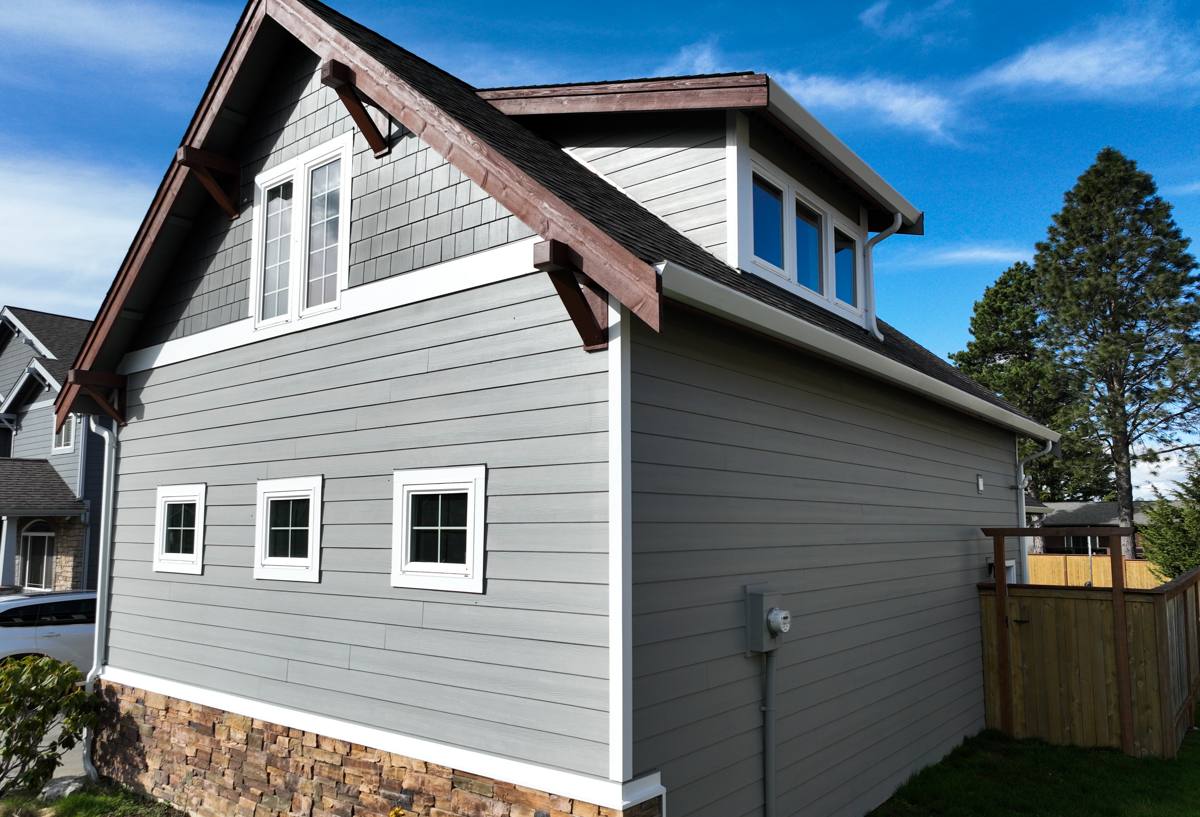
What Bradenton's Climate Does to Ordinary Siding
Manatee County sees a specific combination of stresses that most siding products — especially vinyl, untreated wood, and lower-grade composites — simply aren't built to handle over the long term:
- Intense, year-round UV exposure breaks down pigments and surface coatings, leading to fading, chalking, and brittleness in materials not formulated for it.
- Wind-driven rain during summer storms and hurricane season forces water sideways and upward, finding gaps at seams, corners, and penetrations that would stay dry in a less humid climate.
- Salt air drifts well inland from Tampa Bay and the Gulf, accelerating corrosion of fasteners and trim and degrading materials that aren't rated for coastal exposure.
- Hurricane-force wind events put direct load on every panel, seam, and fastener — a siding system is only as strong as its weakest attachment point.
Individually, any one of these is manageable. Together, over years of Florida summers, they're why so many Mill Creek homes need a full re-side well before national averages would predict — and why both the material and the installation matter more here than they would somewhere with a milder climate.
Why James Hardie Is the Right System for This Climate
We install James Hardie fiber cement siding exclusively — not as a sales preference, but because it's the product built to hold up under exactly the conditions Mill Creek homes face.
Non-combustible, moisture-stable material
Fiber cement is made from cement, sand, and cellulose fibers. It doesn't rot, it doesn't feed pests, and it's non-combustible — a meaningful difference from wood-based products in a state where humidity and wind-driven rain create constant moisture pressure on an exterior wall.
Engineered for humid, coastal-influenced climates
James Hardie manufactures regional product formulations matched to specific climate zones, and the HZ5 version used across Florida is engineered for higher humidity and moisture exposure than the formulations sold in drier states. That's a real material difference, not just marketing — the board itself is made differently for this climate.
Factory-applied ColorPlus finish
Rather than relying on field-applied paint, James Hardie's ColorPlus finish is baked on at the factory in multiple coats, which holds color and resists the fading and chalking that intense Florida UV causes on ordinary painted surfaces. It's also backed by its own finish warranty, separate from the warranty on the boards themselves.
A warranty built for how long the product actually lasts
James Hardie backs its siding with a long, transferable limited warranty — a meaningful benefit if a Mill Creek home changes hands, since coverage can carry over to a new owner rather than resetting to zero at closing.
What a Correct Installation Involves
Fiber cement siding performs exactly as well as the installation behind it — and that's where most of the failures we get called out to repair actually originate. The board itself rarely fails in a wind event; poor flashing, wrong fastener placement, or missing clearances do.
Weather-resistive barrier and flashing
Every penetration — windows, doors, hose bibs, light fixtures, vents — needs proper flashing integrated with a continuous weather-resistive barrier behind the siding. This is the layer that actually keeps wind-driven rain out of the wall assembly; the siding itself is the second line of defense, not the only one.
Fastener pattern and spacing
James Hardie publishes specific fastener requirements by wind zone, and Manatee County's wind exposure means following the manufacturer's high-wind fastening schedule, not a generic pattern. Under-fastened siding is one of the most common causes of panel loss in a strong wind event.
Clearances and gaps
Fiber cement needs minimum clearance from roof lines, decks, and grade, plus proper gapping at butt joints to allow for the board's normal expansion and contraction. Installers who rush this step — or skip it to save material — set a home up for trapped moisture and premature caulk failure.
Manatee County permitting and wind-load compliance
Siding replacement in this area falls under Florida Building Code wind-load requirements, and Manatee County permitting reflects that. A correctly pulled permit and inspection isn't paperwork for its own sake — it's confirmation that the installation actually meets the standard the material is rated for.
Comparing Siding Options for a Home Like Yours
We don't install every product on this list — we only install James Hardie — but Mill Creek homeowners deserve to understand why, based on how each option actually performs in this climate:
| Factor | James Hardie Fiber Cement | Vinyl | Wood / LP SmartSide |
|---|---|---|---|
| Moisture & rot resistance | Does not rot; engineered for humid climates | Doesn't rot, but can warp and buckle in heat | Vulnerable to moisture intrusion at seams and cuts |
| UV / fade resistance | Factory ColorPlus finish resists fading | Prone to chalking and fading over time | Field-applied paint fades and needs repainting |
| Wind performance | Rated for high-wind installation when fastened to spec | Lighter panels more prone to wind damage | Performance depends heavily on installation quality |
| Fire resistance | Non-combustible | Combustible | Combustible |
| Typical maintenance | Occasional washing and caulk checks | Low, but cracks and fades with age | Regular repainting and moisture inspection |
The pattern across every category is the same: fiber cement trades a slightly higher upfront cost for meaningfully lower long-term risk in exactly the conditions Bradenton throws at an exterior wall.
Our Process for Mill Creek Siding Projects
The steps are the same on every job because skipping one is where problems start:
- On-site assessment. We walk the exterior, check for existing moisture damage, and evaluate the current wall assembly before recommending a scope of work.
- Tear-off and substrate check. Old siding comes off and we inspect the sheathing underneath for rot or damage that needs to be addressed before anything new goes up.
- Weather barrier and flashing. A continuous weather-resistive barrier goes on first, with flashing detailed at every window, door, and penetration.
- Hardie installation to wind-zone spec. Boards are installed with the fastener pattern, clearances, and joint treatment required for this area's wind rating — not a generalized national standard.
- Final inspection and walkthrough. We confirm the work passes required inspections and walk the finished exterior with the homeowner before calling the job done.
Why Hiring a Crew That Already Works in Mill Creek Matters
Siding installation isn't uniform across Florida, let alone across the country. A crew that regularly works in Mill Creek and the surrounding Bradenton area already knows the Manatee County permitting process, understands the wind-load requirements that apply to this part of the county, and has seen firsthand what happens to a poorly installed exterior after a few hurricane seasons. That local track record matters more than a low bid from an out-of-area crew that's never pulled a permit here and won't be nearby if a warranty issue comes up later.
It also matters for responsiveness. A local crew can get back out to a Mill Creek property quickly if something needs a look after a storm, rather than a homeowner waiting on a company based hours away.
Maintenance and Long-Term Care in a Salt-Air Environment
James Hardie siding is low-maintenance, not no-maintenance. A little attention keeps it performing for the long haul in a coastal-influenced climate:
- Rinse the exterior periodically to clear salt residue, pollen, and airborne grit before it builds up on the finish.
- Inspect caulking at joints, trim, and penetrations annually, and after any major storm.
- Keep irrigation heads and sprinklers from spraying directly on siding — constant wetting shortens the life of any exterior material.
- Trim back landscaping so foliage isn't holding moisture against the wall.
- Have a professional check flashing and fastening after any named storm that brought sustained high winds.
None of this is heavy upkeep — it's the kind of basic attention that lets a properly installed Hardie exterior reach the long end of its service life instead of the short end.
If you're weighing a siding project for a Mill Creek property, we're glad to take a look and walk you through what your home actually needs — no pressure, no obligation. Reach out below for a free estimate.