 Bradenton Window
 Mill Creek is a quiet, established residential community in the Bradenton area, and like most neighborhoods in Manatee County, its homes take a beating from the weather that a lot of homeowners underestimate until they're dealing with cracked, warped, or rotting siding. Between hurricane-force winds, intense year-round UV exposure, wind-driven rain, and salt air drifting in off the Gulf, the exterior cladding on a Mill Creek home is doing more work than siding does almost anywhere else in the country. This page covers what siding installation actually needs to look like in this specific climate, what a correct job involves from the ground up, and why we install only one product system — James Hardie fiber cement — on every home we work on.
What Mill Creek's Climate Actually Does to Siding
It's easy to think of siding as a cosmetic layer. In Bradenton, it's structural protection. Four climate factors do most of the damage over time, and they compound each other:
- Hurricane-force wind: Even homes outside a storm's direct path see sustained high winds and wind gusts multiple times a year. Siding that isn't fastened and flashed correctly can lift, crack at the edges, or peel away entirely, and once one panel fails, wind gets behind the next one.
- Year-round UV intensity: Florida sun doesn't take a season off. Paint films and unstable substrates chalk, fade, and become brittle far faster here than in a moderate climate, which is why factory-applied, UV-stable finishes matter so much more in Bradenton than they do in most of the country.
- Wind-driven rain: Rain that comes in sideways during a storm doesn't behave like normal rainfall. It gets forced into seams, laps, and fastener penetrations that would stay dry in a calmer climate, which makes correct flashing and water-resistive barrier detailing non-negotiable.
- Salt air: Even a few miles inland from the coast, airborne salt accelerates the corrosion of fasteners and metal trim and speeds up the breakdown of materials not built to handle it.
None of this is unique to Mill Creek specifically, but it's the reality for every home in this part of Manatee County, and it's the baseline we design every installation around.
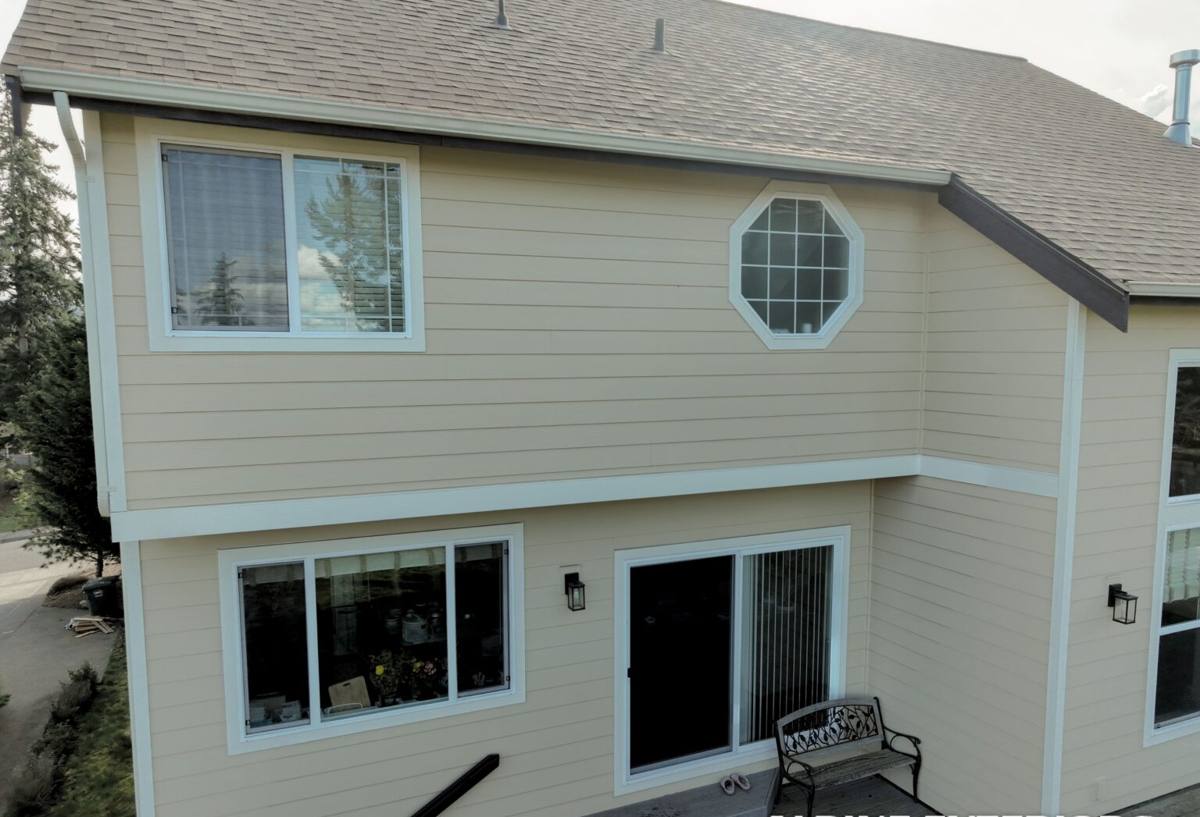
Why We Install Only James Hardie Fiber Cement
We made a decision a long time ago to install one siding system and install it right, rather than offer a menu of products with different weaknesses. We don't install vinyl siding, LP SmartSide, Cemplank, Allura, primed spruce, or cedar. That's not a knock on every homeowner who has one of those products on their house today — it's a statement about what we're willing to put our name behind in this climate.
James Hardie fiber cement is non-combustible, which matters in a state where wildfire and lightning-strike risk exist alongside hurricane risk. It's engineered in climate-specific formulations — Hardie's HZ10 product line is built specifically for hot, humid, high-moisture regions like the Gulf Coast, which is exactly what Bradenton is. The factory-applied ColorPlus finish is baked on and warranted against the fading and chalking that plain-primed products struggle with under constant Florida sun. And because it's cement-based rather than wood-based or foam-based, it doesn't feed mold or absorb water the way organic and lower-density materials can. It comes with a strong, transferable warranty that follows the house, not just the original owner — something that matters if you ever sell.
Every "why we don't install X" conversation we have with a homeowner comes down to the same thing: those products can be installed well and can perform reasonably under the right conditions, but the trade-offs — moisture sensitivity, finish durability, installation tolerance for error, warranty structure — are trade-offs we don't think make sense to accept on a Manatee County home.
What a Correct Siding Installation Involves
It starts before the first panel goes up
A siding job is only as good as what's underneath it. On every installation we do, that means a properly lapped and sealed water-resistive barrier, correctly flashed windows, doors, and penetrations, and attention to how water is meant to move down and off the wall if it ever gets behind the cladding — because in a wind-driven rain event, some water will get behind the first line of defense. The siding itself is the second layer of a system, not the only layer.
Fastening and clearances that match the wind zone
James Hardie publishes fastening schedules that vary by wind zone, and Manatee County's wind exposure means we follow the fastening pattern, nailing zone, and fastener spacing built for high-wind conditions — not the minimum spec that might be fine in a calmer part of the country. We also hold correct clearances above rooflines, decks, and grade, and gaps at trim and butt joints, because tight-to-the-wall installation without expansion room is one of the most common causes of buckling and cracking down the road.
Trim, caulking, and finish details
The finish work is where a lot of the long-term performance actually lives. Correctly primed and caulked cut ends, properly integrated trim, and touch-up paint matched to the ColorPlus finish all determine whether the siding looks and performs like new in year ten, not just in year one.
Signs a Mill Creek Home Needs Siding Replacement, Not Repair
Not every siding problem means a full replacement, but in this climate, damage tends to compound quickly once it starts. Here's what we look for when we're deciding whether repair is realistic or replacement is the honest recommendation:
- Cracking, splitting, or buckling across multiple panels rather than one isolated spot
- Soft or spongy spots when pressed, which usually means moisture has gotten behind the siding
- Paint that's chalking heavily, peeling, or has faded unevenly across sun-exposed walls
- Visible gaps opening up at seams, corners, or trim boards
- Siding that flexes or feels loose to the touch, which can indicate failed or corroded fasteners
- Mold, mildew, or dark staining that keeps returning no matter how often it's cleaned
- Rising energy bills that track with a home whose siding and underlying barrier have degraded
If you're only seeing one or two of these in a small area, a repair may genuinely be the right call. If you're seeing several at once, or the siding is old enough that one problem area is a preview of what's coming next, replacement is usually the more honest recommendation — and we'll tell you which situation you're in during an inspection, not just quote the bigger job by default.
Our Siding Installation Process
The process doesn't change much from house to house, because the steps that produce a durable result in this climate don't change. What does change is the amount of prep work a given home needs before installation can start.
- On-site inspection and measurement. We look at the existing siding, sheathing condition where accessible, window and door flashing, and any problem areas before we ever talk product or price.
- Written estimate and product selection. You'll see the James Hardie profile, color, and any trim options in writing, with a clear scope of what's included.
- Removal of existing siding. We strip the old material down to the sheathing so we can actually inspect what's underneath, rather than installing over unknown conditions.
- Sheathing repair, as needed. Any rotted or water-damaged sheathing gets addressed before anything else goes back on the wall — this step gets skipped by corner-cutting crews more than any other, and it's the one that causes the most expensive problems later.
- Water-resistive barrier and flashing installation. This is the layer that protects the home if water ever does get past the siding, and it's installed and lapped to shed water downward, not trap it.
- James Hardie siding installation. Installed to the manufacturer's wind-zone fastening schedule, with correct clearances, joints, and corner and trim integration.
- Caulking, touch-up, and final detailing. Cut ends sealed, fasteners set correctly, finish touched up to match.
- Final walkthrough. We go over the finished work with you directly before calling the job done.
Siding Installation Cost Factors in Mill Creek
We're not going to quote a number here that doesn't mean anything without seeing your actual home — every estimate depends on square footage, current wall condition, and how much trim and detail work is involved. What we can tell you is what actually moves the price up or down, so an estimate makes sense when you get one:
| Factor | Why It Affects Cost |
|---|---|
| Sheathing condition | Rot or water damage found once old siding is removed adds repair work before new siding can go on |
| Home size and wall complexity | More corners, dormers, and trim details mean more labor and material cuts |
| Product profile and finish | Lap width, panel style, and ColorPlus finish color affect material cost |
| Story count and access | Two-story walls and limited access points increase equipment and labor time |
| Existing siding removal | Full tear-off of old material takes more labor than installing over new construction sheathing |
| Trim and accessory scope | Corner boards, window trim, and fascia work done alongside siding add to the total |
Correct Installation vs. Common Shortcuts
A lot of siding problems we get called out to inspect trace back to installation shortcuts rather than product failure. This is the difference between the two approaches on the details that actually matter in a hurricane-prone climate:
| Detail | Correct Installation | Common Shortcut |
|---|---|---|
| Fastening pattern | Matches Hardie's wind-zone fastening schedule for the region | Generic or minimum-spec fastening regardless of local wind exposure |
| Clearances | Proper gaps at grade, roofline, and joints for drainage and expansion | Siding installed tight to trim and grade, trapping moisture |
| Water barrier | Lapped and sealed to shed water down and out | Reused or improperly lapped barrier that can trap water behind the wall |
| Sheathing | Inspected and repaired before new siding goes on | Covered over without inspection, hiding existing damage |
| Cut ends and joints | Primed, sealed, and caulked per manufacturer spec | Left exposed or under-caulked, inviting moisture intrusion |
Permits, HOA Rules, and Local Considerations
Siding replacement in unincorporated Manatee County and within Bradenton's city limits typically requires a building permit, and homes in a community with an HOA or deed restrictions may also need color and product approval before work starts. We handle the permitting process as part of the job, but if Mill Creek has an active HOA, it's worth checking your covenants for any siding color or material guidelines before you fall in love with a specific finish — it can save a step later. Wind-load and fastening requirements are also tied to local building code, which is another reason we don't treat "wind zone" as a generic label; it's a real code requirement that affects how the job gets built.
What to Ask Before You Hire a Siding Contractor in Mill Creek
Not every contractor working in Bradenton installs to the same standard, and siding is one of those jobs where the difference doesn't show up until years later. Before you sign a contract, it's worth asking:
- Do you inspect and repair sheathing before installing new siding, or install over what's already there?
- What fastening schedule do you follow, and is it matched to local wind exposure?
- Is the manufacturer's warranty registered in my name, and is it transferable if I sell the home?
- Who pulls the permit, and is that included in the quote?
- Can I see the written scope of work before the job starts, not just a verbal estimate?
- Do you work in this area regularly, or is this a one-off job for you?
That last question matters more than it sounds. A crew that regularly works Manatee County knows the wind-zone requirements, the permitting process at the county and city level, and how Gulf Coast humidity and salt air actually behave against a wall over years, not just on install day. That's the difference between a crew that installs siding and a crew that installs siding correctly for this specific climate.
Maintenance After Installation
James Hardie siding is low-maintenance, not no-maintenance. In Mill Creek's climate, a simple annual routine keeps it performing the way it's designed to:
- Rinse the exterior with a garden hose or low-pressure wash once or twice a year to clear salt residue and pollen buildup
- Walk the exterior after any major storm to check for loose trim, damaged caulking, or impact damage
- Keep sprinklers and irrigation from spraying directly onto the siding, which shortens the life of caulked joints
- Trim back landscaping that holds moisture against the wall
- Re-caulk joints and touch up finish as needed rather than waiting for a small gap to become a bigger problem
Done right, this is a light routine — a fraction of the upkeep that some other siding materials demand in this same climate.
Ready to Talk About Your Mill Creek Home
If your siding is showing its age, or you just want an honest read on whether repair or replacement makes sense, we're glad to come take a look. We'll walk the exterior with you, explain what we find, and put together a clear, no-pressure estimate for James Hardie siding installation built for what Mill Creek's climate actually demands. Use the form below to request your free estimate.