 Bradenton Window
 Longboat Key's Climate Puts Real Stress on Siding
Longboat Key sits on a barrier island, which means every exterior surface on a home here is working harder than the same surface would a few miles inland in Bradenton or Manatee County. Salt-laden air moves off the Gulf and the bay nearly year-round, and it doesn't just affect homes on the water — it travels across the whole island. Add in intense, near-constant UV exposure, wind-driven rain that gets pushed sideways during storms, and the real possibility of hurricane-force winds, and you have a combination that will find every weakness in a siding system faster than almost anywhere else in the region.
Siding on Longboat Key isn't just a cosmetic layer. It's the first line of defense between the structure and an environment that combines heat, moisture, salt, and wind pressure in ways most siding products were never designed to handle over the long term. That's why the material choice and the installation details matter more here than they would on a typical inland Manatee County home.
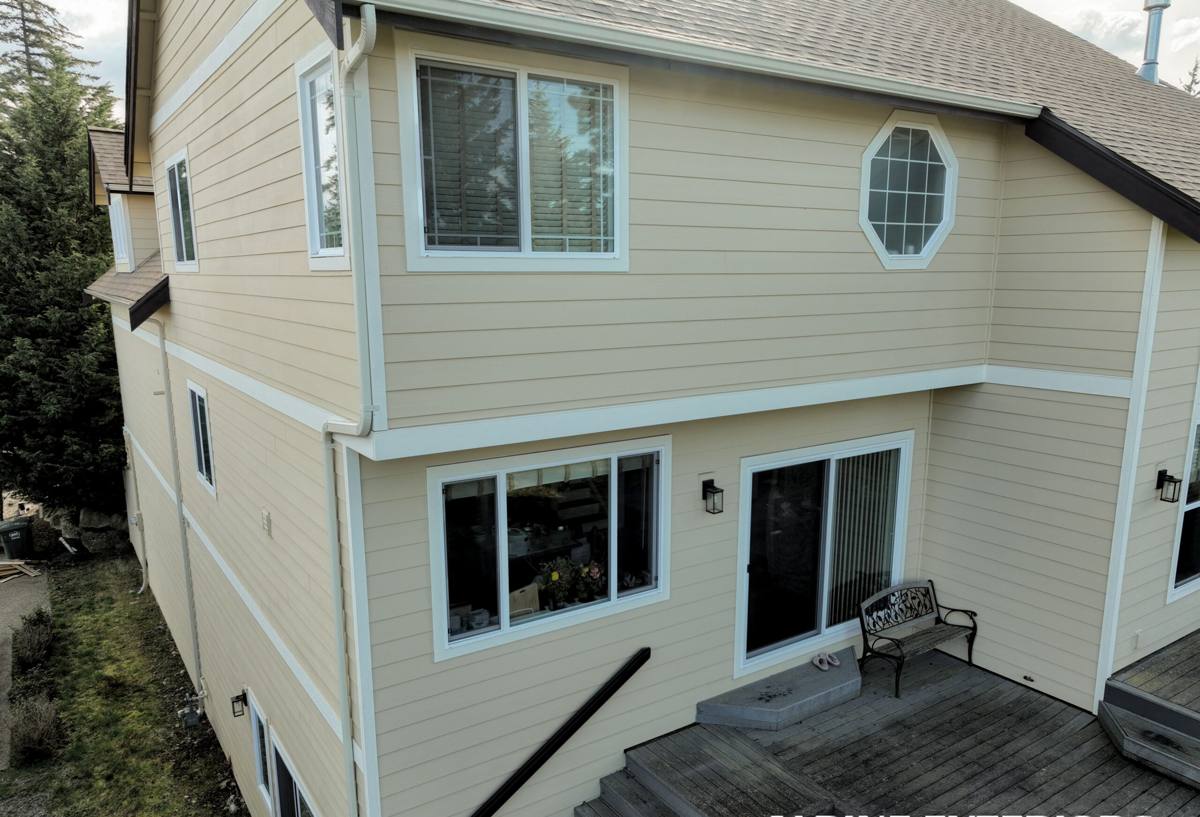
What "Correct" Siding Installation Actually Means Here
A lot of siding problems on the coast aren't material failures — they're installation failures. Even a high-quality product will underperform if it's hung the way it would be in a dry, calm climate instead of a wind-driven, salt-exposed one. On Longboat Key, correct installation means paying close attention to details that are easy to skip and hard to see once the job is finished:
- A properly detailed weather-resistive barrier behind the siding, with seams lapped and sealed to shed wind-driven rain rather than let it track behind the cladding
- Flashing at every window, door, and penetration, installed so water is directed out and away from the wall assembly, not just covered up
- Fastener type, length, and spacing matched to both the substrate and the wind pressures the wall will see — under-fastened siding is one of the most common causes of wind damage
- Correct clearances at the bottom of the wall, around trim, and at butt joints so the material can handle moisture and temperature movement without trapping water
- Caulking and sealant used only where the manufacturer specifies it — oversealing can trap moisture just as easily as underexposure can let it in
None of this is unusual in the trade. What's unusual is how often it gets rushed on coastal jobs where crews are used to inland conditions and don't adjust their approach for salt exposure and higher wind loads.
Why We Install Only James Hardie Fiber Cement Siding
We made a decision as a company to install James Hardie fiber cement siding exclusively — no vinyl, no LP SmartSide, no primed wood, no engineered wood alternatives. That's not a marketing position; it's a practical one, built around what actually holds up in a Gulf Coast barrier island environment.
Vinyl siding can soften, warp, or discolor under intense, sustained UV exposure, and its performance in high wind depends heavily on fastening and panel engineering that varies widely by product and installer. Wood-based and engineered wood siding products are organic materials at their core — even with treated substrates and factory coatings, they're more vulnerable to moisture intrusion, and a barrier island with constant humidity and salt air is an unforgiving place for anything that can absorb water and swell.
James Hardie fiber cement is cement, sand, and cellulose fiber — it doesn't absorb moisture the way wood-based products do, it doesn't soften or distort in heat and UV the way vinyl can, and it's non-combustible. Hardie also engineers specific product lines for different climate zones, with an HZ10 formulation built for hot, humid, high-moisture regions like ours. Combined with the factory-applied ColorPlus finish — which is baked on under controlled conditions rather than field-painted — you get a finish that's built to handle sun and salt exposure with far less touch-up over the years, backed by a strong transferable manufacturer warranty.
We're not going to tell you every other product is unusable — plenty of homes around the country wear vinyl or engineered wood siding without issue. But for what a Longboat Key home is exposed to, and for a company that wants to stand behind its installations for decades, Hardie is the material we're willing to put our name on.
How the Materials Compare
| Factor | Vinyl Siding | Engineered Wood (LP SmartSide) | James Hardie Fiber Cement |
|---|---|---|---|
| Moisture behavior | Doesn't absorb water, but seams and panels can allow water intrusion behind the wall | Wood-based core; treated but still vulnerable to swelling if moisture reaches the substrate | Cement-based; does not swell, rot, or absorb water like organic materials |
| UV / sun exposure | Can fade, chalk, or soften over time under intense, sustained sun | Factory finish holds up reasonably well; edges and cuts need proper sealing | ColorPlus factory finish engineered for UV resistance; holds color longer |
| Wind performance | Highly dependent on panel gauge and fastening; can be damaged in sustained high wind | Solid performance when properly fastened and flashed | Dense, heavy board resists wind pressure well when installed to spec |
| Combustibility | Combustible | Combustible (wood-based) | Non-combustible |
| Salt air / coastal durability | Moderate; can pit or discolor near the water | Moderate; coating maintenance matters more near salt air | Strong; formulated specifically for humid, coastal climates |
| Warranty structure | Varies widely by manufacturer and grade | Manufacturer-specific, typically limited | Long-term, transferable manufacturer warranty |
Our Installation Process, Start to Finish
Every siding job on Longboat Key starts with an honest look at the existing wall assembly, not just the visible siding. We check for hidden moisture damage, soft sheathing, and any areas where prior flashing or trim work was done incorrectly, since covering up an existing problem with new siding just hides it for another few years.
- Assessment and measurement — walking the exterior, checking existing conditions, and identifying any trim, window, or structural issues that need to be addressed before new siding goes on
- Removal and substrate check — stripping old siding where applicable and inspecting the sheathing and framing underneath for rot, moisture staining, or insect damage
- Weather barrier installation — installing and properly lapping a weather-resistive barrier suited to our humidity and wind-driven rain exposure
- Flashing and trim detailing — flashing every window, door, and penetration before siding goes up, not after
- Hardie board installation — installing to James Hardie's published fastening and clearance specifications, adjusted for wind exposure on the site
- Caulking, touch-up, and final inspection — sealing only where specified, then a walk-through so you understand what was done and why
We also coordinate the project timeline around weather. A barrier island job with open wall sections needs a real plan for what happens if a summer storm rolls in mid-project, and that planning happens before the first board comes off, not after.
Wind, Code, and Permitting Considerations
Manatee County's coastal areas, Longboat Key included, fall under building code requirements that are stricter than what you'll find further inland — wind load requirements, wind-borne debris considerations, and fastening schedules are all part of a properly permitted siding job here. This isn't paperwork for its own sake. It's the difference between siding that's rated to stay attached in a real coastal wind event and siding that was installed the way it would be in a calmer part of the state.
Part of doing this correctly is pulling the proper permits, following the fastening schedule the product and the code require for the site's wind exposure, and not treating those requirements as optional because "it's just siding." A contractor who's used to working in this specific coastal wind zone will already have this built into their process instead of treating it as an afterthought.
Living With Hardie Siding in a Salt-Air Environment
One advantage of choosing a material engineered for this climate is how little ongoing attention it needs compared to alternatives. That said, no siding on a barrier island is completely maintenance-free, and setting realistic expectations up front matters:
- Rinse the exterior periodically to clear accumulated salt residue and airborne debris, especially on Gulf-facing and bay-facing walls
- Keep an eye on caulking at trim joints and penetrations over the years — sealant is the one component that does wear out before the siding does
- Trim back vegetation and irrigation spray that keeps siding constantly damp in one spot
- Address any impact damage (from storm debris, lawn equipment, etc.) promptly rather than letting a small chip become a moisture entry point
Because the ColorPlus finish is factory-applied and engineered for UV and moisture exposure, you're not looking at the repaint cycle that field-painted wood or older siding systems typically need. That's a meaningful difference on an island where sun and salt exposure are constant, not occasional.
What to Look for in a Longboat Key Siding Contractor
Because Longboat Key is a barrier island — reached primarily by bridge, with a mix of Gulf-front, bay-front, and interior homes — logistics matter in a way they don't on a typical inland job. Material staging, site access, and scheduling around bridge traffic and seasonal patterns all factor into how smoothly a project runs. A crew that already works this area regularly has that figured out; a crew that doesn't is learning it on your project.
Before hiring anyone for siding work here, it's worth asking:
- Do they have direct experience installing on barrier island or coastal properties, not just siding experience in general?
- Are they a certified installer for the product they're proposing, and can they explain the manufacturer's fastening and clearance specs for our wind zone?
- Will they pull the required permits and follow the local wind-load fastening schedule, or is that left vague?
- What does their warranty actually cover — labor, materials, or both — and for how long?
- Can they walk you through their moisture-management details (flashing, weather barrier, clearances) before the job starts, not just after something goes wrong?
A contractor who can answer those questions specifically, rather than generally, is one who's actually built their process around this climate.
Why Hiring a Crew That Already Works Longboat Key Matters
Coastal siding work rewards experience with the specific conditions, not just experience with the material. A crew that regularly works Longboat Key and the surrounding Manatee County coastline already understands how wind exposure changes from a Gulf-front lot to an interior one, how salt air affects long-term material choices, and how to sequence a project around the weather patterns that actually show up here. That experience shows up in the details you can't see once the siding is up — the flashing behind the trim, the fastening schedule that was actually followed, the weather barrier that was lapped correctly instead of just stapled up quickly.
If you're planning a siding project on Longboat Key, we're glad to walk your property, look at what you're working with, and give you a straight answer about what it would take to do the job right. Reach out for a free, no-pressure estimate using the form below.