 Bradenton Window
 Southgate is one of Bradenton's older, established residential neighborhoods, with a housing stock that spans decades of Florida construction — mid-century block homes with wood or early composite siding accents, additions and remodels from the past twenty or thirty years, and everything in between. What all of it shares is exposure to the same demands: Manatee County's hurricane-force wind events, sun that doesn't let up for most of the year, wind-driven rain that gets pushed sideways into wall assemblies during storms, and salt-laden air moving inland off the Gulf and Tampa Bay. Siding in Southgate isn't decorative — it's the first line of defense on a house that gets tested constantly, and we approach every job here with that in mind.
What Southgate's Climate Actually Does to Siding
Hurricane-force winds don't just risk catastrophic damage in a named storm — they put repeated stress on every panel, seam, and fastener over years of lesser wind events, tropical storms, and routine gusty afternoons. Siding that isn't fastened and spaced correctly starts to work loose long before a hurricane ever makes landfall nearby. Year-round, intense UV is a slower but just as real problem: it breaks down cheaper paints and coatings, fades color, and makes brittle materials crack and check faster than homeowners expect. Wind-driven rain, especially during the wetter half of the year, tests every horizontal lap and every point where siding meets a window, door, or trim detail — if the water management behind the siding isn't right, moisture gets in and stays in, and Florida's humidity doesn't dry things out quickly once that happens. And salt air, even well inland from the immediate coastline, accelerates corrosion on fasteners and metal trim in a way that's constant rather than event-driven — it's working on a house every day, not just during storms.
On an older Southgate home, those four factors compound. Original siding, trim, and fasteners were often specified for a different era of building codes and a different set of product options than what's available today. A re-side project here isn't just about swapping old material for new — it's a chance to correct water management and fastening details that may have never been right in the first place.
Where Siding Failures Actually Start
It's rarely the field of the siding that fails first. It's the transitions — where siding meets a window or door frame, where a horizontal joint wasn't lapped correctly, where fasteners were driven too tight or too loose for the material's expansion behavior, or where the bottom starter course sits too close to grade and wicks moisture. Those are the details that decide whether a siding job is still tight and weathertight after a few hurricane seasons, or starting to show gaps, staining, and soft spots within a few years.
Why We Install Only James Hardie Fiber Cement
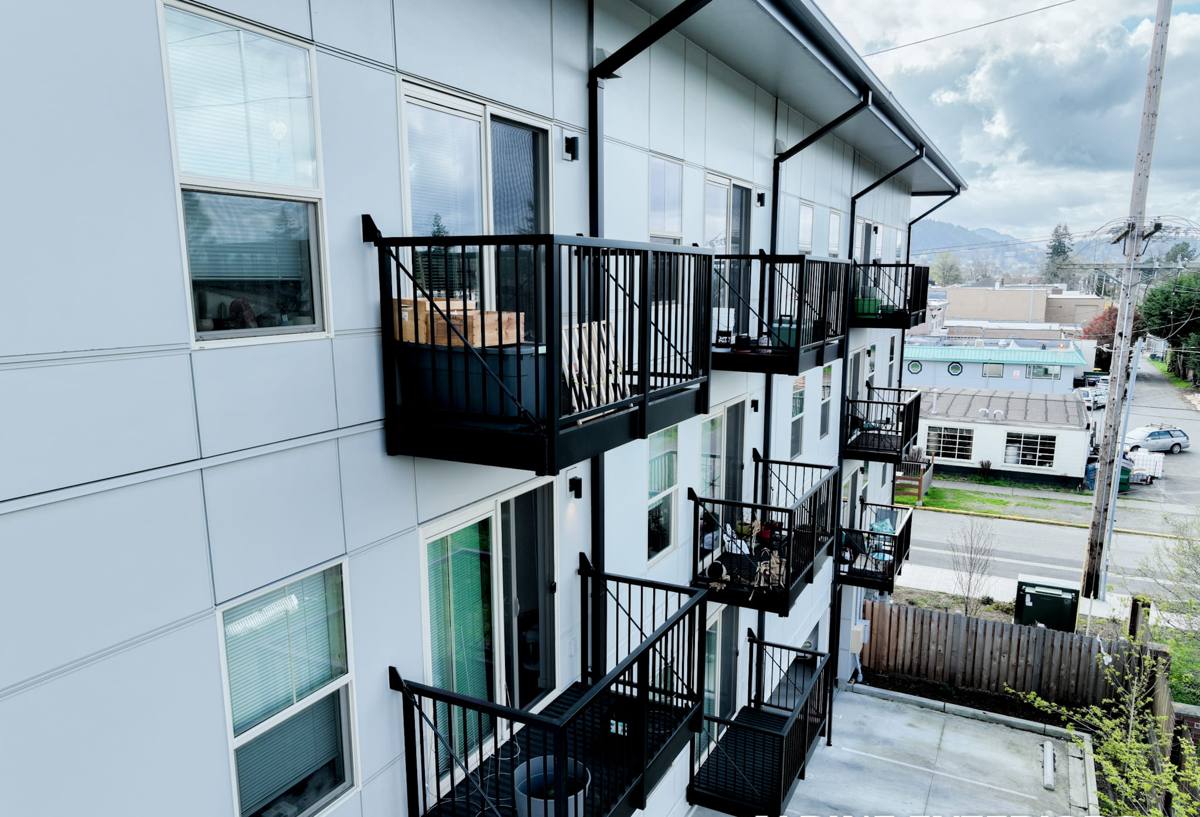
We don't install vinyl, LP SmartSide, Cemplank, Allura, primed spruce, or cedar. That's a deliberate standard we hold on every job, including here in Southgate, not a limitation on what we're capable of installing. Vinyl can distort and become brittle under sustained Florida UV and doesn't offer meaningful wind resistance compared to fiber cement. Engineered wood and primed wood products depend on maintaining a coating or paint film that constant sun and humidity work against year after year, and any breach in that film invites moisture into a wood-based substrate. Other fiber cement brands may perform reasonably, but we've standardized on one manufacturer so we can be precise about installation specs, warranty terms, and long-term performance rather than juggling different requirements across products.
James Hardie fiber cement is non-combustible, doesn't swell or rot the way wood-based siding can, and holds its shape and fastening integrity through Florida's heat and humidity swings far better than the alternatives. Hardie's ColorPlus factory finish is baked on under controlled conditions and backed by its own finish warranty, which matters directly in a climate where UV fading and coating failure are constant threats to anything field-painted. Hardie also engineers its HZ5 product line specifically for hot, humid climates like ours — that's not marketing language, it's a real difference in how the product is formulated and rated compared to the HZ10 line built for colder, drier regions. Combined with a strong transferable warranty, it's the product we're willing to put our name behind on a Southgate home.
What a Correct Fiber Cement Siding Job Involves
Tear-Off and Substrate Inspection
Removing the old siding is also the point where hidden problems get found — rotted sheathing, prior water intrusion, or fastening into framing that's no longer sound. On an older Southgate home, this step often turns up substrate conditions that need correcting before new siding goes on. We address that as part of the plan, not as a change order sprung on you mid-job.
Moisture Barrier and Flashing
A weather-resistive barrier goes on correctly lapped, shingle-style, so water sheds outward rather than working its way in. Every window, door, and penetration gets flashed to direct water past the opening, not into it. This is the layer that does the real waterproofing work — the siding itself is the visible finish, but the barrier and flashing behind it are what actually keep wind-driven rain out of the wall.
Fastening and Clearances
Hardie's installation specs call for specific fastener types, spacing, and embedment, along with minimum clearances from grade, roof lines, and other surfaces. In a hurricane-wind environment, fastening pattern isn't a detail to shortcut — it's a big part of what keeps siding attached through a wind event instead of peeling off. We follow manufacturer spec here, not a generalized "close enough" approach.
Joints, Caulking, and Finish
Butt joints, corners, and trim transitions get detailed so they shed water rather than trap it, using sealants rated for sustained UV and movement. Where ColorPlus prefinished panels are used, factory-finished edges get treated with matching touch-up product rather than field paint, preserving the finish warranty rather than voiding it.
Signs Southgate Homeowners Should Watch For
Older siding doesn't always fail obviously. On homes we look at in this neighborhood, the early warning signs tend to repeat: soft or spongy spots when pressed near the bottom courses, visible gaps opening up at seams and corners, paint that's chalking or peeling faster than it used to, staining that suggests water is tracking behind the siding rather than running off it, and fastener heads that are rusting or backing out. Any one of those is worth a look before it becomes a larger repair.
- Soft, spongy, or bowed sections, especially near the bottom of walls or below windows
- Visible gaps, cracking, or separation at seams and corners
- Paint or finish that's chalking, peeling, or fading unevenly
- Staining or dark streaking that suggests water tracking behind the material
- Fasteners that are rusting, popping, or backing out
- Soft trim or window casings adjacent to the siding
Our Process, Start to Finish
- On-site assessment — we walk the exterior, check for hidden moisture and substrate issues, and evaluate wind exposure for your specific lot and elevation
- Honest recommendation — full re-side, targeted repair, or a phased approach, explained plainly along with the reasoning
- Material selection — profile, plank width, and ColorPlus color chosen to fit the home and the neighborhood
- Tear-off and substrate correction — old material removed, any rot or framing issues addressed before new siding goes on
- Weather barrier and flashing installation — the moisture-management layer built correctly around every opening and penetration
- Siding installation — fastened and spaced to Hardie's HZ5 specifications for this climate and wind exposure
- Finish and walkthrough — joints and trim detailed, touch-up completed, and a final walkthrough before we call the job done
Cost Factors for Southgate Siding Projects
| Factor | What Changes the Price |
|---|---|
| Substrate condition | Rot, prior water damage, or out-of-plumb framing found during tear-off adds repair work before new siding can go on |
| Home size and complexity | Cut lines, dormers, and multiple gable ends take more labor and material than a simple rectangular footprint |
| Siding profile and plank width | Standard lap profiles are generally more economical than board-and-batten or shake-style panels |
| Trim scope | Full trim replacement alongside the siding costs more upfront but avoids mismatched old trim against new material |
| Access and site conditions | Tight lot lines, mature landscaping, or multi-story sections can add labor time |
Why Hiring a Crew That Already Works Southgate Matters
Manufacturer installation instructions are written for average conditions, and a hurricane-prone, salt-air, high-UV climate like Bradenton's rarely qualifies as average. A crew that doesn't work this area regularly can install fiber cement siding that looks right on day one and still get the details wrong that matter five or ten years out — fastener spacing that's technically within spec but not tight enough for repeated wind loading, flashing laps that are correct on paper but not sequenced for wind-driven rain, or caulking choices that aren't built for constant sun exposure. Those are judgment calls made on the job, informed by having seen how a particular wall type or exposure performs here over time, not decisions a spec sheet makes for you.
We work in Southgate and the surrounding Bradenton area regularly, so we're not guessing at how this neighborhood's mix of older and newer construction tends to hold up. That familiarity shows up in the small decisions — the ones that determine whether your siding is still tight, straight, and holding its color after a few hurricane seasons, or starting to show problems well before it should.
Ready for a Straight Answer on Your Siding
If you're noticing early signs of trouble on your current siding, planning ahead of the next storm season, or just want an honest read on what your Southgate home actually needs, it's worth having someone look at the real condition of the walls before you start comparing quotes. We offer free, no-pressure estimates for fiber cement siding projects in Southgate and throughout the Bradenton area — use the form below to get a time on the schedule.