 Bradenton Window
 Bradenton Beach sits right on the Gulf, and that location is exactly what makes window replacement here a different job than it is a few miles inland in Manatee County. Homes on or near the beach take a steady beating from salt-laden air, near-constant UV exposure, wind-driven rain, and the real possibility of hurricane-force wind loads during the season. Windows that would hold up fine in a shaded inland neighborhood can fail years early out here if they weren't built, or installed, with that exposure in mind.
This page covers what Bradenton Beach homes specifically need from a window replacement, what a correct installation actually involves in this environment, how our process works from first visit to final walkthrough, and why hiring a crew that already works this stretch of coastline matters more than it would for a typical inland job.
Why Bradenton Beach Is a Different Job
Distance from the water changes almost everything about how a window performs over time. Salt air corrodes hardware, fasteners, and lower-grade frame components faster than a drier inland setting ever would. Storms push rain sideways into wall assemblies and window openings instead of letting gravity handle it, so any gap in the flashing or sealant gets tested repeatedly, not occasionally. And UV exposure here runs close to year-round, which breaks down cheaper vinyl compounds, seal materials, and low-end coatings faster than manufacturer literature written for a national average climate would suggest.
None of that means Bradenton Beach homes need exotic products. It means the product selection, the installation sequence, and the flashing details all have to account for a harsher-than-average environment, rather than defaulting to whatever's standard practice inland.
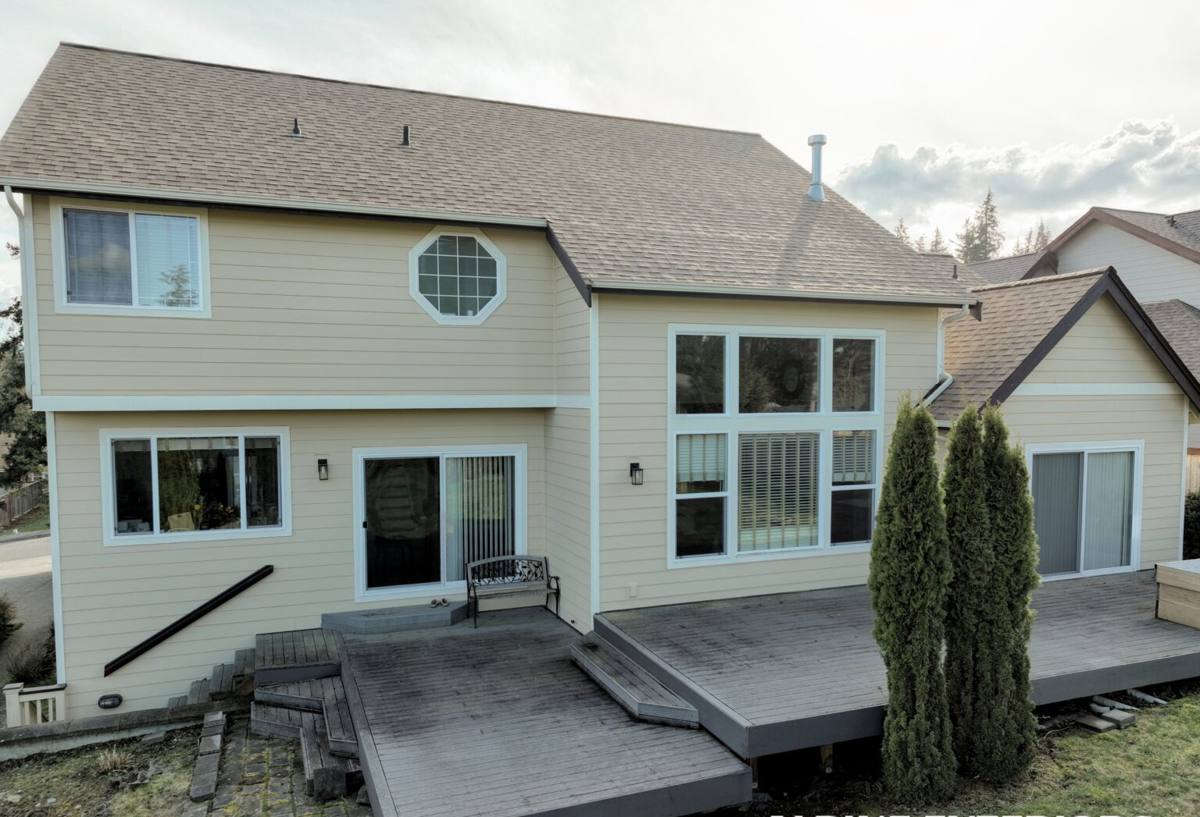
What Barrier Island and Near-Coastal Homes Actually Need
Wind Resistance
Manatee County enforces Florida's high-velocity wind zone requirements, and homes on or near Bradenton Beach are squarely in that category. Replacement windows here need documented wind-load ratings appropriate to the site's exposure, not just whatever's cheapest to source. This isn't optional paperwork — it's what determines whether a window stays intact and sealed during a tropical storm or hurricane, and it's what a permit reviewer will be checking.
Impact Protection
Depending on the property and its wind zone, code may call for impact-rated glass or an approved shutter system as the compliance path. Impact-rated windows also carry a practical benefit beyond code: laminated glass holds together under wind-borne debris impact instead of shattering inward, which matters for a home that takes direct exposure off the Gulf.
Corrosion and Salt Resistance
Hardware — hinges, locks, cranks, and fasteners — is often the first thing to fail on a coastal window, well before the glass or frame shows any problem. We look for corrosion-resistant hardware and fastener specifications suited to direct salt exposure, not generic interior-grade components dressed up for an exterior application.
UV Stability
Frame material and glass coating both matter here. Lower-grade vinyl can discolor, warp, or become brittle under sustained UV exposure faster than higher-grade compounds. We'll talk through which frame materials and glass packages hold up honestly to Bradenton Beach's sun exposure rather than defaulting to whatever's fastest to install.
Signs Your Windows Are Losing the Fight
- Fogging or moisture between panes on double- or triple-glazed units, a sign the seal has failed
- Hardware that's stiff, corroded, or won't lock cleanly anymore
- Visible daylight, drafts, or whistling around the frame during windy conditions
- Chalky, faded, or warped vinyl or frame material on the sun-facing side of the house
- Water staining on interior sills or the wall below a window after storms
- Noticeably higher cooling bills without another clear explanation
- Frames that no longer carry a visible wind-load or impact rating label, common on older coastal homes
What a Correct Installation Involves
Assessment and Product Selection
We start with an honest look at the specific opening, its orientation, and its exposure. A window facing the Gulf directly needs a different spec than one on a more sheltered side of the same house. We'll walk through wind-load rating, impact protection, and frame material options for that specific opening rather than quoting one standard package for the whole house.
Removal Without Collateral Damage
Old windows come out carefully, with attention to what condition the surrounding framing and wall assembly are in. On older Bradenton Beach homes, this step is often where we find out whether prior water intrusion has already damaged framing that needs repair before a new window goes in — better to catch that now than after the new unit is sealed in place.
Flashing and Weatherproofing
This is the step that decides whether a window actually performs in wind-driven rain. Every opening gets flashed in a sequence that sheds water outward and downward, lapped correctly so water can't work its way behind the flashing course above it. Sealant is a backup to good flashing, not a substitute for it — a caulk-only installation is one of the more common shortcuts we see fail early on exposed coastal homes.
Setting and Fastening to Wind Load
The new window gets shimmed, squared, and fastened to the schedule its wind-load rating actually requires, not a generic pattern. Under-fastening is invisible on install day and shows up as a failure during the next serious storm.
Final Seal and Walkthrough
Interior and exterior finish work gets sealed and trimmed out, and we walk the job with you so you know how the specific product you chose performs and what little maintenance it actually needs.
Our Process, Start to Finish
- On-site assessment — we look at each opening's exposure, condition, and any signs of existing water intrusion or frame damage
- Honest recommendation — wind-load rating, impact protection, and frame material matched to that specific opening and its orientation
- Permitting — Manatee County and City of Bradenton Beach permitting handled as part of the job, not left to the homeowner to sort out
- Removal and prep — old units come out carefully, with any hidden framing or water damage addressed before the new window goes in
- Installation and flashing — set, shimmed, fastened to wind-load spec, and flashed in a sequence built for direct coastal exposure
- Final seal and walkthrough — finish work completed and reviewed with you so you know what to expect going forward
Frame Material Trade-Offs for This Exposure
| Frame Material | How It Handles Salt Air & UV | Maintenance |
|---|---|---|
| Vinyl (standard grade) | Can discolor or become brittle faster under sustained coastal sun | Low, but shorter realistic service life in direct exposure |
| Vinyl (impact/coastal grade) | Formulated for higher UV and salt resistance | Low |
| Aluminum | Strong and wind-load capable, but prone to corrosion without a marine-grade finish | Moderate — finish and hardware need monitoring |
| Fiberglass | Holds dimensional stability and color well under sun and salt exposure | Low |
| Wood or wood-clad | Vulnerable to moisture and salt without diligent upkeep | High — regular maintenance is non-negotiable this close to the Gulf |
We'll walk through the honest trade-offs for your specific home rather than defaulting to whatever's fastest to install. In general, we lead with impact-rated vinyl or fiberglass on direct Gulf-facing openings, since both hold up to sustained salt and UV exposure with less ongoing upkeep than aluminum or wood. That said, the right call depends on your budget, the specific opening, and how much maintenance you're realistically willing to keep up with.
What Actually Drives Cost Here
We won't quote a number without seeing the openings in person, but a few factors consistently move price on Bradenton Beach window jobs: the wind-load and impact rating required for the specific opening and its exposure, frame material, glass package, how many openings are being replaced together, the condition of the existing framing and any hidden repair work it needs, and whether the opening is standard size or requires a custom unit. A single Gulf-facing impact window will generally cost more than the same size window on a sheltered inland lot, because the product itself has to meet a higher spec.
Why a Local Bradenton Beach Crew Matters
Manufacturer installation guidance is written for average conditions, and Bradenton Beach doesn't have average conditions. A crew that already works this stretch of coastline knows which parts of that guidance are non-negotiable here and where extra time on flashing, fastening, or sealant is worth it even when it technically isn't required elsewhere in the county. That experience shows up in decisions that don't come up in a sales pitch — how much flashing lap a Gulf-facing opening actually needs, when a sill deserves a sloped detail instead of relying on caulk, how to sequence a job around a barrier island's permitting and inspection timeline.
Those are the details that decide whether a window replacement is still performing cleanly through the next several hurricane seasons, or showing leaks and soft trim within a couple of years.
What to Ask Before Hiring for Coastal Window Work
- Ask for the documented wind-load and impact rating on the specific product being proposed, not a general claim
- Confirm current Florida contractor licensing and insurance
- Ask how they handle Manatee County and City of Bradenton Beach permitting
- Ask specifically how they flash a Gulf-facing opening, not just their general installation process
- Get a written scope of work before signing anything
- Ask how labor and the window unit are each covered under warranty
If you're weighing window replacement for a Bradenton Beach home, it's worth having someone look at the actual openings and their exposure before you start pricing products. We offer free, no-pressure estimates for window replacement in Bradenton Beach and the surrounding area — use the form below to get a time on the schedule.