 Bradenton Window
 Building Decks for Cortez's Waterfront Climate
Cortez sits right on the water along Sarasota Bay, and that location shapes almost every decision that goes into a deck built here. A deck design that works fine a few miles inland in Bradenton can fail early in Cortez because the exposure is simply harsher — more salt in the air, more direct sun off the open water, and more wind-driven rain during storm season. Manatee County as a whole deals with hurricane-force wind events, intense year-round UV, and humidity that never really lets up, but waterfront communities like Cortez get an extra dose of all three.
A custom deck built for this area needs to be treated less like an outdoor furniture project and more like an exterior structural addition to the home. That means the fasteners, the framing protection, the decking material, and the railing hardware all have to be chosen with corrosion and moisture cycling in mind from day one — not upgraded later after something starts rusting or rotting.
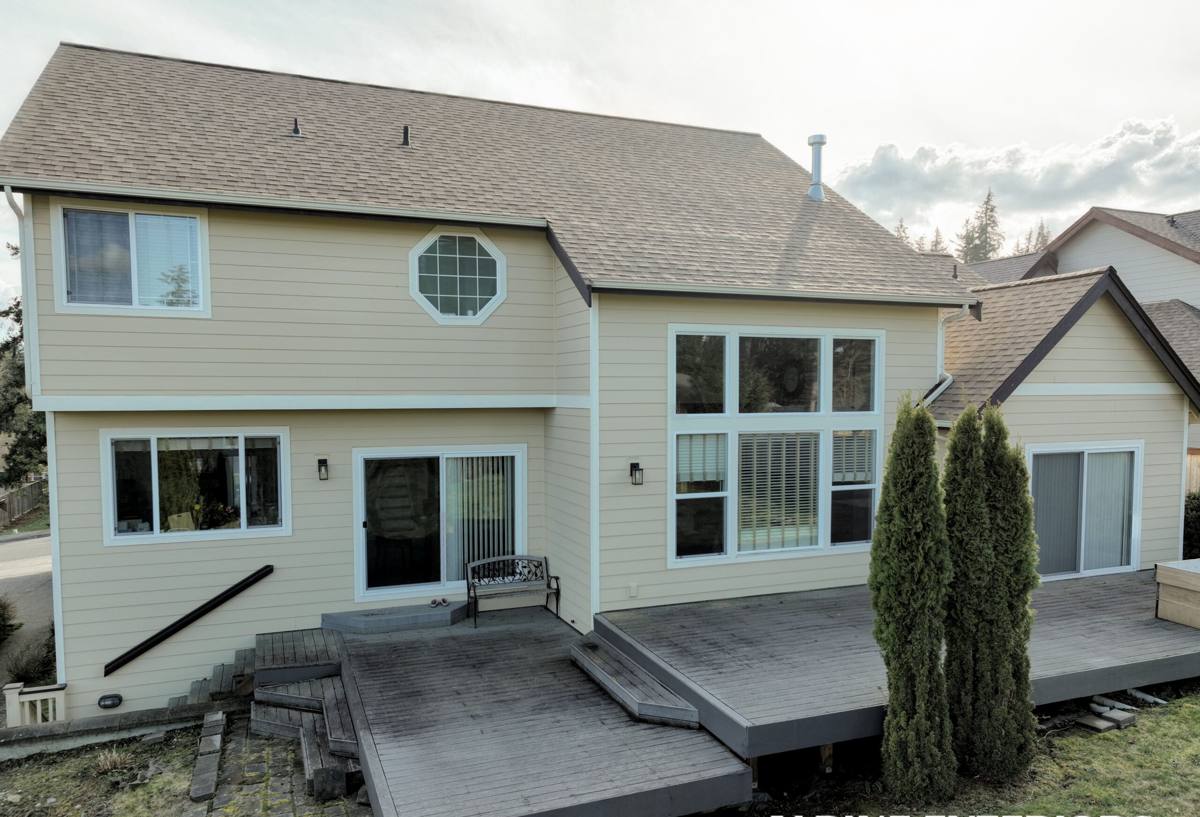
What Makes Cortez Different from a Typical Backyard Deck
Cortez is a working waterfront village, and a lot of the homes here reflect that history — many sit elevated on pilings or raised foundations because of flood zone requirements, with decks and stairs designed around that elevation rather than sitting flush with grade. That changes the engineering conversation. A deck attached to an elevated home has to tie into raised framing correctly, account for stair runs and landings, and handle wind loads that are higher than a ground-level patio deck would see.
The salt air off the bay is also a bigger factor here than it would be on a similar home set back from the water. Salt spray accelerates corrosion on metal fasteners, hinges, and railing hardware, and it speeds up the breakdown of finishes on wood. A deck built with standard interior-grade hardware or an off-the-shelf fastener package will show rust and staining far sooner in Cortez than the same materials would inland.
Common Starting Points We See
- A deck attached to an elevated or stilt-style home that needs stairs, landings, or a second level
- An aging deck with visibly corroded fasteners, soft or discolored boards, or a railing that's become loose
- A bare concrete slab or ground-level patio the owner wants converted into a proper elevated deck with shade and seating
- New construction or a major addition where the deck is being designed alongside the home
Choosing the Right Decking Material for Salt Air and Sun
Material choice matters more here than almost anywhere else in the county, because the combination of UV exposure and salt air is genuinely tough on surfaces. There isn't one "correct" material for every project — it's a real trade-off between upfront cost, long-term maintenance, and how the deck will look after a few Florida summers.
| Material | Salt/Moisture Behavior | Maintenance | Typical Lifespan |
|---|---|---|---|
| Pressure-treated pine | Resists rot when sealed regularly; fasteners must be corrosion-rated | Needs re-sealing/staining every 1-2 years in this climate | 10-15 years with upkeep |
| Composite decking | Doesn't absorb moisture or rot; color can fade with intense UV over time | Occasional washing; no sealing or staining | 20-25+ years |
| PVC/capped polymer decking | Fully moisture-proof, best resistance to salt and humidity | Lowest maintenance of the common options | 25+ years |
| Tropical hardwood (e.g. ipe) | Naturally dense and rot-resistant, but still needs oiling to hold color | Regular oiling to prevent graying and surface checking | 20-30 years with upkeep |
For a lot of Cortez homeowners, composite or PVC decking ends up being the more practical long-term choice simply because it removes the recurring maintenance burden that comes with wood in a salt-air environment. That said, some owners specifically want the look and feel of real wood, and that's a legitimate choice too — it just means committing to a more disciplined maintenance schedule to protect the investment.
Railing and Hardware Deserve the Same Attention
It's common for a deck's boards to hold up fine while the railing hardware and fasteners fail first, because metal corrodes faster than the decking material itself in salt air. We spec stainless steel or otherwise corrosion-rated fasteners and hardware as standard on Cortez projects rather than treating it as an upgrade, because standard galvanized hardware often isn't enough this close to the water.
The Structural Details That Matter Most Near the Water
The visible surface of a deck is only part of the job. The framing and connection details underneath are what determine whether a deck lasts fifteen years or thirty, and they're also what's hardest to fix later without tearing the deck apart.
Ledger Attachment and Flashing
Where a deck attaches to the house — the ledger board — is one of the most common failure points on any deck, and it's an even bigger concern in a wind-driven rain environment. Proper flashing keeps water from getting behind the ledger and into the home's wall framing. We flash every ledger connection correctly rather than relying on caulk alone, which tends to fail well before the rest of the structure does.
Joist Protection
Covering the tops of pressure-treated joists and beams with a self-adhering flashing tape before decking goes down keeps rainwater from pooling in fastener holes and wicking into the wood grain. It's a small step that meaningfully extends the life of the frame, especially given how much wind-driven rain this area sees during storm season.
Footings, Piers, and Elevated Framing
For decks attached to elevated or stilt-style homes, the substructure has to be engineered for real wind and, where applicable, flood loads — not just built to hold up the weight of furniture and people. Footing depth, pier spacing, and the connection hardware between posts, beams, and joists all need to account for uplift in a hurricane-force wind event, not just gravity loads.
Fasteners and Metal Connectors
Every metal connector — joist hangers, post bases, structural screws — should be rated for coastal or salt-exposure use. This is one of the areas where cutting corners doesn't show up right away; it shows up years later as rust stains, weakened connections, or a railing post that's gone soft at the base.
Permitting and Code in Manatee County
Deck construction in Manatee County requires a permit, and for waterfront or elevated properties in areas like Cortez, that process often involves additional review tied to flood zone requirements. We handle the permitting process as part of the job rather than leaving it to the homeowner, including the structural details an inspector will actually check.
Common Code Points on a Cortez Deck
- Guardrails required on any deck surface roughly 30 inches or more above grade, built to a minimum 42-inch height
- Baluster spacing that doesn't allow a 4-inch sphere to pass through, for child safety
- Stair rise and run within code tolerances, with handrails required on longer stair runs
- Proper footing depth and structural connections sized for local wind load requirements
- Flood zone or elevation considerations for decks attached to raised or waterfront structures
Skipping the permit might save time upfront, but it creates real problems later — unpermitted structures can complicate a home sale, cause issues with insurance claims after storm damage, and in some cases require costly rework to bring up to code retroactively.
Our Process from First Call to Finished Deck
Every deck starts with a real conversation about how the space will be used, not a generic template. From there, the process is straightforward:
- Site visit and assessment — we look at the home's elevation, existing structure (if replacing a deck), sun exposure, and how close the site is to salt water or spray.
- Design and material selection — we walk through decking material, railing style, and layout options based on your budget, maintenance preference, and how the space will function.
- Permitting — we prepare and submit the permit package to Manatee County, including any documentation required for the property's flood zone status.
- Construction — proper flashing, corrosion-rated fasteners, and code-compliant framing and railings are built in as standard practice, not optional add-ons.
- Final inspection and walkthrough — we pass the required county inspections and walk the finished deck with you before calling the job complete.
Maintaining a Deck in a Salt-Air Environment
Even a well-built deck needs some ongoing attention in a coastal environment — the goal of good construction is to reduce that maintenance burden, not eliminate it entirely.
- Rinse salt residue and debris off the deck surface and railings periodically, especially after storms
- Check fasteners and railing connections once or twice a year for early signs of corrosion or loosening
- Re-seal or re-stain wood decking on the schedule appropriate to the product — don't wait until it's visibly gray or cracking
- Keep gutters and downspouts clear so runoff doesn't dump extra water directly onto or under the deck
- Trim back vegetation that traps moisture against the deck structure or railings
Why Hiring a Crew That Already Works in Cortez Matters
A lot of what separates a deck that holds up in Cortez from one that doesn't isn't visible on the day it's finished — it's in the fastener spec, the flashing detail, and the footing design that only shows its value five or ten years down the road. A crew that regularly works this specific stretch of Manatee County's waterfront already knows which hardware standards to build in as default, how the local permitting process handles elevated and flood-zone properties, and what this particular coastline's combination of sun, salt, and storm wind actually does to a structure over time. That local familiarity means fewer surprises during permitting and a deck that's built to the conditions it will actually face, not a generic spec sheet.
If you're planning a new deck or need to replace one that's showing its age, we're happy to take a look and put together a straightforward, no-pressure estimate. Use the form below to get started.