 Bradenton Window
 What Ellenton's Exterior Walls Are Actually Up Against
Ellenton sits in Manatee County, part of the Bradenton and greater Tampa Bay area, and homes here take on a specific combination of exterior stress that a lot of siding products simply weren't engineered to handle. It isn't one dramatic factor, it's four ordinary ones stacking up year after year: hurricane-force wind loads during storm season, intense UV exposure nearly every month of the year, wind-driven rain that gets pushed sideways into joints and trim, and salt-laden air drifting inland off the Gulf and Tampa Bay. None of these alone is unusual for Florida. Together, over a decade or two, they're a tougher test on a wall assembly than most siding marketing copy is written for.
Hurricane-Force Wind Loads
Manatee County sits within Florida's wind-borne debris region, and the Florida Building Code's wind-load and fastening requirements for this part of the state reflect that. Siding here has to stay attached and intact through sustained high winds and wind-driven debris impact, not just look good on a calm day. Fastening pattern, panel engineering, and manufacturer wind ratings matter more here than in most parts of the country.
Intense, Year-Round UV
Florida's sun angle and number of clear days per year put a lot more UV load on an exterior finish than a siding product designed for a milder climate is built to shed. Coatings that aren't engineered for it chalk, fade, and lose adhesion faster, and that shows up as a house that looks tired years before the underlying material has actually failed.
Wind-Driven Rain and Humidity
Rain that arrives sideways during a Gulf storm finds its way into lap joints, trim seams, and any spot where flashing or caulk isn't detailed correctly. Combine that with Manatee County's year-round humidity and afternoon storm pattern, and any gap in the water management behind the siding stays wet longer than it would in a drier climate, which is exactly the condition that leads to hidden rot behind the wrong material.
Salt Air Off the Gulf and Tampa Bay
Ellenton isn't beachfront, but it's close enough to open water that salt-laden air is a routine part of the exposure for most properties in the area, not just homes directly on the coast. Salt accelerates the breakdown of factory finishes and corrodes fasteners and trim hardware faster than inland exposure would, and that's a gap that tends to show up slowly, as a coating failure years before it should happen rather than an obvious day-one problem.
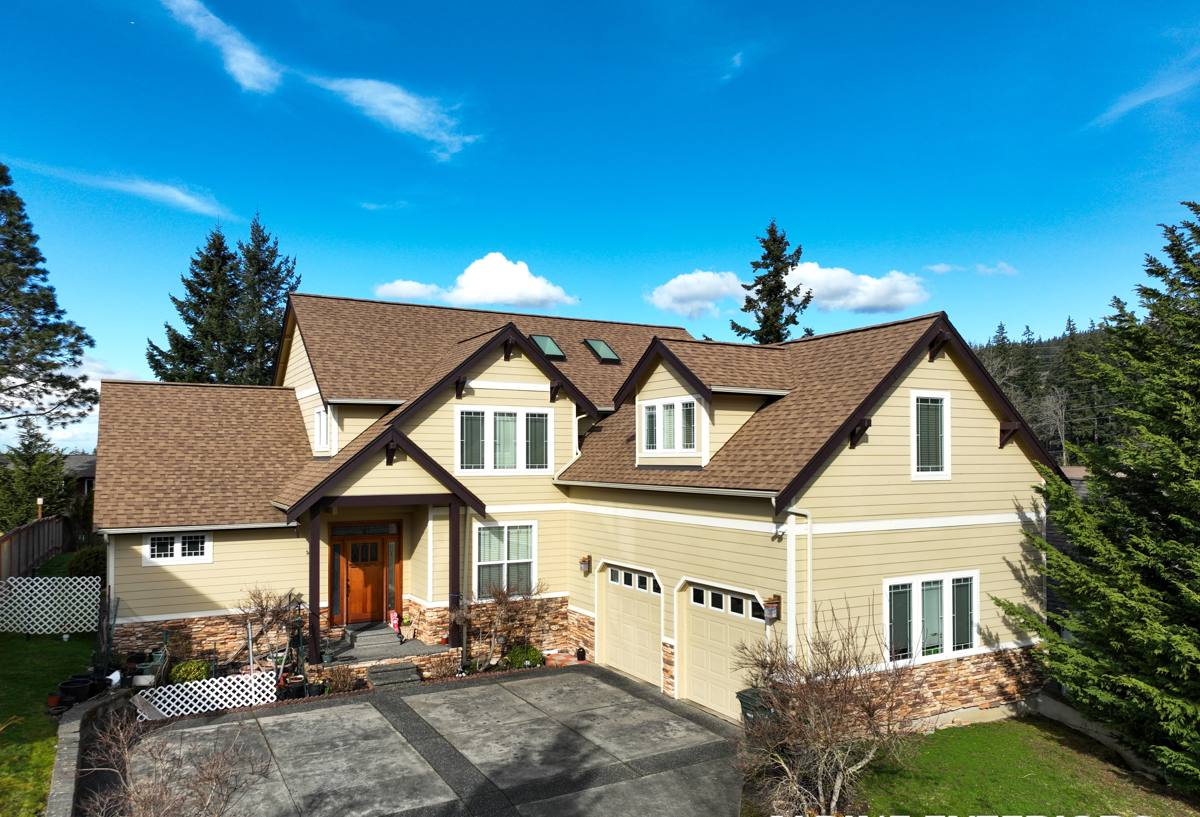
Why Fiber Cement Is the Right Material Here
Fiber cement is a blend of Portland cement, sand, and cellulose fiber, cured into rigid boards and panels. It's an inorganic material, which means it doesn't have a wood-based or foam core that can absorb water and swell, rot, or feed pests the way organic siding materials can. It's also non-combustible, and it holds a factory-applied finish differently than wood or vinyl because it doesn't expand and contract with heat and humidity the way those materials do. For a climate that combines heat, humidity, salt air, and storm wind in one package, that combination of properties is a better match than most alternatives on the market.
That doesn't mean any fiber cement product performs identically. The specific manufacturer, the product line engineered for this climate zone, and the quality of the installation all determine whether a fiber cement job actually delivers the twenty-plus-year performance the material is capable of.
Why We Install Only James Hardie
We install James Hardie fiber cement exclusively. We don't offer vinyl, LP SmartSide, Cemplank, Allura, primed spruce, or cedar, and that's a deliberate standard, not a supply limitation. James Hardie engineers its HardieZone products by climate, backs its ColorPlus factory finish with its own separate warranty, and has the deepest certified installer network and regional track record of any fiber cement manufacturer we've worked with. Standardizing on one product line means every job we do, we can stand behind fully, because we know exactly how that specific system is supposed to perform and be installed.
HZ10: The Line Engineered for This Region
James Hardie builds its siding for different climate zones under its HardieZone system, and the HZ10 line is engineered specifically for hot, humid, high-UV regions like the Gulf Coast of Florida. That's the product line we use on Ellenton homes. It's not the same board that gets installed in a dry inland climate or a freeze-thaw region up north, and using the correct zone-specific line is one of the concrete reasons the manufacturer, not just the material category, matters.
The Product Lines We Use in Ellenton
HardiePlank Lap Siding
Lap siding is the most common choice for Ellenton homes, available in several textures and exposure widths, and it's the workhorse of most re-sides and new builds we do in this area. It carries the same HZ10 climate engineering and ColorPlus finish options as the rest of the Hardie lineup.
HardiePanel Vertical Siding
Vertical panel siding shows up on accent walls, gable ends, and some full-home applications where the homeowner wants a different look than traditional lap. It's installed with different joint and flashing detailing than lap siding, which is one of the reasons installation experience with the specific product matters as much as experience with the brand generally.
Trim, Soffit, and Accessories
A siding job is only as good as its weakest detail, and trim boards, fascia, and soffit are usually where water intrusion problems start if they're not matched and installed correctly. We use Hardie trim products alongside the field siding so the whole exterior system is engineered to work together rather than mixing a Hardie wall with mismatched trim.
What a Correct Installation Involves Here
Fiber cement's real-world performance depends heavily on installation quality. A rushed or out-of-spec install can undercut even the best-engineered product, and in a climate with this much wind and rain exposure, the margin for error is smaller than in milder parts of the country.
| Installation Detail | Why It Matters in Ellenton |
|---|---|
| Manufacturer-specified clearances from grade, roofline, and decking | Keeps splash-back and standing water off the board edge during heavy Gulf storms |
| Correct fastener type, spacing, and embedment depth | Meets Florida Building Code wind-load requirements and keeps panels attached in hurricane-force gusts |
| Proper flashing at windows, doors, and penetrations | Stops wind-driven rain from tracking behind the siding into the wall assembly |
| Correct joint and seam treatment per manufacturer spec | Prevents the small gaps where sideways rain and humidity find their way in |
| Factory-primed or ColorPlus finished boards, field touch-up done correctly | Protects against year-round UV fade and salt-air finish breakdown |
Fastening for Wind Resistance
Fastener pattern and placement aren't cosmetic details on a coastal Florida job, they're what keeps the siding attached during a wind event. We follow James Hardie's published fastening schedules for this wind zone rather than a generic pattern, and that spec varies by product line and wall height.
Flashing and Water Management
Every window, door, and penetration is a potential entry point for wind-driven rain. Correct flashing integration behind the siding, not just caulk on the surface, is what actually keeps water out over the life of the job.
Our Process for an Ellenton Siding Project
- On-site inspection of the current exterior, including sheathing condition, existing water damage, and window and door flashing.
- Measurement and a walk-through of product line, board profile, and color options suited to the home and this climate zone.
- A written estimate that spells out material, labor, and any sheathing repair contingencies before work starts.
- Permitting handled for the scope of work, since re-siding in Manatee County typically requires a permit.
- Removal of old siding, inspection and repair of the underlying wall assembly, and installation of a proper water-resistive barrier.
- Installation of James Hardie siding, trim, and accessories to manufacturer spec and local wind-load fastening requirements.
- Final walk-through with the homeowner before we consider the job complete.
Cost Factors for Fiber Cement Siding in Ellenton
Every home is different, and we don't publish blanket per-square-foot pricing because it depends on too many site-specific variables. These are the factors that actually move the number on an estimate:
| Factor | How It Affects the Estimate |
|---|---|
| Home size and wall complexity | More corners, gables, and cutouts mean more labor and trim work |
| Condition of existing sheathing | Hidden rot or water damage found during tear-off adds repair scope |
| Board profile and finish selection | Textures, exposure widths, and ColorPlus color options vary in cost |
| Trim and accessory scope | Full trim package replacement costs more than reusing sound existing trim |
| Access and site conditions | Tight lots, multi-story sections, or landscaping obstacles add labor time |
Why Local Experience in Manatee County Matters
A crew that already works in Ellenton and the Bradenton area knows the region's permitting process, is used to the Florida Building Code's wind and fastening requirements for this zone, and has a working sense of how different lots here are exposed to sun, storm direction, and salt air. That's not a small thing on a material where installation quality determines most of its real-world performance. A contractor who's installed Hardie siding across Manatee County has already worked through the details that go wrong on generic, out-of-region installations, from fastener corrosion in salt exposure to flashing details that hold up against wind-driven rain during storm season.
It also matters for timing. Florida's hurricane season runs through the back half of the year, and scheduling a re-side around that window, along with the summer's near-daily afternoon storm pattern, is something a local crew plans around as a matter of course rather than something that catches an out-of-area contractor off guard mid-project.
Maintenance Ellenton Homeowners Can Expect
James Hardie fiber cement with a ColorPlus finish is genuinely low-maintenance compared to wood or vinyl, but "low-maintenance" isn't "no-maintenance." Here's what actually keeping it up looks like:
- Rinse the exterior periodically to clear salt residue, pollen, and dust buildup, especially on homes closer to open water.
- Inspect caulked joints around windows, doors, and trim annually and have any cracked or failing caulk redone before rainy season.
- Watch for any signs of moisture staining at the base of walls or around penetrations, which can signal a flashing issue worth addressing early.
- Keep an eye on paint or ColorPlus finish condition and address any chalking or fading through the manufacturer's finish warranty rather than a generic repaint.
- After a major storm, do a visual check for cracked boards, loose panels, or damaged trim before the next weather system comes through.
If you're weighing a re-side or new siding for a home in Ellenton, we're glad to walk the property, look at what's on the walls now, and give you a straight answer about what we'd recommend and why. Reach out using the form below to schedule a free, no-pressure estimate.