 Bradenton Window
 Why Anna Maria Island Siding Needs a Different Approach
Anna Maria Island sits out in the Gulf, connected to the mainland by bridges from Bradenton and the rest of Manatee County, and that barrier-island position is exactly why siding here wears differently than it does ten miles inland. Homes across Anna Maria, Holmes Beach, and Bradenton Beach take on constant salt-laden air, direct Gulf-facing wind loads, and some of the most intense year-round UV exposure in the state. Add wind-driven rain during tropical systems and even routine summer storms, and you have a combination that punishes siding materials that were never engineered for it.
We're a Bradenton-based crew, and Anna Maria Island is part of our regular service area — not a once-in-a-while trip. That matters because coastal siding work isn't the same job as a subdivision re-side five miles from the bay. The prep, the fastening, the flashing details, and the product itself all need to account for what this specific environment does to a house over time.
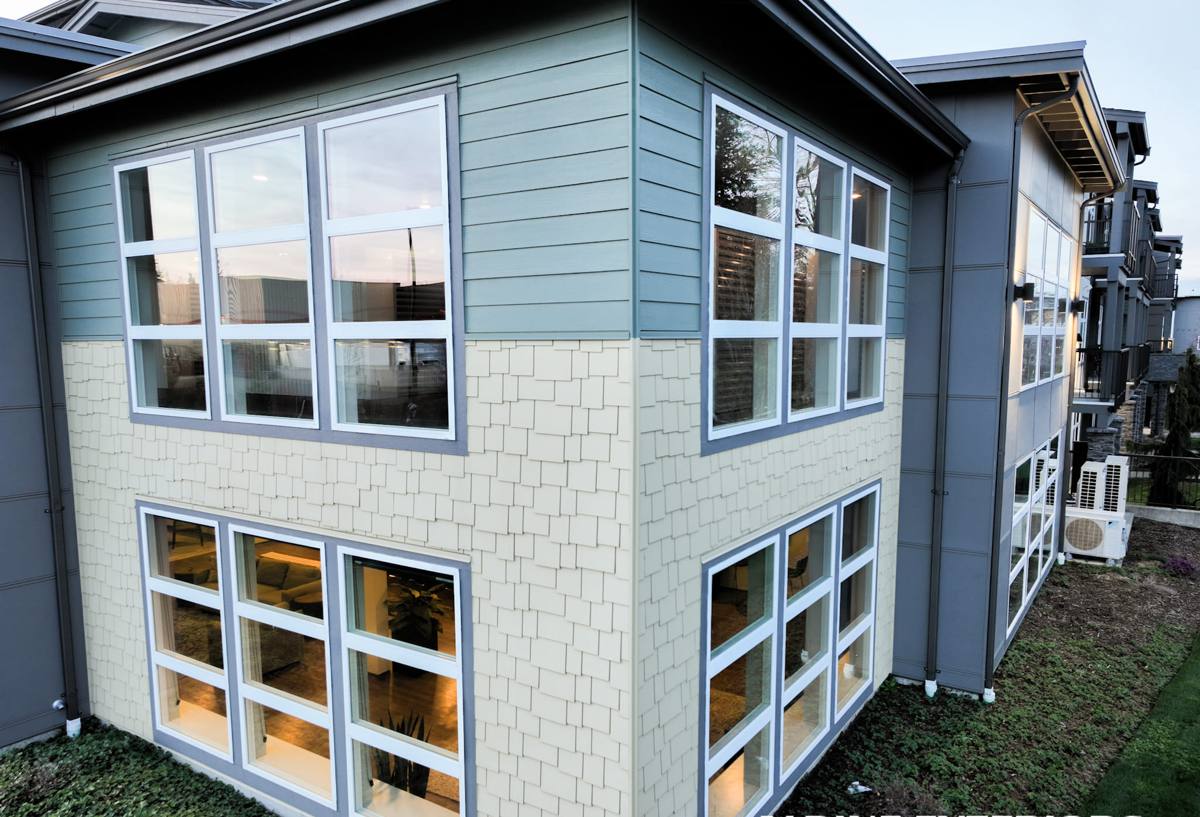
What the Coastal Environment Actually Does to Siding
Salt Air and Corrosion
Airborne salt doesn't just sit on the surface — it works into fastener heads, trim joints, and any seam where two materials meet. Over years, that accelerates corrosion in cheap fasteners and trim hardware, which shows up as rust streaking and loosening panels long before the siding itself would otherwise need attention.
Wind-Driven Rain and Moisture Intrusion
It's rarely straight-down rain that causes damage on the island — it's rain pushed sideways and upward under wind pressure, forcing water behind panels, around window trim, and into laps that weren't sealed or flashed correctly. Materials that swell, delaminate, or wick moisture along their edges fail from the inside long before a homeowner notices anything from the street.
UV Exposure and Color Fade
Gulf-front and near-Gulf homes get more direct sun exposure than inland properties, and cheap paint systems chalk, fade, and crack years faster under that kind of constant UV load. A siding finish that isn't formulated for this kind of exposure will look tired well before the underlying material fails.
Why We Install James Hardie Here — and Nothing Else
We standardized on James Hardie fiber cement for every home we side, and on a barrier island, the reasons for that are magnified rather than theoretical.
HZ5 Climate-Engineered Panels
James Hardie engineers its HZ product lines for specific climate zones, and HZ5 is built for the kind of humidity, moisture cycling, and storm exposure that defines Gulf Coast barrier islands. That's a meaningfully different product than what's sold in a dry inland climate, and it's the version we use on Anna Maria Island projects.
ColorPlus Factory Finish
Rather than relying on job-site paint, Hardie's ColorPlus finish is baked on in a controlled factory process, which gives it far better UV and fade resistance than field-applied paint — a real advantage given how much direct sun island-facing elevations take on.
A Non-Combustible Core
Fiber cement doesn't feed a fire the way wood-based products can, which matters anywhere, but it's a genuine peace-of-mind factor for homeowners on a barrier island with a single evacuation route and limited fire department response distance during storm season.
We don't install vinyl, LP SmartSide, or other fiber cement alternatives like Cemplank or Allura. Vinyl can warp and become brittle under sustained heat and UV, and its seams give wind-driven rain an easy path behind the wall. Wood-based composite siding depends heavily on maintaining an intact factory coating — any breach lets moisture in, and moisture is the one thing this island never runs short of. Those aren't reasons to call another product "bad" — they're the honest trade-offs that led us to build our business around one material we can install and stand behind consistently.
What a Correct Installation Involves on Anna Maria Island
Prep and Moisture Management
Before any panel goes up, the sheathing gets inspected for existing water damage — common on older beach cottages — and a proper weather-resistant barrier is installed with correctly lapped and taped seams. Skipping or rushing this step is the single biggest reason re-sides fail early in coastal climates, regardless of what siding product goes over it.
Fastening and Flashing for Wind Exposure
Fastener spacing, type, and placement all need to follow Hardie's fastening schedule for the local wind zone, not a generic inland spec. Flashing at windows, doors, and roof-to-wall transitions has to be detailed to shed water outward under wind pressure, not just gravity.
Joint and Trim Detailing
Every horizontal joint, corner, and trim intersection is a potential entry point for wind-driven rain. Caulking, joint placement, and drainage gaps need to be handled to Hardie's installation instructions — not shortcuts that look fine on day one but open up within a couple of storm seasons.
| Installation Detail | Why It Matters on Anna Maria Island |
|---|---|
| Weather-resistant barrier | First line of defense against wind-driven rain reaching sheathing |
| Fastener type and spacing | Resists wind uplift and salt-air corrosion over time |
| Window and door flashing | Directs water outward instead of behind trim and panels |
| Joint sealant and spacing | Keeps horizontal seams from becoming moisture entry points |
| ColorPlus factory finish | Holds color and resists chalking under constant Gulf sun |
Our Process for Island Projects
We start with an on-site assessment of the existing siding and sheathing condition, since older island homes sometimes have moisture damage that isn't visible from the outside. From there we walk through product and color selection, confirm the wind zone and any permitting requirements that apply to the property, and schedule the tear-off and install around weather windows rather than rushing through a forecast we can't control.
During installation, we manage debris and disposal, protect landscaping and neighboring property lines on the island's typically tighter lots, and inspect flashing and joint details before final trim goes on — not after a problem shows up. Once the job is complete, we walk the homeowner through what routine maintenance looks like given the site's specific exposure.
Why Hiring a Crew That Already Works This Island Matters
Barrier island jobs come with logistics that inland crews don't deal with regularly: tighter access on some lots, awareness of local wind-load and building code requirements that can differ from mainland Bradenton, and an understanding of how quickly conditions change once a system is in the Gulf. A crew that treats Anna Maria Island as a regular part of its territory — rather than an occasional trip — is more likely to anticipate these details instead of learning them on your project.
We also carry that experience into every material decision. Knowing how fast salt air corrodes cheap hardware, or how a poorly flashed joint behaves in a sideways rain event, shapes how we spec and install every job on the island, not just the ones that look difficult on paper.
Cost Factors for Anna Maria Island Homes
Every property is different, but a few factors consistently move the price on island siding projects more than they would inland:
| Factor | Why It Affects Cost |
|---|---|
| Home age and construction | Older beach cottages more often need sheathing repair before siding goes on |
| Lot access and staging | Tighter island lots can require more careful, sometimes slower, material staging |
| Elevation and stories | Elevated coastal homes or multi-story construction add labor and equipment needs |
| Trim and detail complexity | More window, door, and roofline transitions mean more flashing and joint work |
| HZ5 product selection | Climate-engineered panels are specified for this exposure rather than a standard inland product |
Keeping James Hardie Siding Performing on the Island
Fiber cement is low-maintenance compared to most alternatives, but "low-maintenance" isn't "no-maintenance," especially in this environment. A simple annual routine keeps it performing the way it's designed to:
- Rinse salt residue off exterior walls periodically, especially on Gulf-facing elevations
- Check caulking at joints, trim, and penetrations once a year and after major storms
- Look for any hardware or fastener rust and address it before it stains or loosens panels
- Keep irrigation heads and sprinklers from constantly wetting the base of the siding
- Trim vegetation back so it isn't holding moisture against panels or trim
- Have flashing and joints inspected after any named storm that hits the area
If you own a home on Anna Maria Island and want an honest look at your current siding — or you're planning ahead for a replacement — we're happy to walk the property with you and put together a straightforward, no-pressure estimate. Just fill out the form below and we'll get in touch.