 Bradenton Window
 Why Window Efficiency Is a Different Problem in Lakewood Ranch
Lakewood Ranch sits inland enough from the Gulf to feel a little removed from the coast, but the climate that drives window performance here doesn't care about zip code boundaries. Homes throughout this part of Manatee County deal with long stretches of intense, direct sun, humidity that never really lets up, wind-driven rain during summer storms, and salt-laden air that travels further inland than most homeowners expect. Windows are one of the biggest thermal weak points in any house, and in a climate this demanding, an underperforming window doesn't just mean a slightly higher electric bill — it means your air conditioner running harder, humidity creeping into your walls, and UV rays quietly breaking down flooring, furniture, and trim year after year.
"Energy-efficient windows" isn't a marketing phrase to us. It's a specific combination of glass, framing, and installation choices that has to hold up to Gulf Coast conditions while actually lowering your cooling costs. That's the standard we build every Lakewood Ranch project around.
Signs Your Current Windows Are Working Against You
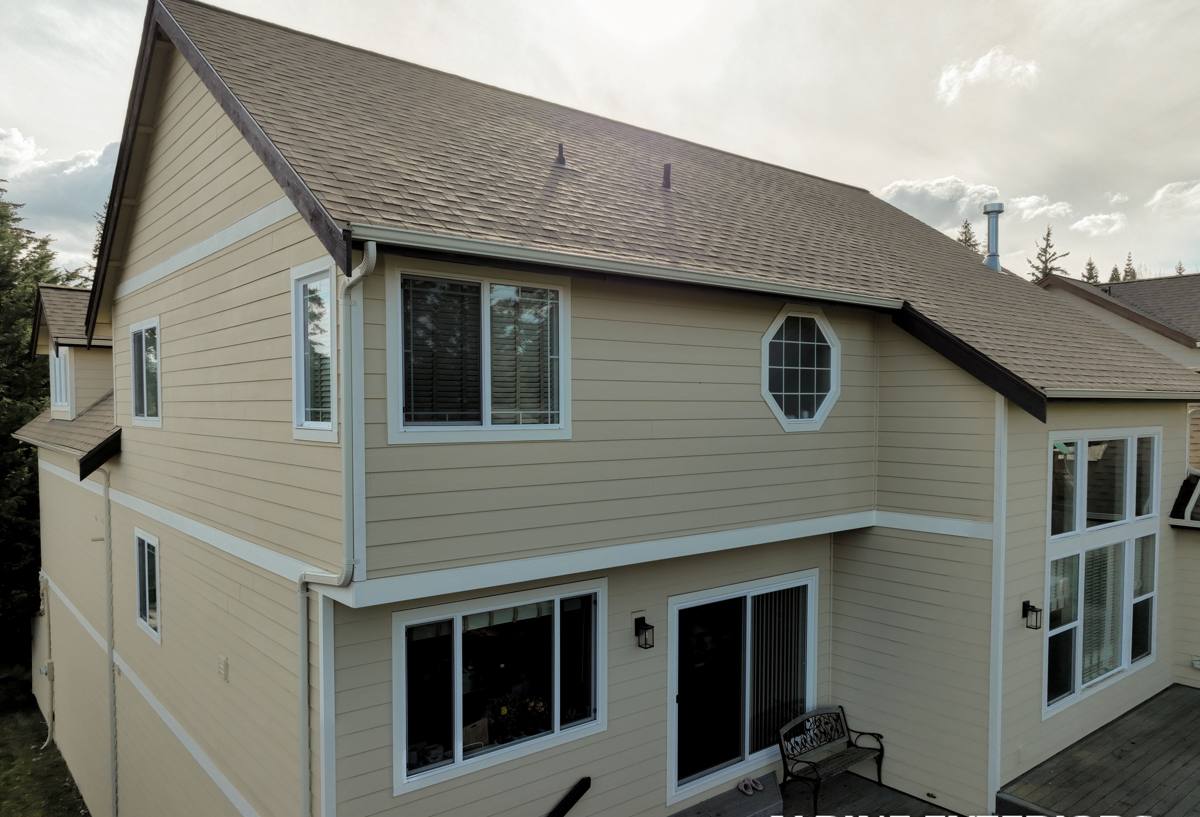
Most homeowners don't think about their windows until something goes wrong. But inefficient windows usually give off warning signs well before a full failure. Walk through your home and check for these:
- Rooms that feel noticeably hotter in the afternoon, especially on the west or south side of the house
- Glass that's warm or even hot to the touch on the inside during peak sun hours
- Condensation or fogging between panes, which usually means a failed seal on an older insulated glass unit
- Fading carpet, hardwood, or furniture near windows that get direct sun
- A noticeable draft or a whistling sound during windy weather
- Windows that are hard to open, close, or lock — often a sign the frame has shifted or corroded
- Your air conditioner cycling more often than it used to, without any other obvious cause
Any one of these on its own might not mean much. Several of them together, especially in a home more than 15-20 years old, usually points to windows that are past their useful life for this climate.
What "Energy-Efficient" Actually Means for a Gulf Coast Home
Low-E Coatings
Low-emissivity (Low-E) coatings are microscopically thin, virtually invisible layers applied to the glass that reflect infrared heat and block a significant share of UV radiation without darkening the glass or noticeably changing the view. In a market with as much sun exposure as ours, Low-E glass is one of the single biggest factors in keeping interior temperatures stable and protecting furnishings from sun damage.
U-Factor and Solar Heat Gain Coefficient
These are the two numbers that actually tell you how a window performs, and they matter far more than any brand name on a sticker. U-factor measures how much heat transfers through the window — lower is better for keeping conditioned air inside. Solar Heat Gain Coefficient (SHGC) measures how much solar radiation passes through the glass and turns into heat inside your home — again, lower is generally better for a hot, sunny climate like ours, particularly on east, south, and west-facing exposures.
Gas Fill and Spacer Systems
Insulated glass units with an argon or krypton gas fill between the panes slow heat transfer more effectively than plain air. The spacer that separates the panes also matters — a warm-edge spacer resists conducting heat and cold to the edge of the glass, which reduces condensation risk and improves comfort near the window frame.
Frame Construction
The frame is doing more work than most people realize. Multi-chambered frame designs trap air and reduce heat transfer through the frame itself, not just the glass. In a humid environment, the frame material also has to resist moisture absorption, expansion and contraction, and — this close to the coast — corrosion from salt in the air.
Comparing Frame Materials for This Climate
| Frame Material | Energy Performance | Salt Air & Humidity Resistance | Maintenance |
|---|---|---|---|
| Vinyl (multi-chamber) | Strong — insulates well, no thermal bridging | Good — won't corrode or rot | Low — no painting, occasional cleaning |
| Fiberglass | Very strong — low expansion/contraction, holds seals well over time | Very good — highly stable in heat and humidity | Low — durable finish, minimal upkeep |
| Aluminum | Weaker unless thermally broken — aluminum conducts heat readily | Prone to corrosion near the coast without proper coatings | Moderate to high — coatings and hardware need monitoring |
| Wood (clad) | Good when properly clad and sealed | Vulnerable if cladding or sealant fails — moisture intrusion risk | Higher — exposed wood needs regular attention |
We don't install every option on this list on every home. When we recommend against a product for a given application, it's because of how it performs specifically in this climate over the long run — moisture behavior, maintenance burden, or how well it holds a seal in salt air and heat cycling — not because of any one brand being "bad." Frame choice should match your home's exposure, your maintenance preferences, and your budget, and we'll walk through those trade-offs honestly.
Energy Efficiency and Storm Performance Aren't Separate Decisions
One of the advantages of upgrading windows in this part of Florida is that you don't have to choose between energy performance and storm readiness — the products that meet current Florida Building Code wind-load and impact requirements for this region are, in most cases, the same laminated, multi-pane, well-sealed windows that also deliver strong energy numbers. A properly rated impact window keeps wind-driven rain and debris out during a storm and keeps conditioned air in every other day of the year. When we spec a window for a Lakewood Ranch home, we're looking at both jobs at once: how it performs on a calm 95-degree August afternoon and how it performs when a summer system rolls through with sideways rain.
Installation quality matters just as much as the product rating here. A high-performance window installed with poor flashing or an incomplete seal will still let water intrude during wind-driven rain and will still leak conditioned air around the frame, no matter how good the glass is. The window and the installation are one system — we treat them that way.
How We Approach a Lakewood Ranch Window Project
1. On-Site Assessment
We walk the home, check existing window condition and orientation, and note which elevations take the most direct sun and wind exposure. A window on a west-facing wall with full afternoon sun has different priorities than one on a shaded, protected side of the house.
2. Product Selection
Based on that assessment, plus your budget and any HOA or architectural guidelines for your community, we recommend frame material, glass package, and configuration — not a one-size answer, but a plan for each elevation if conditions vary.
3. Accurate Measurement and Permitting
Window replacement in Manatee County generally requires a permit, and accurate measurements up front prevent delays later. We handle the permit process as part of the job.
4. Removal and Installation
Careful removal protects surrounding stucco, drywall, and trim. Proper installation means correct flashing, sealant, and fastening — the details that determine whether a window actually performs to its rating once it's in the wall, not just on paper.
5. Final Check and Cleanup
We confirm every window operates correctly, seals properly, and passes any required inspection, and we leave the site clean.
Working Within Lakewood Ranch's HOA and Community Standards
Lakewood Ranch is made up of numerous distinct communities, many with their own homeowners' association and architectural review guidelines covering exterior appearance — things like frame color, grid patterns, and glass tint. Skipping that review, or assuming your community doesn't have one, can lead to a rejected application after the windows are already ordered. Part of doing this job right locally is knowing to check for those requirements early and build the timeline around them, rather than treating it as an afterthought once product is on order.
Why a Crew That Already Works This Area Matters
A contractor who works Lakewood Ranch and the surrounding Bradenton area regularly isn't starting from zero on each project. That means a realistic sense of how different communities' review processes typically run, familiarity with the Manatee County permitting process from repeat experience, and an understanding of how the area's mix of home ages and construction styles affects what a proper retrofit requires. It also means that if a question comes up after installation — a hardware adjustment, a warranty question, prepping the house before a storm — you're not waiting on a crew that has to drive in from another county. Local presence isn't a slogan; it's what makes the follow-through actually happen.
What a Correct Job Looks Like, Start to Finish
- Windows sized and rated appropriately for the specific elevation and exposure, not a blanket spec for the whole house
- Glass package matched to sun exposure — tighter SHGC control on hot, sun-heavy walls
- Frame material chosen for long-term performance in heat, humidity, and salt air, not just upfront cost
- Wind-load and impact compliance verified for the local building code requirements
- Proper flashing and sealant detailing at every opening, not just at the visible trim
- Permit pulled and inspection completed through Manatee County
- HOA or architectural review confirmed before installation, where applicable
- Clear documentation of product ratings and warranty terms handed to you at project close
If your Lakewood Ranch home has windows that are original to the build, showing seal failure, or just costing you more in cooling than they should, we're glad to take a look and talk through honest options — no pressure, no upsell script. Fill out the form below for a free, no-obligation estimate, and we'll walk your home the same way we'd walk our own.