 Bradenton Window
 Lakewood Ranch's Climate Is Harder on Siding Than It Looks
Lakewood Ranch feels a little removed from the coast, but the weather that drives siding failure in Manatee County doesn't stop at the shoreline. Hurricane-force wind gusts push rain sideways into wall assemblies, months of intense Florida sun bake and fade anything not built to hold color, and salt-laden air drifting in off Tampa Bay and the Gulf works its way into fasteners, trim, and seams long after a storm has passed. None of that is dramatic on any single day. It's the accumulation, year after year, that separates siding that holds up from siding that doesn't.
A Community Built in Layers
Lakewood Ranch has grown in phases over more than two decades, so homes here span a wide range of construction eras, elevations, and original exterior materials — stucco, vinyl, wood trim, and fiber cement all sit within the same neighborhoods. That mix means every siding job we look at starts from a different baseline, but the exposure every home is fighting against is the same: sun, wind, and moisture that don't care how new the house is.
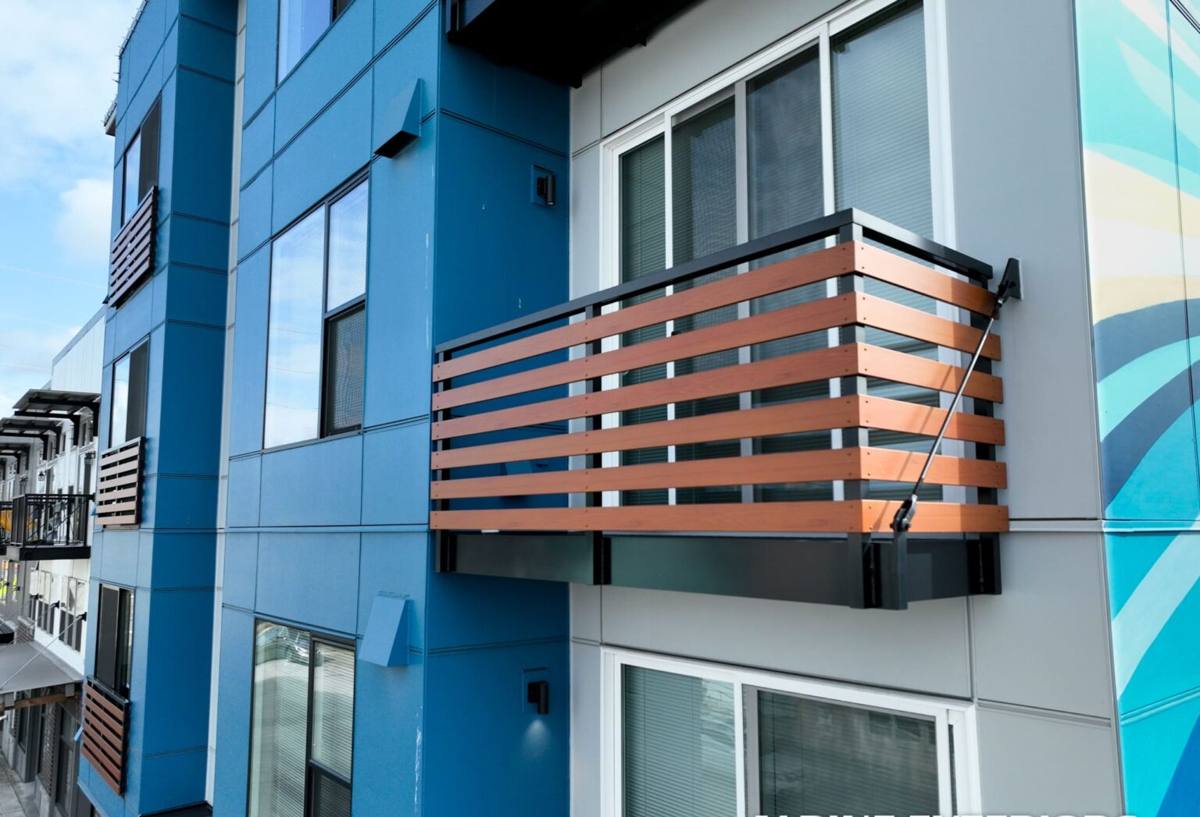
What James Hardie Fiber Cement Siding Actually Is
James Hardie siding is made from cement, sand, and cellulose fiber, cured into a dense, dimensionally stable board. It doesn't warp in humidity the way wood can, it won't feed pests, and it's non-combustible. The factory-applied ColorPlus finish is baked on and backed by its own warranty, which means the color layer is engineered to resist the fading, chalking, and peeling that field-applied paint struggles with under year-round Florida sun. That matters more here than in most parts of the country, because Lakewood Ranch homes get direct, high-UV exposure nearly every month of the year, not just a few summer weeks.
We install James Hardie exclusively. We don't carry vinyl, LP SmartSide, Cemplank, Allura, or unfinished wood siding, and we're upfront with homeowners about why: each of those products has a real trade-off — heat distortion, moisture sensitivity, shorter finish life, or installation tolerances that are easy to get wrong — that we're not willing to install and then stand behind for the next twenty years.
Choosing the Right Hardie Product Line for This Area
James Hardie engineers its siding by climate zone, and Manatee County falls into the HZ5 category — built for high humidity, heavy rainfall, and coastal-influenced air. That's a meaningfully different product than the HZ10 line built for freeze-thaw regions up north, and it's one reason we don't treat every Hardie order as interchangeable.
Beyond the climate zone, there are real profile decisions to make:
- Lap siding — the most common choice, available in different reveal widths and smooth or cedar-textured finishes
- Board and batten (vertical) — often used as an accent on gables or entry features
- Shingle-style panels — used where a home's design calls for a more textured, traditional look
- HardieTrim — for corners, fascia, and window/door surrounds, matched to the field siding
We walk through these options against the home's existing architecture rather than defaulting to whatever's fastest to install.
Lakewood Ranch HOA and Architectural Standards — Plan Before You Start
Lakewood Ranch is a master-planned community, and most of its neighborhoods fall under an HOA or architectural review process that governs exterior changes, including siding material and color. Requirements vary by village and by association, so the first practical step on any siding job here isn't material selection — it's confirming what your specific HOA requires for submittal and approval before anything is ordered.
In practice, that usually means a color and material submittal packet, sometimes a sample board, and a waiting period for board review. We've been through this process enough times in this area to know what most associations ask for, and we provide manufacturer spec sheets and ColorPlus color documentation in the format review boards typically want, so the approval step doesn't stall the project. If your HOA process is more involved than usual, we'd rather find that out at the estimate stage than after material has already been ordered.
What a Correct Installation Involves in This Climate
Fiber cement siding is only as good as the installation behind it, and in a wind-and-rain climate like this one, the details that don't show up in a photo are the ones that matter most.
The Parts You Don't See
A correct install starts with an intact weather-resistive barrier behind the siding, properly lapped and sealed, so any moisture that gets past the surface has somewhere to go besides your wall sheathing. Flashing at every window, door, and penetration has to be installed to shed water outward, not trap it. Manufacturer-specified clearances — typically a minimum gap from grade and from roof lines — keep the bottom edge of the siding from sitting in standing water or trapped runoff, which is one of the most common causes of premature siding failure we see on homes that weren't installed to spec.
The Parts You Do
Fasteners matter more here than people expect: in a salt-air environment, corrosion-resistant nails or screws driven to the manufacturer's exact pattern are what keep siding attached through wind events instead of working loose over a few seasons. Joints get caulked with a product rated for the movement and moisture involved, not whatever's on the truck. Cut edges get sealed or oriented so raw, unfinished cement isn't left exposed to weather. None of this is complicated, but skipping any one step is exactly how a well-made product ends up with a poor track record on a specific house.
Our Process From Estimate to Finished Job
- On-site inspection — we look at the existing siding or stucco, substrate condition, trim, and any moisture issues before quoting anything
- HOA guidance — if your neighborhood requires architectural approval, we help you assemble what your association needs to review
- Material selection — profile, reveal, and ColorPlus color chosen against your home's design and your HOA's approved options
- Substrate prep — removal of failing material, repair of any damaged sheathing, and installation of a proper weather-resistive barrier
- Installation — Hardie siding and trim installed to manufacturer fastening, flashing, and clearance specifications
- Final walkthrough — caulking, trim, and finish details reviewed with you before we call the job done
What This Kind of Job Costs — Factors That Move the Number
Every Hardie siding job is priced around the specific house, but the same handful of factors drive most of the variation we see on Lakewood Ranch homes.
| Factor | Why It Matters |
|---|---|
| Home size and wall complexity | More linear footage, gables, and cutouts increase material and labor |
| Existing material removal | Stripping old stucco or siding down to sheathing adds time and disposal cost |
| Substrate repair | Any rotted or water-damaged sheathing found underneath needs to be replaced before Hardie goes on |
| Profile and trim detail | Board-and-batten accents, shingle panels, and custom trim take more labor than plain lap siding |
| Color and finish | Standard ColorPlus colors versus premium or custom finishes affect material pricing |
| Access and site conditions | Multi-story sections, tight lot lines, or landscaping can add setup and staging time |
We give a firm, written number after the on-site inspection — not a ballpark over the phone — because guessing at any of these factors sight-unseen isn't fair to you or accurate for us.
Maintenance Checklist: Keeping Hardie Siding Right in Manatee County
James Hardie siding is genuinely low-maintenance compared to most alternatives, but "low-maintenance" isn't "no-maintenance," especially in this climate. A simple annual routine keeps it performing the way it's designed to:
- Rinse siding with a garden hose (not a pressure washer) once or twice a year to clear salt residue and pollen buildup
- Walk the perimeter after any major storm and check for cracked caulk joints or dislodged trim pieces
- Keep irrigation heads and sprinklers from spraying directly on siding, which accelerates mineral staining
- Trim landscaping back from siding so leaves and moisture aren't trapped against the surface
- Recaulk joints and penetrations if you notice gaps opening up, rather than waiting for a leak to show inside
- Check for any visible fastener corrosion or staining around nail heads, which can signal a fastener issue worth addressing early
Why Hiring a Crew That Already Works in Lakewood Ranch Matters
Siding installed to spec performs the same everywhere, but getting to a finished, approved job in Lakewood Ranch specifically has a few extra steps most general contractors haven't dealt with — knowing which villages have active architectural review boards, what those boards typically want in a submittal, and how Manatee County permitting works alongside HOA approval. A crew that's already done this in the area moves through that process faster because it isn't the first time, and that translates into fewer delays and surprises for you between signing a contract and having a finished house.
If you're weighing a siding project on your Lakewood Ranch home, we're glad to walk the exterior with you, talk through what your specific HOA will require, and give you a straightforward, no-pressure estimate — no obligation to move forward, just an honest look at what the job actually involves.