 Bradenton Window
 Why Lakewood Ranch Siding Wears Differently Than Siding Up North
Lakewood Ranch sits inland from the Gulf, but "inland" in Manatee County still means year-round humidity, intense UV exposure, and the kind of wind-driven rain that comes through every summer storm season and, in a bad year, a hurricane. Siding here doesn't fail the way it does in a drier, milder climate. It doesn't just fade — it absorbs moisture at the seams, swells, and lets that moisture sit against the wall sheathing for months at a time. By the time a homeowner notices soft spots, bubbling paint, or a musty smell near an exterior wall, the damage is usually already behind the siding, not just on it.
That's the core problem with siding replacement in this part of Florida: it's not a cosmetic project. Whatever goes back on the house has to hold up to sun, water, and wind pressure for fifteen-plus years without babysitting. We've built our whole approach around that reality, and it's why we only install one type of siding — James Hardie fiber cement — rather than offering a menu of products with different price points and different failure modes.
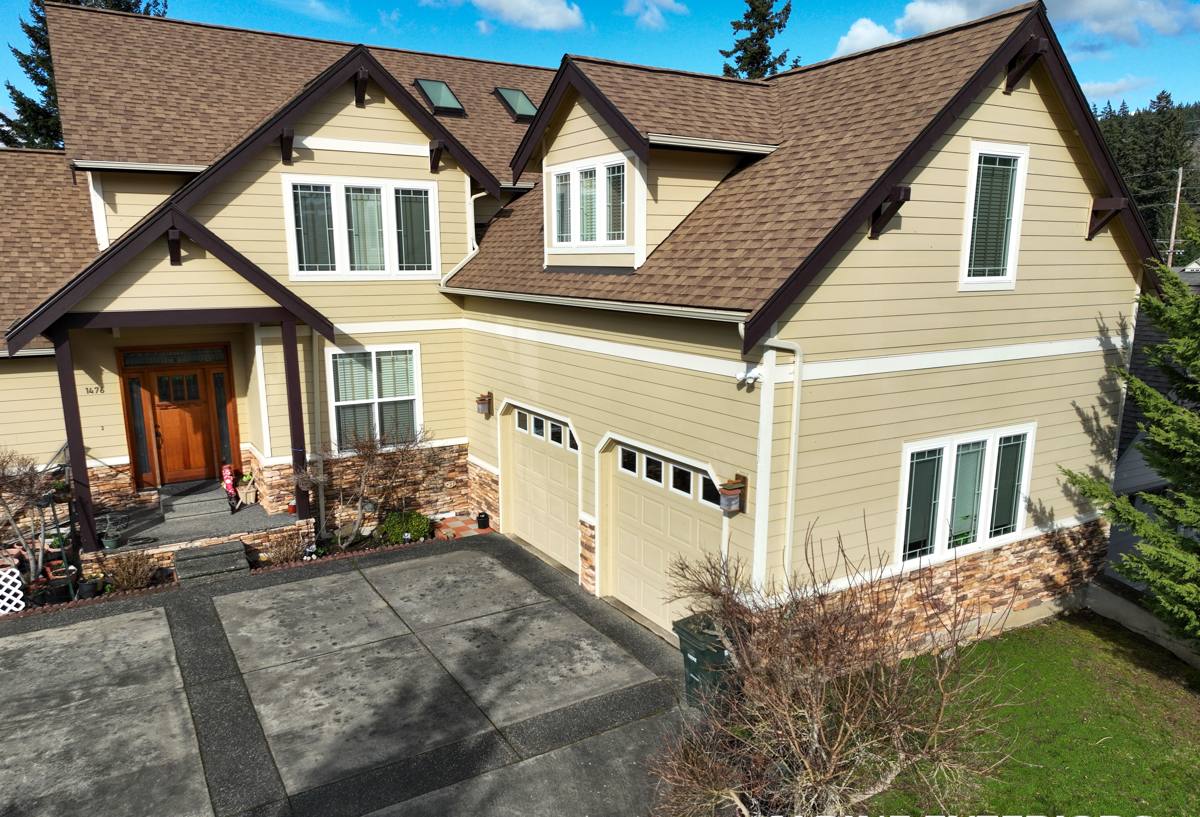
What Manatee County's Climate Actually Does to a Wall System
Three things drive most of the siding failures we see in and around Lakewood Ranch:
- UV load. Central Florida gets some of the most direct, sustained sun exposure in the continental U.S. Paint finishes that aren't engineered for it chalk, fade unevenly, and lose adhesion years before a manufacturer's warranty suggests they should.
- Wind-driven rain. It's not steady rain that causes problems — it's rain pushed sideways into laps, seams, and butt joints during storms. Any siding product with weak seam performance or a installation-sensitive lap system becomes a moisture entry point.
- Humidity cycling. Materials that absorb and release moisture repeatedly — swelling in humid stretches, drying and shrinking in dry ones — eventually crack, cup, or pull away from fasteners. Over a decade of Florida summers, that cycling adds up.
Add occasional salt-tinged air after a storm pushes onshore flow inland, and you have a climate that is genuinely harder on exterior materials than most of the country. Homes in Lakewood Ranch are newer on average than a lot of Florida housing stock, but "newer" doesn't mean immune — original builder-grade siding is often the first thing to show its age.
Why We Only Install James Hardie Fiber Cement
We get asked why we don't offer vinyl, LP SmartSide, or a cheaper fiber cement alternative alongside Hardie. The honest answer is that we used to see the callbacks. Vinyl siding is inexpensive and easy to install, but it's a petroleum-based product that softens and can warp under sustained direct sun, and it has no real fire resistance — a meaningful trade-off in a state where wildfire and ember exposure are part of the conversation. Engineered wood products like LP SmartSide perform well in many climates, but they rely on a treated wood substrate and a factory coating that has to stay perfectly intact at every cut edge and seam; in a high-humidity, high-rain environment, any breach in that coating gives moisture a path into wood fiber, and wood fiber that gets wet repeatedly will eventually swell and deteriorate.
James Hardie fiber cement is cement, sand, and cellulose fiber — it doesn't burn, it doesn't absorb moisture the way wood-based products do, and it doesn't soften in heat. The ColorPlus factory finish is baked on and warrantied separately from the substrate, which is a meaningfully different promise than a field-painted or shop-primed product. None of this means Hardie is maintenance-free or foolproof — it still has to be installed correctly, with the right clearances, fastening, and flashing. But it gives us a material we can stand behind for the specific stresses this region puts on a house.
What This Means in Practice
When we quote a siding replacement in Lakewood Ranch, we're not upselling you from a "standard" option to a "premium" one. There's one product line we install, because it's the one we've found actually holds up here without repeat service calls.
What a Correct Siding Replacement Actually Involves
A siding replacement done right is mostly about what happens before the new siding ever goes up. This is where corners get cut on cheap jobs, and it's where most long-term failures actually start.
- Full tear-off and sheathing inspection. Old siding comes off completely so the sheathing underneath can be checked for rot, delamination, or hidden moisture damage — especially around windows, at corners, and near the roofline.
- Repair before cover. Any compromised sheathing gets replaced. Covering over damaged sheathing with new siding just hides a problem that will keep spreading.
- Water-resistive barrier. A correctly lapped and sealed weather barrier goes over the sheathing, with special attention to windows, doors, and any penetration where water tends to find a way in.
- Proper flashing. Flashing at windows, doors, and roof-to-wall transitions has to shed water outward, not channel it behind the new siding.
- Manufacturer-spec installation. Correct nailing pattern, correct clearance from grade and roofline, correct gaps at butt joints and trim — all specified by James Hardie for a reason, and all frequently skipped by crews trying to move faster.
- Caulking and finish work. Sealant at seams and trim, done with the right product and technique, not just a bead run down every visible line.
Our Process for Lakewood Ranch Homeowners
The process itself is straightforward, but we don't skip steps to shorten the timeline:
- On-site assessment. We walk the exterior with you, look for the usual trouble spots — window returns, lower wall sections, areas with poor drainage away from the foundation — and get a real read on what's underneath the current siding, not just what's visible.
- Moisture check. Where we suspect hidden water damage, we probe or use a moisture meter before quoting, so the estimate reflects what the job actually needs rather than a guess.
- Product and profile selection. Lap width, panel style, and trim details get chosen to match the home's existing lines — most Lakewood Ranch homes read best with a specific reveal and trim combination, and we'll walk you through the options rather than defaulting to whatever's fastest to install.
- Tear-off and prep. Old material comes off, sheathing gets inspected and repaired as needed, and the barrier and flashing go in before any new siding is hung.
- Installation to spec. Fastening, clearances, and joint treatment follow James Hardie's published installation requirements — this is also what keeps the manufacturer's warranty valid.
- Final walk-through. We inspect the finished exterior with you before calling the job done, not after an invoice goes out.
James Hardie Product Lines We Use in This Climate
James Hardie makes region-specific formulations, and for Gulf Coast Florida, the HZ10 product line is engineered for exactly the humidity and moisture exposure this area sees. The table below breaks down the common siding profiles within that system.
| Profile | Typical Use | Notes for This Climate |
|---|---|---|
| HardiePlank lap siding | Most common whole-home replacement | Traditional horizontal reveal, widest color and texture range |
| HardiePanel vertical siding | Accent walls, gables, modern facades | Fewer horizontal seams, often paired with board-and-batten trim |
| HardieTrim boards | Corners, window and door surrounds, fascia | Matches substrate durability so trim doesn't fail before the field siding does |
| HardieSoffit panels | Eaves and overhangs | Resists the humidity that collects under overhangs and roof returns |
What Drives Cost on a Lakewood Ranch Siding Job
We don't publish flat pricing because the honest cost factors vary house to house, but the table below covers what actually moves the number up or down on a typical estimate.
| Factor | Why It Matters |
|---|---|
| Home size and wall area | More square footage means more material and labor, the biggest single driver of total cost |
| Number of stories | Multi-story homes need more scaffolding and safety setup, which adds labor time |
| Extent of hidden damage | Rotted or delaminated sheathing found during tear-off adds repair cost that can't be known until the old siding is off |
| Trim and architectural detail | Homes with more corners, window surrounds, and gable detail take longer to fit and finish correctly |
| Siding profile chosen | Lap width and panel style affect both material cost and installation time |
| Tear-off vs. overlay | We don't install over failing siding, but the condition of what's coming off affects disposal and labor time |
Why a Local Bradenton Crew Matters for This Job
Lakewood Ranch has its own permitting quirks, and depending on the specific section of the community, there may be HOA design guidelines around approved colors, trim styles, or even siding profiles. A crew that already works this area regularly knows to check those requirements before ordering material, not after — which avoids the headache of a color or profile getting flagged mid-project. Local crews also know how Manatee County's permitting office handles siding replacement paperwork, which keeps the project moving instead of stalling on avoidable back-and-forth.
There's also a practical service argument: a crew based in the area is the one that can realistically come back for a warranty question, a caulking touch-up, or a storm-damage inspection five or ten years down the line. A contractor working from out of the county on a one-time job doesn't have the same incentive to stand behind the work long-term.
Questions to Ask Before You Hire
Whether you go with us or someone else, these are the questions that actually separate a durable siding job from a callback waiting to happen:
- Will the crew do a full tear-off, or are they proposing to install over existing siding?
- Who inspects the sheathing once the old siding is off, and what happens if they find damage?
- What water-resistive barrier and flashing details are included, specifically — not just "we'll seal it up"?
- Is the installer certified or trained on the specific manufacturer's fastening and clearance requirements?
- Does the quote separate material, labor, and any anticipated repair contingency, or is it one vague number?
- What does the manufacturer's warranty actually require in terms of installation method to stay valid?
- Is the company familiar with Manatee County permitting and any Lakewood Ranch HOA guidelines?
If your Lakewood Ranch home's siding is fading unevenly, showing soft spots, or just getting close to the end of its useful life, it's worth having a local crew take a real look before problems spread behind the walls. We offer a free, no-pressure estimate — no obligation, just an honest read on what your home actually needs.