 Bradenton Window
 Siding Repair Built for Palmetto's Coastal Climate
Palmetto sits close enough to Tampa Bay and the Manatee River that homes here take a different kind of beating than siding installed just a short distance inland. Salt-laden air moves through the area daily, hurricane-force winds test every seam and fastener during storm season, and the Florida sun delivers enough year-round UV intensity to break down lower-grade siding materials well before their expected lifespan. Add wind-driven rain that finds its way behind loose panels, trim, and flashing, and it becomes clear why siding repair in this part of Manatee County isn't cosmetic maintenance — it's protection for the wall structure underneath.
We repair siding on Palmetto homes regularly, and the damage we find almost always traces back to the same handful of causes: storm impact, sun exposure, moisture that got behind the siding instead of running off it, and corrosion where fasteners or trim were never rated for a coastal environment. A repair that only addresses what's visible on the surface tends to fail again within a year or two. A repair that addresses the cause holds up.
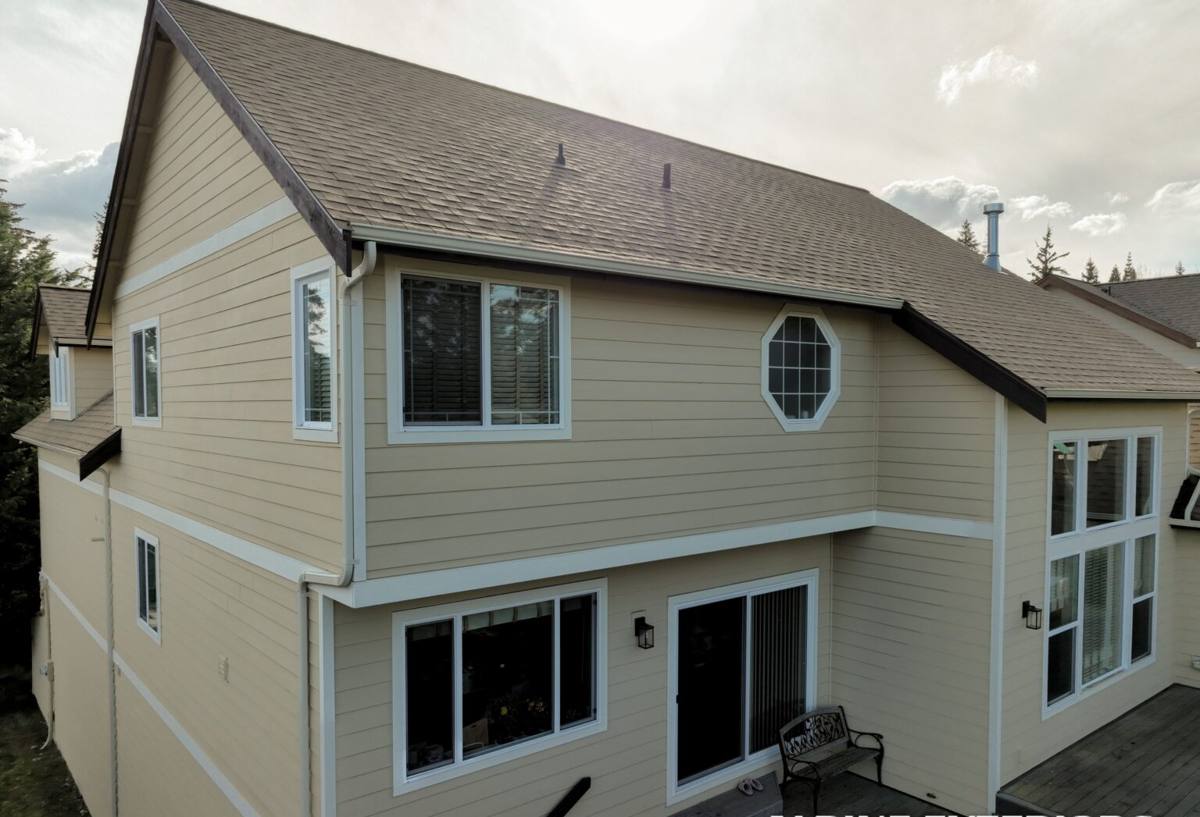
Signs Your Palmetto Home's Siding Needs Repair
Some siding damage is obvious right after a storm. Other damage develops slowly and gets dismissed as "just weathering" until it's caused real harm to the wall behind it. Walk your exterior periodically and look for these warning signs:
- Cracked, split, or visibly warped siding panels or boards
- Sections that have pulled loose, buckled, or show gaps at the seams
- Soft or spongy spots when you press on the siding, which usually means moisture has reached the substrate
- Paint or finish that's peeling, chalking, or fading unevenly across the wall
- Rust streaks around nail heads or trim fasteners
- Visible daylight or drafts around window and door trim where siding meets the frame
- Discoloration or dark staining near the base of walls, which can point to wicking moisture
- Increased pest activity, particularly around soft or damaged sections
Any one of these on its own might be minor. Several of them together usually mean water has been getting behind the siding for a while, and that's the kind of problem that gets more expensive the longer it sits.
What's Actually Damaging Siding in This Part of Manatee County
Storm and Wind Load
Palmetto's exposure to tropical systems means siding has to handle sustained high wind and the debris impacts that come with it. Wind doesn't just tear siding off in dramatic fashion — more often it works panels loose at the fastener points over multiple storms, which is damage you can't always see from the ground.
UV and Heat
Florida sun is intense and constant. Siding materials that rely on a painted or laminate surface finish tend to chalk, fade, and eventually crack as UV breaks down the resin binders. Once the finish fails, the material underneath loses its protection and deteriorates faster.
Wind-Driven Rain and Moisture Intrusion
Rain in this area rarely falls straight down during a storm — it drives sideways into walls, working into any gap, seam, or unsealed joint. Once moisture gets behind siding, it can sit against sheathing and framing for days without drying out, which is how small leaks turn into rot.
Salt Air Corrosion
Even a few miles from open water, airborne salt accelerates the corrosion of fasteners, flashing, and any metal trim components. Corroded fasteners lose their grip strength, which is a common reason siding that looked fine last year suddenly comes loose this year.
What a Correct Siding Repair Job Actually Involves
A repair that's done right is not just replacing the piece that's obviously broken. It starts with figuring out why that piece failed in the first place.
Diagnosing the Full Extent of the Damage
We check beyond the damaged panel itself — the surrounding sections, the trim, the flashing, and where possible, the condition of the water-resistive barrier and sheathing behind it. Damage often extends further than what's visible from the outside, especially with moisture intrusion.
Matching Material, Profile, and Finish
Repaired sections need to match the existing siding in profile, exposure, and color, or the patch will stand out and telegraph exactly where the problem was. This is easier when the original installation used a consistent, well-documented product line.
Fastening and Flashing to Spec
Fasteners, clearances, and flashing details all have to follow manufacturer installation requirements — not general "good practice," but the specific published spec for the product. In a wind-driven-rain climate, flashing detail at seams, trim, and penetrations is often the difference between a repair that lasts and one that leaks again in a year.
Sealing Without Trapping Moisture
Caulking and sealant have their place, but they're not a substitute for proper flashing and drainage. Over-sealing a repair can trap moisture that gets in from somewhere else, which causes rot to develop out of sight. A correct repair manages water so it drains and dries, not just so it looks sealed.
Repair or Replace? Weighing the Real Factors
Not every siding problem calls for full replacement, but not every problem should be patched either. These are the factors that actually drive the decision:
| Factor | Leans Toward Repair | Leans Toward Replacement |
|---|---|---|
| Extent of damage | Isolated to one or a few sections | Spread across multiple walls or elevations |
| Age of existing siding | Still within its expected service life | Nearing or past the end of its useful life |
| Moisture history | Isolated incident, source now corrected | Repeated leaks or evidence of long-term wall moisture |
| Underlying material | Sheathing and framing sound | Rot or damage found behind the siding |
| Product still available | Matching profile and color obtainable | Discontinued or significantly weathered mismatch |
| Storm exposure going forward | Repair restores intended performance | Whole-wall vulnerability likely to recur |
We'll tell you honestly which side of that table your home falls on. If a targeted repair will hold up, that's what we recommend — there's no reason to replace sound siding. If the damage points to a bigger underlying issue, we'll explain why and show you what we found.
Our Siding Repair Process in Palmetto
- On-site inspection. We walk the exterior, check the damaged areas up close, and look for related issues nearby — loose fasteners, compromised flashing, or early signs of moisture intrusion.
- Diagnosis and honest recommendation. We explain what caused the damage, whether it's isolated or connected to a broader problem, and what repair versus replacement would each look like.
- Written scope and estimate. You get a clear explanation of the work, the materials, and the cost before anything starts.
- Removal of damaged material. We pull only what needs to come out, checking the sheathing and water-resistive barrier underneath as we go.
- Repair of what's behind the siding, if needed. Damaged sheathing, framing, or barrier material gets addressed before new siding goes back up — patching over a hidden problem isn't a repair.
- Installation to manufacturer spec. New material is fastened, flashed, and finished to match the surrounding siding and meet the product's published installation requirements.
- Final walkthrough. We review the completed work with you so you know exactly what was done and why.
Why We Repair and Install Only James Hardie Fiber Cement
Every siding repair we do on a Palmetto home uses James Hardie fiber cement — it's the only siding product we install, on repairs and full replacements alike. That's a deliberate standard, not a limitation. Fiber cement is non-combustible, holds up to wind-driven rain without swelling or rotting the way wood-based products can, and Hardie's ColorPlus factory finish is engineered specifically to resist the fading and chalking that intense, constant Florida UV causes in field-painted or laminate finishes. Hardie also builds region-specific HZ product lines formulated for higher-moisture climates like ours, and backs installations with a strong transferable warranty when the work is done to spec.
Practically, this also means better repairs. Because we work almost exclusively with one manufacturer's product system, we know its profiles, colors, and installation requirements well enough to match a repair to existing Hardie siding cleanly — and if your current siding isn't Hardie, we'll be straightforward with you about what a compatible repair versus a full re-side would involve.
Why Hiring a Crew That Already Works in Palmetto Matters
Siding repair in this part of Manatee County isn't the same job as siding repair somewhere without hurricane exposure or salt air. A crew that already works locally knows the wind-load and flashing details that matter here, has already seen how salt air corrodes different fastener types over a few seasons, and understands what permitting and inspection typically look like for exterior work in the area. That local experience shows up in the details — the flashing choices, the fastener spec, the way a repair is sequenced — that determine whether it holds up through the next storm season or needs to be redone.
It also matters for accountability. A contractor who plans to keep working in Palmetto has every reason to do the job right the first time and stand behind it, rather than treating a repair as a one-off.
Get a Straightforward Look at Your Siding
If you're seeing cracked, loose, or discolored siding on your Palmetto home, it's worth having someone take an honest look before the damage spreads. We offer free, no-pressure estimates — we'll tell you plainly whether you need a repair or something more, and why. Fill out the form below to get started.