 Bradenton Window
 Parrish sits in the fast-growing corridor between Bradenton and the Hillsborough County line, and a lot of the decks out here are still fairly young — many built or replaced during the area's recent construction boom. That doesn't mean they're immune to problems. A deck in Manatee County spends its life fighting the same battle every outdoor structure in this part of Florida fights: intense UV that bakes finishes and dries out wood fiber, wind-driven rain that finds its way into every seam and fastener hole, salt-laden air pushing in off Tampa Bay, and the occasional hurricane-force wind event that tests every connection point. Deck repair here isn't about fixing bad workmanship most of the time — it's about staying ahead of a climate that never really lets a deck rest.
Why Parrish Decks Wear the Way They Do
Most of the deck calls we run in Parrish fall into a few predictable categories, and almost all of them trace back to moisture cycling and sun exposure rather than a single dramatic failure.
Moisture Cycling
Florida decks get wet, dry out, get wet again — sometimes several times a day during summer storm season. Wood expands and contracts with that cycle, and every cycle loosens fasteners a little more, opens hairline cracks a little wider, and gives water one more chance to get underneath a board or into a post base. Composite decking resists this better than wood, but even composite boards can trap moisture at fastener points and hidden framing if they weren't installed with proper spacing and flashing.
UV and Heat
Year-round sun exposure breaks down surface finishes on wood decking faster than it would in a milder climate, and it also softens and re-hardens some composite materials in a daily cycle that, over years, can affect board stability at the surface. A deck that looks fine from a distance can have a finish that's essentially failed at the fiber level.
Wind and Storm Loading
Bradenton and Manatee County sit squarely in a hurricane-exposed region, and even tropical storm-strength wind puts real lateral load on a deck structure — especially railings, stair stringers, and ledger board connections to the house. Repeated storm loading over multiple seasons can work fasteners loose or stress connections that were marginal to begin with, long before a homeowner notices anything visually wrong.
Salt Air
Parrish isn't directly on the coast, but Tampa Bay's salt air still reaches inland, and it's harder on exposed metal hardware — screws, joist hangers, post brackets, railing connectors — than most homeowners expect. Corrosion at a hidden connection point is one of the more common things we find during a repair visit that started as a homeowner's complaint about "a little bounce" in the deck.
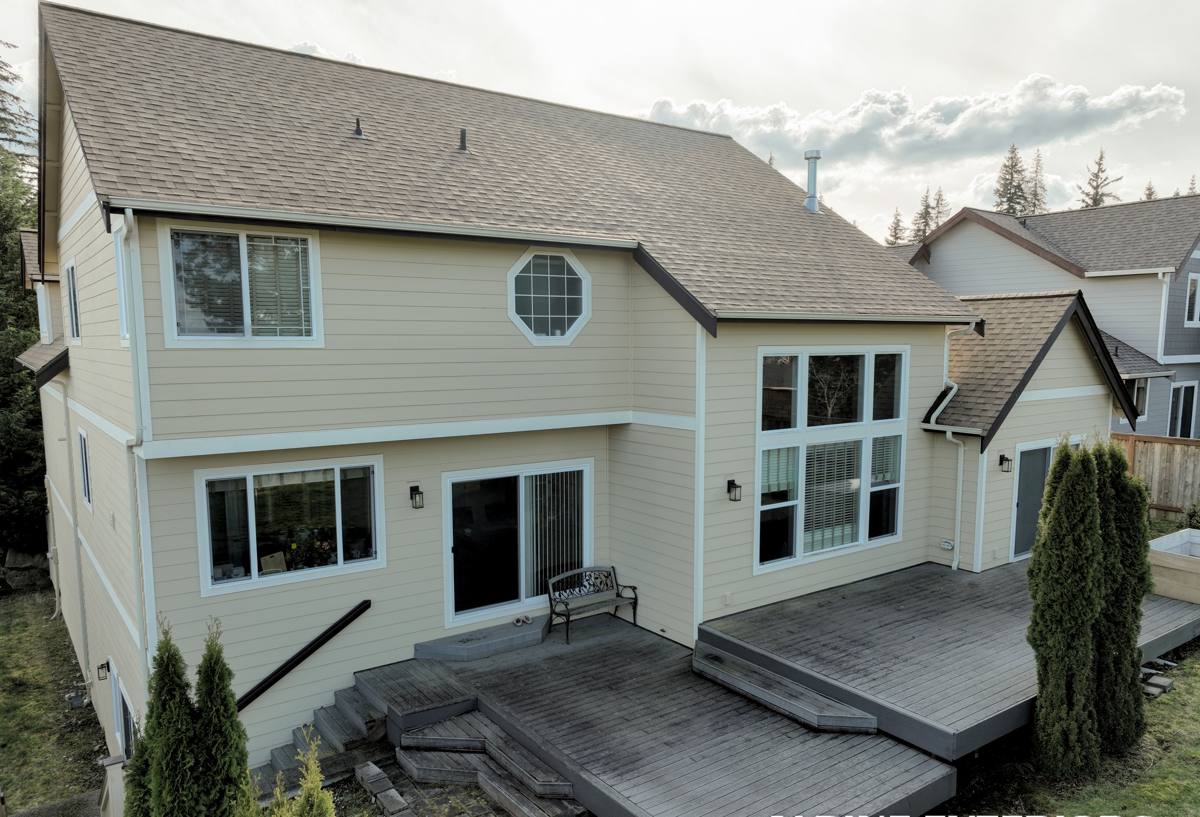
What a Correct Deck Repair Actually Involves
A repair that only addresses the visible symptom tends to come back. Doing it right means understanding what's underneath the problem.
- Identifying whether damage is surface-level (finish, individual board) or structural (framing, ledger, posts, connections)
- Checking fastener condition, not just board condition — corroded or backed-out screws are often the real cause of movement or squeaking
- Inspecting the ledger board connection to the house, which carries a significant share of the deck's total load and is a common point of hidden rot
- Confirming post bases and footings haven't shifted or settled, especially on decks built on grade rather than a slab
- Checking railing posts and connections for looseness — this is a safety item, not just a cosmetic one
- Matching repair materials to what's already there, or recommending a upgrade where the existing material or hardware was undersized for the exposure
Common Repairs We Handle in Parrish
Rotted or Damaged Boards
Whether it's a few deck boards that have gone soft near a drainage low point or a section of framing that's been compromised by long-term moisture intrusion, board and framing replacement needs to match the structural capacity of what it's replacing — not just look similar on top.
Loose or Failing Railings
Railing failures are one of the more serious deck issues because they're a fall-safety concern, not just an annoyance. A railing that flexes or wobbles usually means the post connection at the framing level has loosened or corroded, and that needs to be corrected at the connection, not just tightened at the surface.
Squeaking, Bouncing, or Springy Sections
This is almost always a fastener or framing issue — either screws have backed out from repeated wet-dry cycling, or a joist has more deflection than it should because of moisture damage or an undersized span.
Fastener Pop and Surface Popping
Screws or nails that back out over time create trip hazards and let water into the fastener hole itself, accelerating rot underneath. This is a quick fix if caught early and a bigger one if ignored for a few seasons.
Storm Damage
After significant wind events, we check for loosened structural connections that aren't always visible — a deck can look fine and still have compromised ledger fasteners or post connections that need attention before the next storm season.
Finish and Surface Restoration
UV-damaged wood surfaces, graying, and finish breakdown are addressed differently than structural repair, but they matter — a failed finish accelerates the moisture problems described above.
Wood vs. Composite: Repair Considerations
What a deck is built from changes how it fails and how it should be repaired. We work on both, and we're upfront about the trade-offs of each rather than pushing one material as universally better.
| Factor | Wood Decking | Composite Decking |
|---|---|---|
| Typical failure mode | Rot, splitting, UV-driven surface breakdown | Fastener-point moisture trapping, surface fading, occasional board expansion issues |
| Repair approach | Board or framing replacement, refinishing, fastener correction | Board replacement matched to existing color/profile, hardware correction |
| Maintenance burden | Higher — periodic sealing/staining needed to keep UV and moisture resistance up | Lower surface maintenance, but hidden framing still needs inspection |
| Hidden framing | Usually wood — same rot risk as the surface | Often wood framing under composite boards — still needs the same inspection |
| Hardware sensitivity | Standard exterior-rated fasteners, but salt air still corrodes over time | Requires fasteners rated for the specific composite product to avoid surface damage |
One thing that applies to both: the framing underneath is almost always wood, regardless of what the surface decking is made from. A composite deck with rotted joists underneath is not a minor repair, and it's one of the more common surprises we find during an inspection.
Our Repair Process
- Inspection first. We walk the full deck — surface, railings, stairs, and, where accessible, the framing and connections underneath — before recommending anything.
- Honest scope. We tell you plainly whether you're looking at a targeted repair or whether the damage points to a larger structural issue that needs more than a patch.
- Matched materials. Repairs use materials and hardware rated for Gulf Coast exterior exposure, matched to your existing deck where possible.
- Connection-level fixes. We correct the underlying fastener or framing issue, not just the visible symptom, so the same problem doesn't reappear in a season or two.
- Clean handoff. You get a clear explanation of what was repaired, what to keep an eye on, and any maintenance recommendations specific to your deck's material and exposure.
Why It Matters to Hire a Crew That Already Works Parrish
A deck repair crew that works regularly in Manatee County has already seen how local conditions play out over years, not just in theory. That familiarity shows up in practical ways: knowing which fastener grades hold up against the salt air moving in from Tampa Bay, knowing how quickly wood decking left unsealed can start showing UV damage in this climate, and knowing what wind-driven rain does to a ledger connection over a few hurricane seasons. It also means someone who can look at a Parrish deck and reasonably judge whether a problem is isolated or a sign of a broader issue, because they've seen the pattern before on similar homes in the same weather.
Permitting and code requirements for deck repair can also vary depending on the scope of work and whether structural elements are involved. A local crew already understands how that applies in Manatee County, which avoids delays or rework caused by unfamiliarity with local requirements.
When to Call for a Deck Inspection
- Boards that feel soft, spongy, or spring back slowly when stepped on
- Railings that flex, wobble, or feel less solid than they used to
- Visible gaps, cracks, or separation where boards meet framing
- Rust streaks or corrosion visible around fastener heads
- New squeaking or movement that wasn't there before
- Any deck that took direct wind exposure during a recent storm and hasn't been checked since
- Sun-bleached or graying wood that hasn't been resealed in several years
Catching these early is almost always cheaper and simpler than waiting until a board fails or a railing gives way. Deck damage in this climate tends to move from cosmetic to structural faster than homeowners expect, mostly because the moisture and UV exposure never really stop.
If your Parrish deck has a soft spot, a wobbly railing, or you just want an honest read on its condition after this year's storms, we're happy to take a look. Reach out for a free, no-pressure estimate using the form below.