 Bradenton Window
 Ellenton sits in Manatee County along the Manatee River, in a stretch of the Bradenton area that catches the same hurricane-force wind events, intense year-round sun, and salt-laden air that push siding to fail faster than it would in a milder climate. A lot of the siding damage we see out here isn't dramatic — it's cracked panels at a corner, a buckled section near a downspout, chalky faded paint on an older home, or soft trim around a window that's been quietly taking on moisture for a season or two. None of that fixes itself, and patched wrong, it comes back worse. We repair siding in Ellenton regularly, and we treat every job as a chance to find out why the damage happened, not just cover it up.
Why Ellenton Homes Need Siding Repair Handled Right
Three things drive most of the siding repair calls we get in this part of Manatee County. First, wind — hurricane-force gusts don't just tear panels off in a named storm, they work siding loose over years of routine wind loading, especially at corners, edges, and anywhere a panel wasn't fastened to spec. Second, sun — Florida's UV load runs hard almost all year, and it breaks down paint films, caulk, and lesser siding materials faster than most homeowners expect, leading to fading, chalking, and brittle trim long before the siding is actually worn out structurally. Third, moisture and salt — wind-driven rain during storms and everyday squalls pushes water sideways into seams and laps that were never meant to handle direct pressure, and the salt air riding in off the Gulf and up the Manatee River corridor accelerates corrosion on fasteners and trim hardware the whole time, whether or not a storm ever hits.
None of that makes Ellenton a bad place to own a house with siding — it just means repairs here need to account for all three factors at once, not just patch the visible damage and move on.
What the Climate Actually Does to Siding Here
On a wind-damaged panel, the failure almost always starts at a fastening point or a butt joint, not in the middle of a flat section. Once wind works a panel loose, that gap becomes an entry point for wind-driven rain, and water gets behind the siding where it can rot sheathing or trim long before it shows up as a visible problem on the surface. UV exposure works more slowly but just as steadily — it's why older siding on Ellenton homes often looks faded or chalky on the sun-facing elevations well before the shaded side shows the same wear. And salt air is the quiet one: it corrodes nails, screws, and trim fasteners from the inside of a wall assembly, which means a repair that only addresses the siding surface and ignores the fastener condition underneath doesn't actually solve the problem.
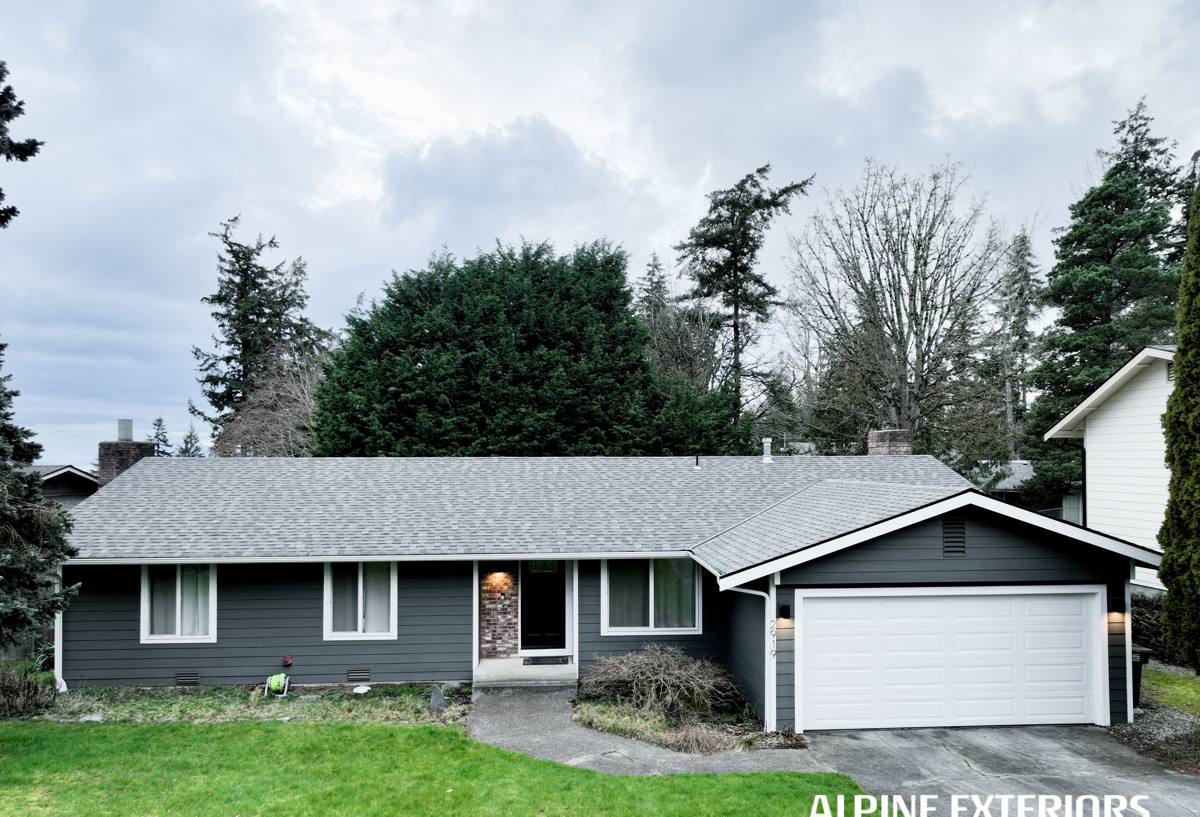
Common Siding Damage We See in Ellenton
- Cracked or split panels — from wind flex, impact debris, or age-related brittleness in lesser materials
- Buckled or bowed sections — usually a sign of moisture trapped behind the siding or fasteners driven too tight during the original install
- Faded, chalking paint — most common on older wood or fiber cement that's overdue for a repaint, especially on south- and west-facing walls
- Soft or rotted trim — around windows, doors, and corner boards where moisture has been getting behind the siding undetected
- Nail pops and loose fasteners — corrosion or wind cycling working screws and nails out over time
- Gaps at seams and butt joints — original caulking or flashing that's failed and needs to be rebuilt, not just resealed on the surface
- Impact damage — from storm debris, falling branches, or lawn equipment, ranging from cosmetic dents to full panel breaks
What a Correct Siding Repair Job Involves
Diagnosing the Real Problem First
The visible crack or gap is rarely the whole story. Before we replace anything, we check what's happening behind the damaged section — whether the sheathing or trim underneath has taken on moisture, whether the fasteners nearby are corroded, and whether the original installation detail (flashing, overlap, gap spacing) was done correctly in the first place. Patching over a section that's still wet underneath, or reusing failed flashing, just guarantees the same repair call again in a year or two.
Matching Material and Finish
A repair on an existing home has to blend in, which means matching plank width, texture, and color as closely as the original material allows. When the existing siding is still sound and just needs a section replaced, we match what's there. When the damaged area needs new material and the existing siding is aging out anyway, that's the point where we talk through whether a full or partial re-side with James Hardie fiber cement makes more sense than continuing to patch a product that's reaching the end of its service life.
Flashing and Moisture Details
This is the step that determines whether a repair actually lasts through the next hurricane season. Every seam, corner, and penetration around the repaired section gets flashed and sealed to shed water outward, not rely on caulk alone to keep it out. On a coastal-influenced property like an Ellenton home, we treat this detail as non-negotiable — it's the difference between a repair that holds and one that reopens the same problem within a year.
Fastening and Finish
We use corrosion-resistant fasteners set to the manufacturer's spacing and depth, not just whatever was already in the wall. Trim and touch-up finish work gets matched to the surrounding paint or factory finish so the repaired section doesn't stand out, and doesn't become the next spot that fades or chalks ahead of the rest of the house.
Repair vs. Replace: How We Make That Call
| Factor | What It Usually Means |
|---|---|
| Extent of damage | A few isolated panels or a corner section is usually a straightforward repair; damage spread across multiple elevations often points toward replacement |
| Age and condition of existing siding | Siding already near the end of its service life is rarely worth continuing to patch — the next repair call is just a matter of time |
| Underlying moisture damage | If sheathing or framing behind the siding has rot or sustained water damage, that has to be addressed regardless of whether you repair or replace |
| Material availability for matching | Discontinued colors or profiles can make an exact match difficult, which sometimes tips the decision toward replacing a full elevation instead of patching |
| How the home is used long-term | If you're planning to stay and want to stop cycling through repairs, replacing with a climate-engineered material can cost less over time than repeated patch jobs |
We'll give you a straight answer on which side of that line your siding falls on. If a repair is the right call, we do the repair — we don't push a full re-side on a home that doesn't need one.
Why We Only Repair With James Hardie Fiber Cement
When a repair calls for new siding material — whether it's a few replacement panels or a full section — we use James Hardie fiber cement, and it's the only siding product we install. We don't carry LP SmartSide, vinyl, Cemplank, Allura, or primed wood, and that's a deliberate standard, not a limitation on what's available. Fiber cement is non-combustible, which matters on a home dealing with Florida's UV and storm exposure over decades, not just one season. Hardie's factory-applied ColorPlus finish is baked on and warranted against fading in a way that field-applied paint on wood or repainted vinyl generally isn't, which matters directly in a climate that fades paint faster than most of the country. And Hardie's HZ product lines are engineered specifically for high-humidity, storm-prone climates like ours, with moisture and impact performance that holds up better under the exact conditions Ellenton sees year-round.
That doesn't mean every other material is a bad choice for every homeowner. Vinyl is lighter and less expensive up front, wood has a traditional look some homeowners want, and other fiber cement brands have their own track records. But when we're the ones doing the install and standing behind the warranty, we install the product we trust to hold up on this coastline, and that's James Hardie.
Our Process, Start to Finish
- Inspection — we look at the damaged area and check what's happening behind it, not just what's visible from the ground
- Diagnosis and quote — a straight explanation of what caused the damage, what repair or replacement it actually needs, and a clear estimate
- Prep — removing damaged material, checking and correcting sheathing, trim, or fastener issues found underneath
- Repair or replacement — matching material where possible, or installing James Hardie fiber cement where new material is needed
- Flashing and sealing — rebuilding the moisture management detail around the repaired area, not just resealing the surface
- Finish and cleanup — matching paint or factory finish, clearing debris, and a final walkthrough with you before we call it done
Quick Checklist Before You Hire a Siding Repair Contractor
- Ask what caused the damage, not just what it will cost to cover it up
- Confirm they'll check for moisture or rot behind the siding, not just replace the visible section
- Ask how they plan to match the existing material, color, and texture
- Get the flashing and sealing plan explained for the specific area being repaired
- Ask whether corrosion-resistant fasteners are standard on their repairs
- Get the repair-versus-replace recommendation in writing, with the reasoning behind it
Why Hiring a Crew That Works Ellenton Regularly Matters
Siding repair looks straightforward from the outside — pull off a bad panel, put on a new one. Done wrong, it's a callback waiting to happen. A crew that works Manatee County and the Bradenton area regularly knows which failure patterns show up on which house styles, how much lap and fastening a repair needs to actually hold through hurricane season, and when a patch is a real fix versus a short-term cover-up that reopens the same problem in a year. That's not something a one-time visit from an out-of-area crew reliably gets right, because it's built from doing this work on this coastline repeatedly, not from a manufacturer's generic installation sheet.
We're not guessing at how Ellenton's mix of wind, sun, and salt air treats a given siding material or repair detail over time. That experience is what separates a repair that holds up for years from one that's back on our schedule the following season.
Ready When You Are
If you've got storm damage, fading, soft trim, or a section of siding that's come loose, it's worth having someone look at what's actually happening behind it before you decide whether to patch it or replace it. We offer free, no-pressure estimates for siding repair in Ellenton and the surrounding Bradenton area — use the form below to get a time on the schedule.