 Bradenton Window
 Why Mill Creek Siding Takes More Punishment Than Most
Homes in the Mill Creek area of Bradenton sit in one of the tougher climates in the country for exterior building materials. Manatee County's proximity to the Gulf means siding here doesn't just deal with sun and rain the way a house in a drier, cooler state would — it deals with hurricane-force wind loads during storm season, salt-laden air moving in off the water, wind-driven rain that gets pushed sideways into every seam and joint, and some of the most intense, sustained UV exposure in the continental United States. Any one of those factors will shorten the life of the wrong siding material. Combined, they do it fast.
That's the lens we look through every time we replace siding on a Mill Creek home. It's not just about picking a product that looks good going up — it's about picking one that's still doing its job in fifteen or twenty years, after hundreds of humid summers, a handful of tropical systems, and constant salt exposure most of the country never has to think about.
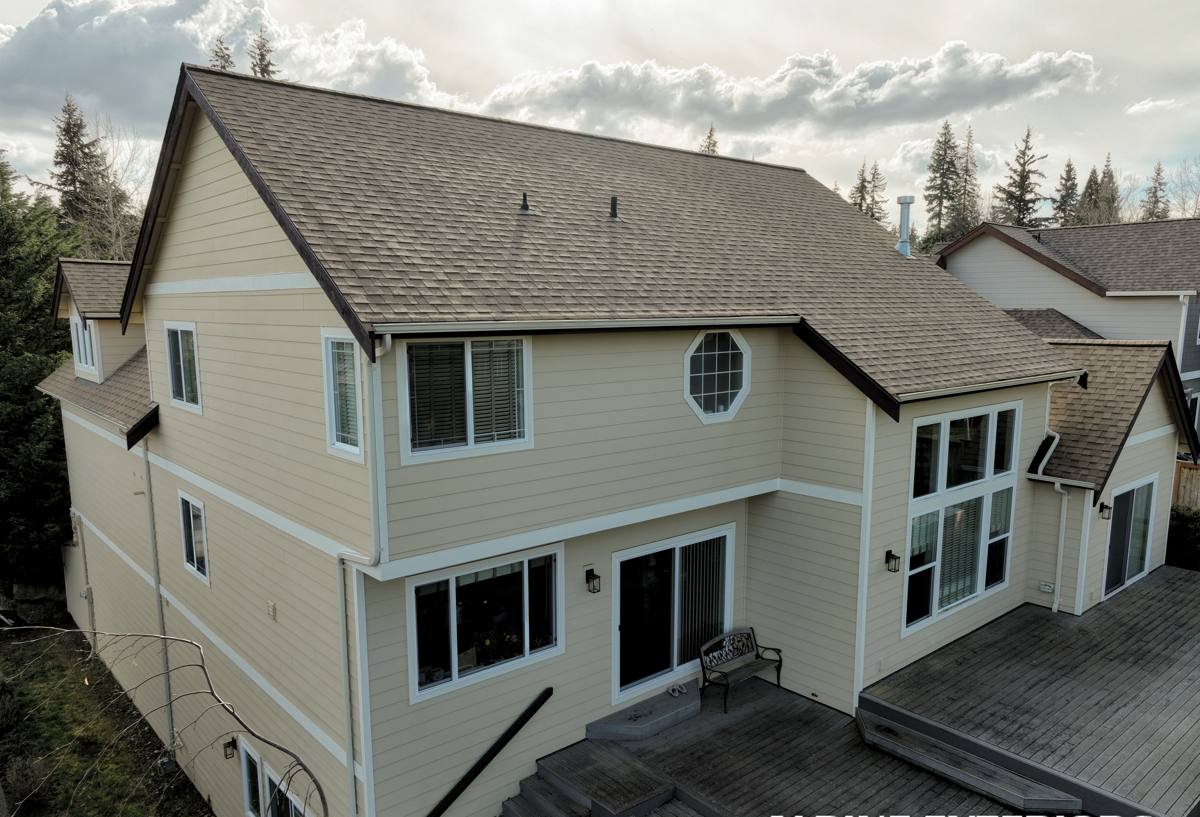
Warning Signs Your Mill Creek Home Needs New Siding
Siding failure in this climate rarely shows up as one dramatic problem. It's usually a handful of smaller signs that add up over a few years. If you're seeing more than one or two of these, it's worth having the siding looked at before it turns into a sheathing or framing problem underneath.
- Cracking, warping, or visible buckling along wall sections, especially on the sides that catch the most sun or the most wind-driven rain
- Soft or spongy spots when you press on the siding, which usually means moisture has reached the substrate
- Paint that's peeling, bubbling, or chalking well ahead of schedule
- Streaking, dark staining, or mildew growth that comes back shortly after cleaning
- Visible gaps opening up at seams, corners, or trim boards
- A musty smell near exterior walls, or rot visible at the bottom edge of siding boards
- Noticeably higher cooling bills, which can mean compromised siding is letting heat and moisture into the wall cavity
What a Correct Siding Replacement Actually Involves
Siding replacement isn't just stripping off the old material and nailing up new boards. In a coastal wind and rain climate like Bradenton's, the details underneath the visible siding are what determine whether the job holds up.
Tear-Off and Sheathing Inspection
Every full siding replacement should start with a complete tear-off, not an overlay. That's the only way to see the sheathing and framing underneath and catch hidden moisture damage before it's sealed behind new siding for another decade. Any soft, rotted, or water-stained sheathing needs to be cut out and replaced — covering it up just hides the problem.
Weather-Resistive Barrier and Flashing
Wind-driven rain doesn't fall straight down — it gets pushed horizontally and even upward under eaves and around openings. A correctly installed weather-resistive barrier, properly lapped and taped, along with correctly integrated flashing at every window, door, and penetration, is what actually keeps that water out of the wall assembly. This is the layer most likely to get rushed on a low-bid job, and it's the layer that matters most in this climate.
Fastening to Wind-Load Specs
Florida Building Code sets fastening and installation requirements specifically because of the wind loads this part of the state has to withstand. That means correct nail or screw type, correct spacing, and correct fastener penetration into the studs — not just "close enough." Under-fastened siding is one of the more common causes of siding failure we see during storm season, and it's completely avoidable with the right installation.
Why We Install Only James Hardie Fiber Cement Siding
We made a deliberate decision to install James Hardie fiber cement siding exclusively, and not offer vinyl, LP SmartSide, or other fiber cement brands. That's not a marketing position — it's a standard we hold because of what this climate does to exterior materials over time.
Fiber cement is non-combustible, which matters in a state where lightning strikes and wildfire exposure are real considerations. Hardie's ColorPlus factory-applied finish is baked on under controlled conditions rather than field-painted, which gives it far more consistent UV and fade resistance than a job-site paint job — a meaningful advantage given how intense and sustained the sun exposure is here. Hardie also engineers specific product lines, including its HZ5 formulation, for hot, humid, moisture-heavy climates like ours, rather than selling one generic board nationwide. And Hardie backs the product with a strong, transferable warranty, which matters to homeowners who may sell within the life of the siding.
None of this means other products are junk. It means that when we weighed moisture behavior, UV performance, impact resistance, and long-term maintenance against what Mill Creek homes actually go through every year, Hardie fiber cement was the product we were willing to put our name behind.
Our Siding Replacement Process for Mill Creek Homeowners
We run the same disciplined process on every siding replacement, because skipping a step is exactly how coastal homes end up with hidden moisture problems a few years down the road.
- On-site assessment — we walk the exterior, check current siding condition, and look for signs of existing moisture intrusion before quoting the job
- Full tear-off — old siding comes off completely so the sheathing can be inspected, not covered up
- Repair as needed — any rotted sheathing, framing, or trim is cut out and replaced before anything new goes up
- Weather barrier and flashing — a new weather-resistive barrier and properly integrated flashing go in around every window, door, and penetration
- Hardie installation to manufacturer and code spec — correct fastener type, spacing, and clearances, installed by a crew trained on Hardie's specific requirements
- Trim, caulking, and factory-finish detailing — joints and transitions sealed correctly so the ColorPlus finish performs as designed
- Final walk-through — we go over the finished job with you before we consider it done
What Drives the Cost of Siding Replacement
Every Mill Creek home is a little different, so costs vary based on a handful of specific factors rather than a flat per-square-foot number. Here's what actually moves the price on a siding replacement quote.
| Factor | Why It Matters | Typical Impact |
|---|---|---|
| Extent of hidden damage | Rotted sheathing or framing found during tear-off has to be repaired before new siding goes on | Can add meaningfully to cost, but is impossible to know until tear-off |
| Home size and wall complexity | More linear footage, more corners, more window and door openings all mean more labor and material | Larger, more cut-up facades cost more per square foot than simple rectangular walls |
| Siding profile chosen | Lap siding, panel siding, and shingle-style Hardie products have different material and install costs | Moderate variation depending on style selected |
| Trim and accessory scope | Fascia, soffit, and trim work bundled into the project add material and labor | Adds cost but often makes sense to do at the same time as siding |
| Story height and access | Two-story walls and difficult access require more equipment and labor time | Moderate to significant increase over single-story work |
Why Hiring a Crew That Already Works in Mill Creek Matters
Siding installation isn't uniform across the country, and it shouldn't be treated that way. A crew that regularly works in and around Bradenton already understands the wind-load fastening requirements the Florida Building Code demands here, knows how to detail flashing for the kind of wind-driven rain this area gets, and has already worked through the local permitting process rather than learning it on your project. That familiarity shows up in fewer surprises, fewer inspection delays, and a job that's built for the specific conditions Mill Creek homes face — not a generic install pulled from a different climate.
Caring for Your New Siding After Installation
Correctly installed Hardie siding is low-maintenance, but "low" isn't "none," especially this close to the Gulf. A few habits go a long way toward getting the full life out of your investment.
- Rinse the exterior periodically to clear salt residue and airborne grit, especially after storms
- Inspect caulking at trim, corners, and penetrations once a year and have any cracked joints resealed promptly
- Keep gutters and downspouts clear so water is directed away from the wall assembly rather than running down the face of the siding
- Trim back landscaping that traps moisture against the siding or blocks airflow along the wall
- Address any impact damage quickly rather than letting a small chip become an entry point for water
If you're weighing a siding replacement for your Mill Creek home, we're happy to take a look and give you a straight, no-pressure assessment of what your home actually needs. Use the form below to request a free estimate.