 Bradenton Window
 Siding Replacement Built for What Parrish Weather Actually Does
Parrish sits in northeastern Manatee County, and like the rest of the Bradenton area, homes here take a beating from four things at once: hurricane-force wind gusts during storm season, intense UV exposure nearly year-round, wind-driven rain that forces water into places it was never meant to go, and salt-laden air drifting in from Tampa Bay and the Gulf. Siding is the single largest barrier standing between that exposure and your home's structure. When it fails, it usually fails quietly at first — a hairline crack, a soft spot, a seam that stops sitting flush — long before it becomes an obvious problem.
This page is about one thing: replacing siding correctly on a Parrish home, with a product and installation approach engineered for exactly this climate. Not a general overview of siding — the specific job, done right, for this area.
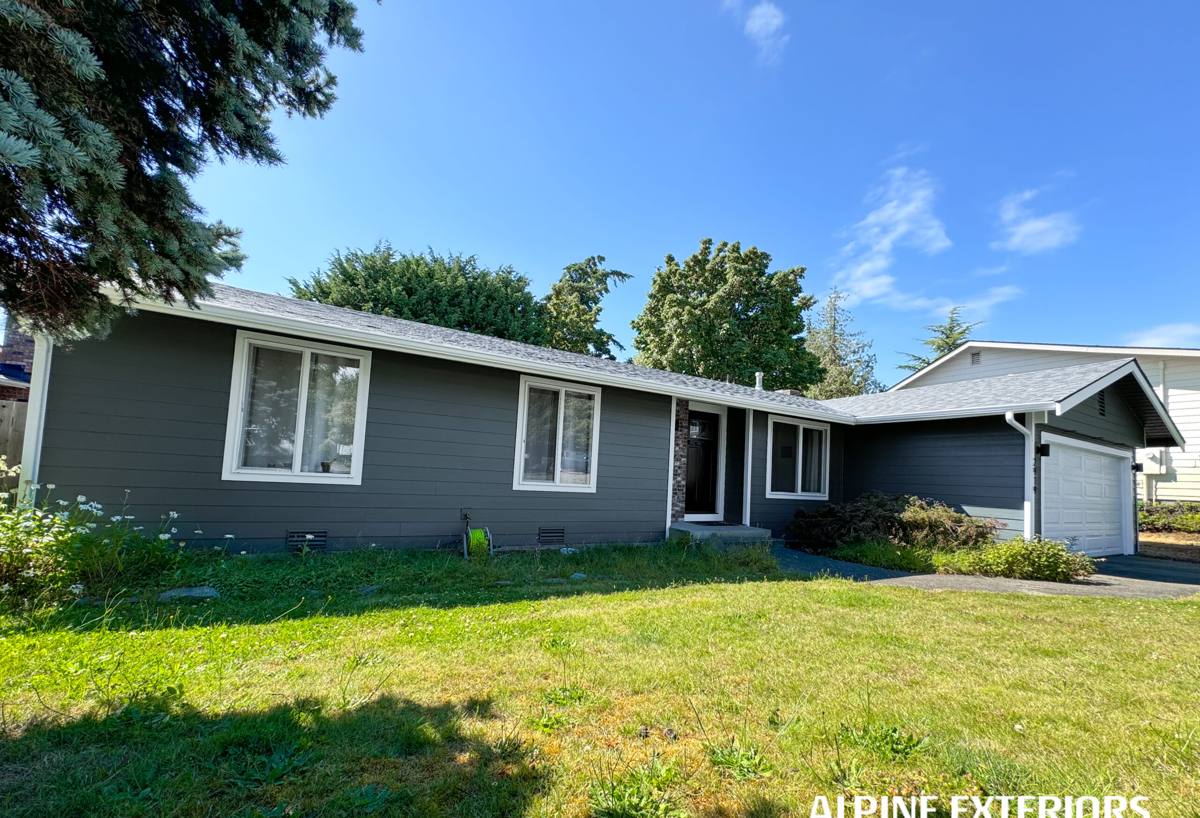
What Years of Florida Exposure Does to Siding
Every siding material ages differently under Florida conditions, but the mechanisms of failure are consistent across the board:
UV Breakdown
Constant sun exposure fades color and breaks down the resins and adhesives in lower-grade siding materials. Field-applied paint chalks and thins over a few years, exposing the substrate underneath to moisture it was never designed to handle unprotected.
Wind-Driven Rain
Rain in Manatee County rarely falls straight down. During tropical storms and summer squalls, it's pushed sideways into laps, seams, and butt joints. If the flashing, laps, and fastening weren't done to spec, water gets behind the siding and into the wall assembly — where it causes rot and hidden damage long before it shows up on the surface.
Salt Air Corrosion
Even well inland from the coast, salt-laden air accelerates corrosion of fasteners, trim, and metal flashing. Siding that looks intact can still be failing at the fastener level, which is why proper fastener selection matters as much as the siding material itself.
Wind Load
Siding that isn't fastened to the correct pattern, or that has degraded over time, is the first thing to lift, crack, or peel away in a high-wind event — often triggering a much larger repair than the siding alone.
Parrish is one of the faster-growing parts of Manatee County, with a mix of newer construction and established homes. Newer homes aren't immune to siding problems — builder-grade material and rushed installation show up as failures within a few years just as often as age-related wear does on an older home.
Signs Your Parrish Home Needs Siding Replacement, Not Just Repair
- Cracked, split, or visibly warped boards or panels, especially on sun-exposed walls
- Soft spots when you press on the siding, or bubbling/peeling paint that signals trapped moisture
- Siding that has pulled away from the wall at seams or corners after a storm
- Needing to recaulk or repaint the same areas repeatedly without the problem going away
- Visible rot, staining, or pest activity near the bottom courses or around trim
- Noticeably higher cooling bills, or drafts felt near exterior walls
- Siding that's simply reached the end of its practical service life and is due for full replacement
Why We Install Only James Hardie Fiber Cement Siding
We don't install vinyl, LP SmartSide, Cemplank, Allura, or primed wood products like spruce or cedar. That's a deliberate standard, not a limitation of what we're capable of installing. Each of those products has legitimate strengths, but in a climate that combines hurricane wind exposure, constant UV, wind-driven rain, and salt air, we've seen the trade-offs consistently outweigh the upside: vinyl can warp and become brittle under prolonged heat and impact, wood-based products are more sensitive to moisture and require more upkeep to hold paint and resist rot, and field-finished products depend heavily on maintenance schedules being kept up.
James Hardie fiber cement siding is non-combustible, engineered specifically for humid, storm-prone climates in its HZ product lines, and finished at the factory with ColorPlus Technology — a baked-on finish that resists UV fade far better than a field-applied paint job and doesn't require repainting on the same cycle. It doesn't absorb water and swell the way wood-based products can, and it carries a strong, transferable warranty when installed to manufacturer specification. That's the product we put on Parrish homes, and it's the standard we hold every installation to.
Hardie Product Lines We Work With
| Product | Best For | Typical Use on Parrish Homes |
|---|---|---|
| HardiePlank Lap Siding | Traditional horizontal siding look | Full-home replacement on ranch and two-story homes |
| HardiePanel Vertical Siding | Board-and-batten or modern vertical look | Accent walls, gables, and porch areas |
| HardieShingle Siding | Staggered or straight-edge shingle appearance | Accent gables and architectural detail sections |
What a Correct Siding Replacement Job Actually Involves
Siding replacement isn't just removing old material and nailing up new boards. Done correctly, it involves several steps that determine whether the new siding actually performs for its expected lifespan in this climate:
- Full tear-off of the old siding and inspection of the sheathing underneath for hidden rot or moisture damage
- Repair or replacement of any damaged sheathing before new siding goes on — covering a problem never fixes it
- Installation of a proper weather-resistive barrier as the home's real moisture defense layer
- Correct flashing at every window, door, and penetration point, since flashing — not caulk — is what actually keeps wind-driven rain out
- Fastening in the pattern and with the fastener type James Hardie specifies, using corrosion-resistant fasteners appropriate for salt-air exposure
- Proper clearance from grade, roofline, and other transitions so water sheds away instead of wicking into the material
- Caulking and sealant used only where specified, not as a substitute for correct flashing and lap work
Skipping any one of these steps is how a siding job looks fine for a year or two and then fails early — usually right where a shortcut was taken.
Our Process for Parrish Homeowners
- On-site assessment — we inspect your current siding, look for signs of underlying moisture or sheathing damage, and evaluate what's driving the need for replacement
- Product and color selection — choosing the right Hardie line and ColorPlus finish for your home's style and exposure
- Permitting — handling the required Manatee County permitting before work begins
- Tear-off and sheathing repair — removing old material and correcting any hidden damage found underneath
- Installation to manufacturer specification — weather barrier, flashing, fastening, and clearances done to Hardie's published requirements
- Final walk-through — reviewing the completed work with you before we consider the job done
What Affects the Cost of Siding Replacement
Every home is different, so we don't quote prices without seeing the job — but these are the main factors that drive cost up or down on a typical Parrish home:
| Factor | Why It Matters |
|---|---|
| Home size and number of stories | More square footage and higher elevations mean more material and labor time |
| Condition of the sheathing underneath | Hidden rot found during tear-off adds repair work before new siding can go on |
| Hardie product line selected | Lap, panel, and shingle products differ in material and installation time |
| Trim and architectural detail | Gables, dormers, and accent areas take more precision and time than flat wall runs |
| Removal and disposal of old siding | Volume and type of the material being removed affects labor and disposal costs |
| Site accessibility | Landscaping, fencing, or tight lot lines can add time to staging and setup |
Why Hiring a Crew That Already Works in Parrish Matters
Siding installed correctly on paper can still underperform if the crew doesn't understand the specific conditions it has to survive here. A contractor who regularly works Manatee County knows the permitting process, understands the wind and moisture demands local code is built around, and has seen firsthand how the mix of newer construction and established homes in Parrish tends to develop problems over time. That local familiarity shows up in the details — fastener selection, flashing choices, and knowing which parts of a home take the worst of the wind and rain. It also means faster response if storm damage needs attention, and a crew with a real, local track record to stand behind its work rather than a one-time out-of-area install.
If your Parrish home's siding is showing its age or storm damage, we'd be glad to take a look. Fill out the form below for a free, no-pressure estimate — we'll assess what's really going on and walk you through what correct replacement with James Hardie siding would involve for your home.