 Bradenton Window
 Parrish is one of the fastest-growing parts of Manatee County, and that growth shows up in two very different kinds of window jobs. On one side, there are newer production homes built along the growth corridor northeast of Bradenton, often carrying whatever builder-grade window met the minimum the permit required and nothing more. On the other, there are older rural and ranch-style homes scattered through Parrish's original footprint, some still running the aluminum-frame, single-pane windows that went in decades ago. Both situations land in the same place: windows that aren't doing what a Manatee County house actually needs from them. Window installation here isn't just picking a product and setting it in an opening — it's matching the unit, the install method, and the weatherproofing detail to a climate that punishes shortcuts.
What This Climate Does to Windows in Parrish
Manatee County windows deal with a combination of stresses that a lot of the country never has to design around. Hurricane-force wind events put direct pressure on glass and framing, and that pressure has to be resisted by the window itself and by how it's anchored into the wall — a strong unit installed with too few or too shallow fasteners fails the same way a weak unit does. Intense, near year-round UV breaks down lower-grade vinyl, weatherstripping, and sealants faster here than in a milder climate, which shows up as chalking, brittleness, and seal failure well before it should. Wind-driven rain during storms and even ordinary summer downpours pushes water sideways into wall assemblies, testing flashing details that a calmer climate would never stress. And salt air moving inland off the Gulf and Tampa Bay corrodes hardware, screen frames, and fasteners over time, a slow process that never really stops on a house in this part of Florida.
Why "Not Directly Coastal" Doesn't Mean Exempt
Parrish sits inland along the Manatee River corridor, not on the immediate Gulf coastline, and homeowners sometimes assume that means lighter requirements than a beachfront property. In practice, Florida Building Code wind provisions and Manatee County's permitting standards apply broadly across the county, and salt-laden air still moves well inland on a regular Gulf breeze. The distance from the water changes the degree of exposure, not whether the exposure exists. We evaluate wind requirements for the specific property rather than assuming an inland address gets a pass.
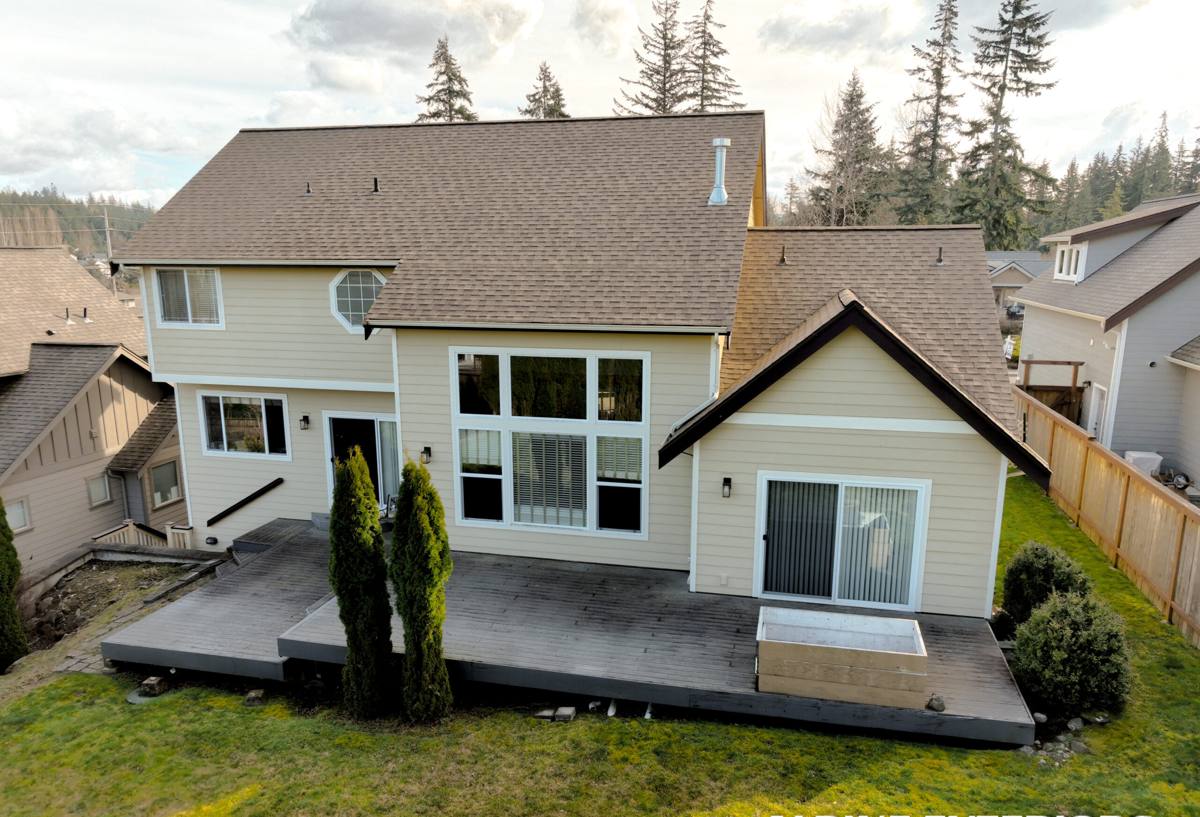
Two Very Different Starting Points
Because Parrish is growing so fast, we see two distinct window situations more often here than in an established, built-out neighborhood.
- Newer production homes — built to meet code at the time of construction, often with the builder's standard window package rather than an upgraded, higher-performance unit. These windows may technically pass inspection and still underperform in wind, heat, or noise compared to what's available now.
- Older rural and established homes — frequently fitted with original aluminum-frame or early-generation vinyl windows that predate current wind and impact standards entirely, along with openings that may not match modern stock sizing.
The right approach differs for each. A production home usually needs a straightforward upgrade to a better-performing, code-compliant unit in an opening that's already standard. An older home more often needs a real assessment of the opening, the surrounding framing, and whether the wall itself needs attention before a new window goes in.
What a Correct Window Installation Job Involves
Assessment and Product Selection
We start by measuring the actual opening and evaluating the wall's wind exposure, not by assuming a stock size or a one-size-fits-all product will work. That assessment determines what wind-pressure and impact rating the window needs to meet for that specific property, which is a code question as much as it is a performance question.
Removal and Opening Prep
Pulling the old window is when hidden problems show up — rotted framing, prior flashing failures, or moisture intrusion that's been sitting behind the old unit unnoticed. We address what we find before the new window goes in, not after, since covering a problem with a new window doesn't fix it.
Setting, Anchoring, and Sealing
A window rated for hurricane-force wind only performs that way if it's anchored the way the rating assumes. That means the correct fastener type, spacing, and embedment into sound structure, not just enough screws to hold the unit in place during install.
Flashing and Weatherproofing
This is the step that decides whether wind-driven rain stays outside the wall or works its way in. Flashing has to be sequenced correctly — lapped so water sheds outward and down, never trapped behind a sill or a head flange. It's easy to rush and hard to fix once the trim and siding go back on, which is exactly why it deserves the most attention on the job.
Trim and Finish
The last step is finishing the exterior trim and sealant joints to match the house and to hold up to constant UV and salt exposure over years, not just look right on install day.
Impact Windows vs. Non-Impact with Shutters
Both approaches can meet Manatee County wind code, but they work differently day to day, and homeowners deserve an honest comparison instead of a sales pitch for whichever product is easier to sell.
| Factor | Impact-Rated Windows | Non-Impact Windows + Shutters |
|---|---|---|
| Storm prep | No action needed before a storm — protection is built in | Shutters must be deployed every time, which depends on someone being home and able to do it |
| Day-to-day performance | Laminated glass also cuts outside noise and UV transmission year-round | No added noise or UV benefit outside of storm events |
| Upfront cost | Higher per window | Lower window cost, but shutters add their own cost and upkeep |
| Appearance | Clean sightlines with nothing added to the exterior | Shutter tracks and hardware are visible year-round |
| Long-term maintenance | Glass and frame are the only components to maintain | Shutter hardware and tracks need their own upkeep, and salt air corrodes hardware over time |
Neither option is wrong, and both are legitimate ways to meet code. We'll walk through which one makes more sense for your specific home and budget rather than defaulting to one for every job.
Our Installation Process
- On-site assessment — we measure every opening, check the wall's wind exposure, and look for any structural or moisture issues that need attention
- Honest recommendation — the product and rating that actually fit the home and budget, explained plainly, not upsold
- Ordering — a realistic timeline communicated upfront, since higher-rated and larger units typically take longer to arrive than basic stock sizes
- Removal and opening prep — the old window comes out carefully, and any hidden rot or flashing issues get addressed before the new unit goes in
- Installation and anchoring — the new unit is set, shimmed, and anchored to meet the wind-load requirements for its rating and size
- Flashing, sealant, and trim — weatherproofing detailed for the specific opening, then finished to match the rest of the exterior
What Drives the Cost of a Window Installation
| Factor | Why It Matters |
|---|---|
| Impact rating required | Higher wind-pressure and impact-rated units cost more than standard non-rated windows |
| Opening condition | Rot, prior water damage, or out-of-square framing on older homes adds repair work before the new window goes in |
| Size and glass area | Larger openings and picture windows cost more to manufacture and install, and carry more wind load |
| Frame material | Vinyl and fiberglass generally cost less to maintain long-term in salt air and UV than an all-wood exterior finish |
| Number of windows | A whole-house project typically has better per-unit pricing than replacing one or two windows at a time |
| Access and site conditions | Second-story openings or homes with limited access can add labor time |
Quick Checklist Before You Sign a Contract
- Confirm the opening was field-measured in person, not estimated from a rough guess or old plans
- Ask what wind-pressure and impact rating the proposed window meets for your specific address
- Get the anchoring and fastening method explained, not just the brand name of the window
- Ask what the flashing plan looks like, specifically how water is directed away from the sill
- Confirm whether the window unit and the installation labor carry separate warranties
- Get a written, realistic lead time for ordering and installation before you commit to a schedule
Why Hiring a Crew That Already Works in Parrish Matters
Manufacturer installation instructions are written for average, generic conditions. A crew that doesn't regularly work Manatee County's mix of new production framing and older, sometimes out-of-square construction can get the product rating right on paper and still miss the details that keep water and wind out in practice — how much a flashing course needs to overlap, which fastener pattern actually holds up to real hurricane-force wind rather than the bare code minimum, when a sealant joint needs extra attention because it will spend years cycling through Florida sun and salt air.
We work in Parrish and the surrounding Bradenton area regularly, which means we're not guessing at how a particular framing type, wall assembly, or opening style tends to hold up here over time. That shows up in the small calls on the job — the ones that decide whether a window installation is still sealed tight and performing after several hurricane seasons, or starting to leak and corrode within a few years.
Ready for an Honest Estimate
Whether you're upgrading builder-grade windows in a newer Parrish home or replacing original windows in an older one, it's worth having someone look at the actual openings and the home's wind exposure before you start pricing products. We offer free, no-pressure estimates for window installation in Parrish and throughout the Bradenton area — use the form below to get a time on the schedule.