 Bradenton Window
 Cortez sits on the water in Manatee County, and it doesn't take long living here to notice what that does to a house. This is a working waterfront community — one of the last of its kind on Florida's Gulf Coast — with a mix of older homes that have weathered decades of coastal exposure and newer construction built to current code. Whatever the age of the house, the windows in it are dealing with the same conditions: salt air off the water, hurricane-force wind loads, wind-driven rain that gets pushed sideways instead of falling straight down, and UV exposure that runs strong nearly year-round. None of that is unique to Cortez, but the degree of it is higher here than it is a few miles inland in Bradenton proper, simply because of how close the village sits to open water.
That combination is why window replacement in Cortez isn't quite the same job as window replacement somewhere more sheltered. The products that make sense, the way an opening gets flashed and sealed, and the code requirements that apply all shift once a home is this exposed. This page covers what Cortez homes actually need from a window replacement, what a correct installation involves, and why hiring a crew that already works this specific stretch of Manatee County waterfront is worth factoring into the decision.
Living With the Gulf: What Cortez's Exposure Does to Windows
Windows fail in predictable ways once they've been exposed to a marine environment long enough. Salt-laden air settles on hardware, fasteners, and frame components continuously, not just during storms, and it accelerates corrosion in ways that aren't always visible until a window starts binding, leaking, or refusing to lock properly. On older aluminum-frame windows especially, that corrosion can advance well before it shows up as anything more than a stiff crank handle or a lock that doesn't quite catch.
Wind is the other constant here. Hurricane-force gusts test a window's structural integrity directly, but ordinary storm wind does damage too — it drives rain into wall assemblies and window flashing at angles that gravity alone would never produce, finding gaps that would go untested in a calmer climate. A window that's watertight against a normal rain can still leak under wind-driven rain if the flashing behind the trim wasn't detailed correctly at installation.
Then there's the sun. Florida's UV load is among the highest in the country, and with little tree cover in many parts of a fishing village built close to open water, window frames and seals take that exposure directly for most of daylight hours, most of the year. UV breaks down vinyl and rubber components faster than manufacturers' standard warranty assumptions often account for, which is part of why product selection matters more here than it would in a shadier, more sheltered neighborhood.
The Housing Stock in Cortez and What It Means for Replacement
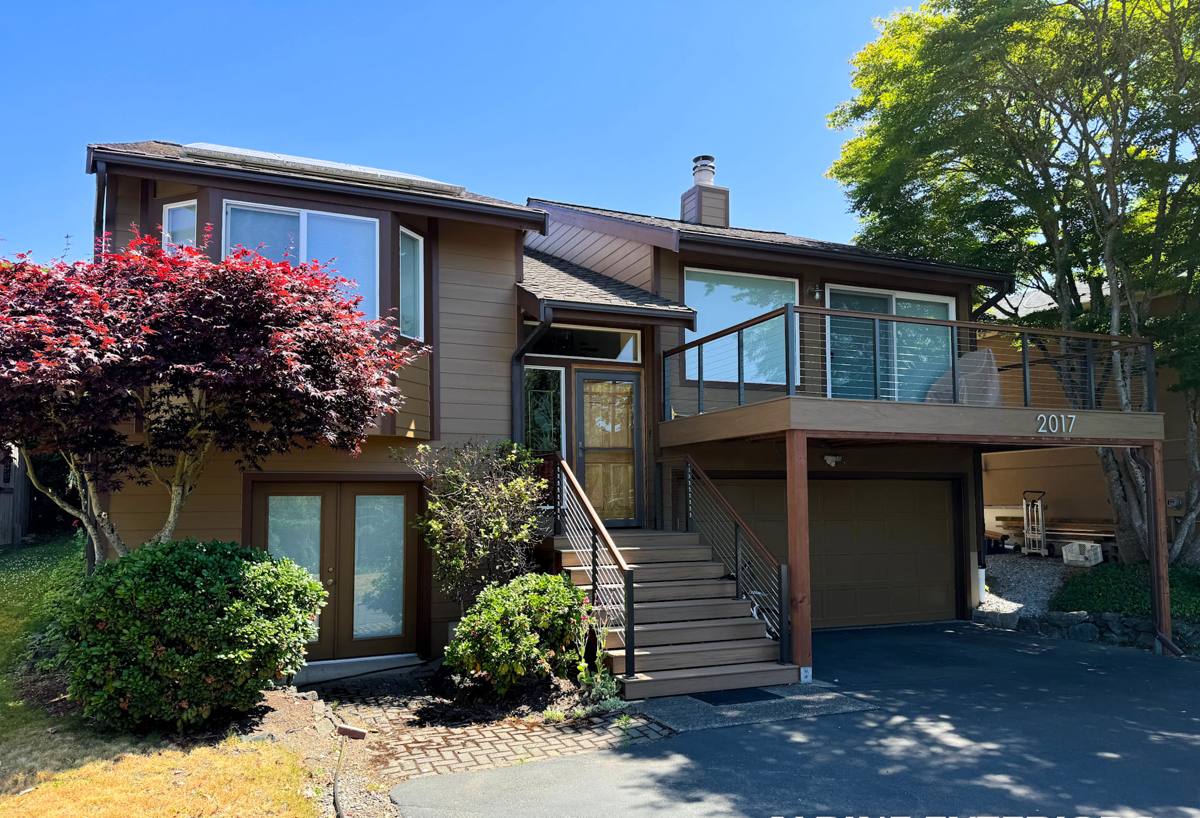
Cortez's character as a historic fishing village means the housing stock is genuinely mixed. Some homes are older, modest in scale, and built to the standards of an earlier era, with windows that may be original single-pane units or aluminum-frame replacements installed decades ago. Others are newer builds or substantial remodels, already carrying more current hurricane-rated glass and framing. That range matters because the right approach to a window replacement depends heavily on what's already there.
An older home with original openings often needs more than a simple unit swap — the rough opening, the wall assembly behind the trim, and the flashing details from decades ago frequently don't meet current expectations, even if the window itself still functions. A newer home with existing impact-rated windows might just need a straightforward like-for-like replacement when a unit reaches the end of its service life. Part of a correct estimate is figuring out which situation applies before assuming either one.
Historic Character Considerations
Parts of Cortez carry recognized historic significance as a fishing village, and some structures in the area may fall under historic designation or association-level guidelines that affect exterior changes, including window replacement. We don't assume this applies to every property, but it's worth checking before ordering materials — a homeowner in a designated structure may face different requirements around frame profile, sightlines, or exterior appearance than a homeowner elsewhere in the same village. We'll ask about this up front rather than find out after materials are ordered.
Florida Building Code and Wind-Borne Debris Requirements
Coastal areas of Manatee County generally fall within Florida's Wind-Borne Debris Region, which affects what's required for new and replacement windows depending on a property's specific wind speed line and distance from the coast. In practice, that usually means a choice between impact-rated glass or an approved protective system for any window opening, rather than the option to install a standard non-impact unit with no protection at all. Requirements can vary by exact location and by how a given jurisdiction has adopted the current code cycle, so we verify what applies to your specific address and don't assume one blanket answer covers every Cortez property.
Permitting is part of this too. Window replacement in Manatee County generally requires a permit, and inspectors are checking for compliance with the applicable wind and impact requirements, not just whether the window is installed straight and functions. Skipping the permit step might save a little time up front, but it can create real problems later — at resale, with insurance, or if work needs to be verified after a storm.
Choosing the Right Window for a Cortez Home
Frame Material
Frame material choice matters more in a marine environment than it does further inland, because each material handles salt air and UV differently. We walk through the trade-offs honestly rather than defaulting to one material for every job.
| Frame Material | Coastal Suitability | Maintenance | Notes |
|---|---|---|---|
| Vinyl | Good — won't corrode, but quality varies significantly by manufacturer | Low | UV-stable formulations hold up much better here than budget-grade vinyl, which can chalk or become brittle over time |
| Aluminum | Fair to good — strong, but prone to corrosion over time without proper coatings | Moderate | Common on older Cortez homes; newer coated and marine-grade aluminum performs better than older uncoated stock |
| Fiberglass | Very good — dimensionally stable, resists both UV and salt corrosion well | Low | Higher upfront cost, but often the strongest long-term match for full-exposure coastal properties |
Glass Package and Hardware
Beyond frame material, the glass package and hardware are where a lot of coastal performance actually lives. Impact-rated laminated glass handles wind-borne debris requirements and adds a layer of security and storm protection that shutters alone don't provide, since the glass stays in the frame during an impact rather than relying on a separate system being deployed in time. Hardware — hinges, locks, cranks, rollers — should be rated for coastal or marine use; standard-grade hardware is often the first thing to corrode and fail on a home this close to open water, well before the window itself has any real problem.
What a Correct Installation Actually Involves
Removal and Opening Prep
Pulling the old window is the easy part. What matters more is what happens once the opening is exposed — checking the rough opening framing for rot or corrosion damage that's been hidden behind trim for years, correcting anything that's compromised, and confirming the opening is square, level, and properly sized before a new unit ever goes in. Skipping this step to save time is one of the most common reasons a window installation fails early in a coastal environment.
Flashing and Sealing
Flashing is the part of the job that decides whether a window stays dry through years of wind-driven rain, and it's also the part most likely to get shortcut on a rushed installation. That means a proper drainage plane, correctly lapped flashing tape or membrane at the sill and jambs, and sealants rated for marine and UV exposure rather than a generic interior-grade caulk that will fail within a few seasons out here. The window itself is rarely what leaks first — it's almost always a flashing or sealant detail that wasn't done right.
Setting, Shimming, and Fastening
A window needs to be shimmed and fastened according to the manufacturer's specific installation instructions to maintain its impact rating and structural performance — this isn't optional on a wind-borne debris region installation, since an improperly fastened unit can fail its rating even if the window itself is rated correctly. Getting this step right is part of what a permit inspection is checking for.
Our Process, Start to Finish
- On-site assessment — we look at the actual openings, note the condition of existing framing, and identify anything (rot, prior water intrusion, historic considerations) that affects the plan before we talk product.
- Product selection — we walk through frame material, glass package, and code requirements for your specific address, and explain the trade-offs rather than pushing one option.
- Permitting — we handle the permit application and coordinate the required inspections so the paperwork isn't left to you.
- Removal and prep — old units come out, openings get inspected and corrected as needed before anything new goes in.
- Installation — new windows are set, shimmed, fastened, flashed, and sealed to manufacturer specification and current code.
- Final walkthrough — we check operation, sealing, and appearance with you before calling the job done, and go over warranty coverage on both the product and the labor.
Cost Factors to Expect
We won't quote a number without seeing the actual openings, but the factors that move price on a Cortez window job are fairly consistent from house to house.
| Factor | How It Affects Cost |
|---|---|
| Impact-rated vs. non-impact glass | Impact-rated laminated glass costs more upfront than standard glass with a separate shutter system, but eliminates the need to store, maintain, and deploy shutters before every storm |
| Frame material | Fiberglass generally costs more than vinyl or standard aluminum; the right choice depends on budget and how much exposure a given elevation gets |
| Opening condition | Framing repair or correction on an older opening adds labor beyond a straightforward like-for-like swap |
| Size and quantity | Larger openings and whole-house replacement projects typically see better per-unit pricing than one-off replacements |
| Historic or design constraints | Matching a specific frame profile or sightline for a historically significant structure can add cost over a standard stock unit |
Keeping Windows Performing Long-Term in Salt Air
A correctly installed window still needs some upkeep to get its full service life out of this environment. A few habits go a long way:
- Rinse frames, tracks, and hardware periodically with fresh water to slow salt buildup, especially after storms with onshore wind
- Check weep holes at the base of the frame to make sure they're clear and draining, not packed with salt residue, sand, or debris
- Inspect exterior caulk and sealant lines yearly for cracking or separation, and address gaps before they become leaks
- Exercise locks, cranks, and rollers a few times a year so hardware doesn't seize from disuse combined with salt exposure
- After any significant storm, do a visual check for loosened trim, new gaps, or water staining on interior sills
Why Hiring a Crew That Already Works Cortez Matters
Manufacturer installation instructions are written for average conditions, and Cortez isn't average — it's a working waterfront village with hurricane wind exposure, salt air, and, in places, historic character considerations layered on top of Manatee County's wind-borne debris code requirements. A crew that already works this community has seen which parts of a standard installation need extra attention here: how much lap a flashing course needs on a wall that takes wind-driven rain more often than most, which hardware grades hold up and which corrode within a few seasons, and how to navigate a historic designation without slowing the project down unnecessarily.
That familiarity also shows up in smaller, practical ways — knowing the county's permitting process and inspection expectations, understanding how this village's mix of older and newer construction typically frames out, and being able to give an honest answer about lead times and product fit rather than a generic sales pitch. None of that replaces a careful, correct installation, but it does mean fewer surprises along the way.
If your Cortez home has windows that are original, aging, leaking, or simply due for an upgrade to current impact standards, it's worth having someone look at the actual openings before you start pricing products. We offer free, no-pressure estimates for window replacement in Cortez and the surrounding Bradenton area — use the form below to get a time on the schedule.