 Bradenton Window
 Why Holmes Beach Siding Wears Differently Than Inland Siding
Holmes Beach sits on a barrier island, with Gulf water on one side and bay water on the other. That position means every wall on every home is closer to salt air, wind-driven rain, and direct sun than almost anywhere else in Manatee County. Siding here doesn't fail because it's old — it fails because it's been doing years of extra work that siding fifteen miles inland never has to do.
Salt carried on the air settles into seams, fasteners, and any small crack in a finish coat. Combined with near-constant humidity, that salt film holds moisture against the wall longer than plain rain does. Add Gulf-driven wind that pushes rain sideways into laps and corners instead of letting it run straight down, and you get a wall assembly under more sustained stress than a standard weather forecast would suggest. Layer on Florida's UV load, which is intense for most of the year, and you have three separate forces — salt, wind-driven water, and sun — all working on the same siding at the same time.
That's the backdrop for every siding repair call we take on Holmes Beach and the surrounding Anna Maria Island area. We're not just patching a hole or replacing a cracked board. We're evaluating what caused the damage and whether the repair will actually hold up against the same conditions that caused it in the first place.
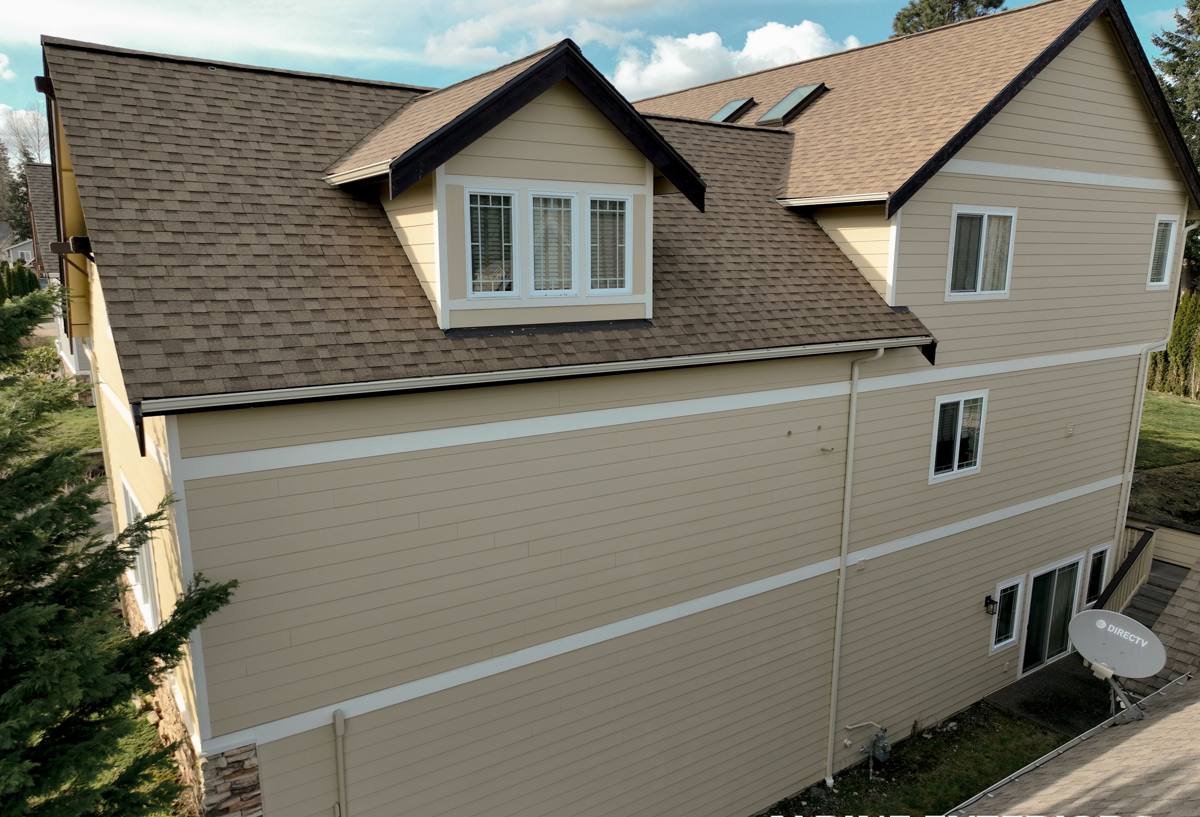
What Actually Causes Siding Damage on Barrier Island Homes
Wind and Storm Impact
Hurricane-force and tropical-storm-force winds are a real and recurring risk for any home this close to the Gulf. Wind doesn't just rip panels off — more often it works siding loose at the fastener points, cracks corner boards, or drives debris into a wall hard enough to punch or split a panel without dislodging the whole thing. That kind of damage can look minor from the ground and still be an open door for water.
Salt Air and Corrosion
Salt air accelerates corrosion in fasteners, trim flashing, and any metal accessory tied into the siding system. Once a fastener corrodes and loses its grip, the panel around it starts to move in wind, which enlarges the fastener hole and lets water in behind the siding — a slow leak that often isn't visible until it's already reached the sheathing.
Wind-Driven Rain
Most siding is designed assuming rain falls more or less straight down and runs off. Wind-driven rain off the Gulf hits siding at an angle, which means it can work its way up under laps and into joints that would stay dry in a calmer climate. Repairs that don't account for this — caulk-only fixes, for example — tend to fail again within a season or two.
UV and Finish Breakdown
Constant sun bleaches color and, more importantly, breaks down whatever protective finish is on the siding surface. Once a finish starts to chalk or crack, the substrate underneath is exposed to moisture directly, which is where rot, delamination, or swelling begins on lesser materials.
Signs Your Siding Needs Repair — Not Just Paint
Homeowners often call us about a cosmetic issue and find out the underlying problem is bigger, or call about something that looks serious and it turns out to be a simple, contained fix. A short inspection usually tells the difference. Watch for:
- Soft, spongy, or crumbling spots when you press on the siding, especially near the bottom of walls or under windows
- Visible cracking or splitting at panel edges, corners, or around fastener heads
- Panels that have pulled loose, warped, or bowed away from the wall
- Staining or streaking that keeps coming back after cleaning, which often points to moisture behind the surface
- Peeling or bubbling paint/finish concentrated on one side of the house (usually the side that takes the most wind and sun)
- Small holes or gaps around trim, corner boards, or utility penetrations
- A musty smell or visible mold near an exterior wall on the interior side
Any one of these on its own might be a small job. Several of them together, or damage that's spread across more than one wall, usually means the whole assembly — not just the visible panel — needs a closer look before we quote a fix.
What a Correct Siding Repair Actually Involves
A repair that only replaces the damaged piece and stops there is a repair that's likely to need doing again. On a barrier island home, we treat every repair as a chance to check the parts of the wall you can't see from the street.
1. Find the Real Cause, Not Just the Symptom
Before anything gets replaced, we figure out why that section failed. A cracked panel from a storm impact is a different problem than a soft panel from years of slow moisture intrusion, even if they look similar at first glance.
2. Check What's Behind the Siding
Once damaged panels are pulled, we look at the water-resistive barrier, flashing, and sheathing underneath. If moisture has already reached the sheathing, replacing the visible siding without addressing what's behind it just hides the problem for a while.
3. Correct the Water Management, Not Just the Surface
Flashing at windows, doors, and trim intersections is what actually keeps wind-driven rain out — the siding itself is the second line of defense, not the first. If flashing was missing, corroded, or installed wrong originally, we address that as part of the repair, not as a separate conversation later.
4. Match Material and Profile
A repair that uses a mismatched panel profile, thickness, or exposure stands out visually and can create new water paths at the seams. We match the existing product line and profile wherever possible, or, when a wall section has failed broadly enough that matching isn't practical, we discuss a full-wall or full-elevation reside instead of a patchwork fix.
5. Fasten and Finish for the Coastal Environment
Fastener choice matters more here than inland. We use fasteners rated for coastal, corrosion-prone environments, and we finish cut edges and exposed fastener heads properly so salt air and rain don't get an easy entry point right where the repair was made.
Repair vs. Replace: How We Help You Decide
Not every damaged section needs a full re-side, and not every repair is worth doing on its own. This is generally how we walk homeowners through the decision:
| Situation | Usual Recommendation | Why |
|---|---|---|
| Isolated impact damage, siding otherwise sound | Targeted repair | Underlying material and finish are still doing their job elsewhere on the wall |
| Soft/rotted sections in more than one area | Broader repair or partial reside of that elevation | Isolated fixes likely miss related moisture damage nearby |
| Siding is an older or discontinued product | Full reside of the affected wall(s) | Matching material may no longer be available, and patchwork won't blend or perform consistently |
| Repeated repairs to the same wall over past years | Full reside | Recurring failures usually mean the wall assembly, not just the panels, needs correcting |
| Storm damage limited to trim, corners, or accessories | Trim/accessory repair only | Field panels are often undamaged even when trim takes the brunt of an impact |
We'll always tell you honestly which category your home falls into rather than defaulting to the bigger job. A lot of repair calls really are just repairs.
Why We Rebuild Damaged Sections in James Hardie Fiber Cement
When a repair calls for new siding material — whether it's a few boards or a full wall — we install James Hardie fiber cement, and only James Hardie. We don't carry vinyl, LP SmartSide, Cemplank, Allura, or wood siding on our trucks, and that's a deliberate standard, not a supply issue.
On a barrier island specifically, the reasoning holds up in practice. Fiber cement doesn't expand and contract with heat and humidity the way vinyl does, so seams and fastener points stay tighter under the temperature swings a Gulf-facing wall goes through. It's non-combustible, which matters given how dry brush and lightning-driven fire risk can spike during Florida's dry season. Hardie's ColorPlus factory finish is baked on and warranted against fading and cracking — a real advantage on a wall that gets more UV exposure than almost any other siding in the county. And Hardie's HZ5 product line is specifically engineered for high-humidity, moisture-prone climates like ours, which is exactly the environment Holmes Beach sits in every day of the year.
For a repair, that also means we can match new sections into existing Hardie siding cleanly, since the profiles, exposures, and ColorPlus finishes are consistent within a product line. If your home isn't already Hardie, we'll say so plainly and walk you through what a full reside would involve — no pressure, no hard sell, just the facts so you can make the call.
Our Siding Repair Process
- On-site inspection. We look at the damaged area and the surrounding wall, not just the spot you called about.
- Diagnosis. We identify whether the cause is impact damage, fastener failure, flashing failure, or long-term moisture intrusion.
- Honest scope. We tell you plainly whether this is a contained repair or something that warrants a broader fix, with the reasoning behind it.
- Written estimate. Clear scope of work, materials, and cost — no vague line items.
- Repair execution. Damaged material removed, underlying barrier and flashing checked and corrected as needed, matched material installed, properly fastened and finished for coastal exposure.
- Final walkthrough. We show you what was done and what to keep an eye on going forward.
Why It Matters to Hire a Crew That Already Works This Island
Barrier island homes aren't built or maintained quite like inland Manatee County homes, and a crew that mostly works inland can miss things that are second nature to a crew that works Holmes Beach and Anna Maria Island regularly. That includes knowing which fastener and flashing details actually hold up against direct Gulf exposure, recognizing salt-driven corrosion before it becomes a bigger structural issue, and understanding the access and staging realities of a tightly built barrier island lot.
It also means showing up prepared for weather-window scheduling that's more compressed here than inland — coastal work often needs to happen between rain and wind events, and a crew unfamiliar with that rhythm can lose days a local crew wouldn't. We work this area regularly enough to plan around it, not around it in theory.
Before You Call a Contractor: A Quick Checklist
- Note which wall or walls have visible damage, and whether it's one spot or spread out
- Check for soft spots by pressing gently on siding near the bottom of walls and under windows
- Look inside near that exterior wall for staining, bubbling paint, or musty smell
- Take photos of the damage from a few angles before any cleanup, if it's storm related
- Ask any contractor you're considering whether they'll check what's behind the siding, not just replace what's visible
- Ask what material they're proposing to match or replace with, and why
A siding problem on a Gulf-facing home rarely gets better on its own, and the cost of a proper repair now is almost always less than the cost of a delayed one later. If you're seeing damage, wear, or recurring issues on your Holmes Beach home, we're glad to come take a look and give you a straight answer about what it needs. The estimate is free, there's no pressure, and you'll get a clear explanation either way — just fill out the form below to get started.