 Bradenton Window
 Whitfield Estates Sits Right Where Florida's Climate Does the Most Damage
Whitfield Estates is an established residential community on the Bradenton side of the Sarasota Bay shoreline, and that location comes with a specific set of exterior challenges. Homes here sit close enough to open water that salt-laden air is a near-constant presence, mature tree canopy in many yards means siding spends part of every day in shade and part in direct sun, and the whole area sits squarely in a hurricane-exposed wind zone under Manatee County's building code. None of that is unique to any one house — it's just the baseline every exterior surface in this neighborhood has to survive, year after year, for decades.
Siding is the first line of defense against all of it. When it fails — through cracking, moisture intrusion, delamination, or simple age — the problems don't stay cosmetic for long. Water finds its way behind failing siding and into wall sheathing, and in a coastal, humid climate that moisture doesn't dry out on its own the way it might in a drier region. That's the core reason siding replacement in Whitfield Estates isn't just a curb-appeal project; it's a structural one.
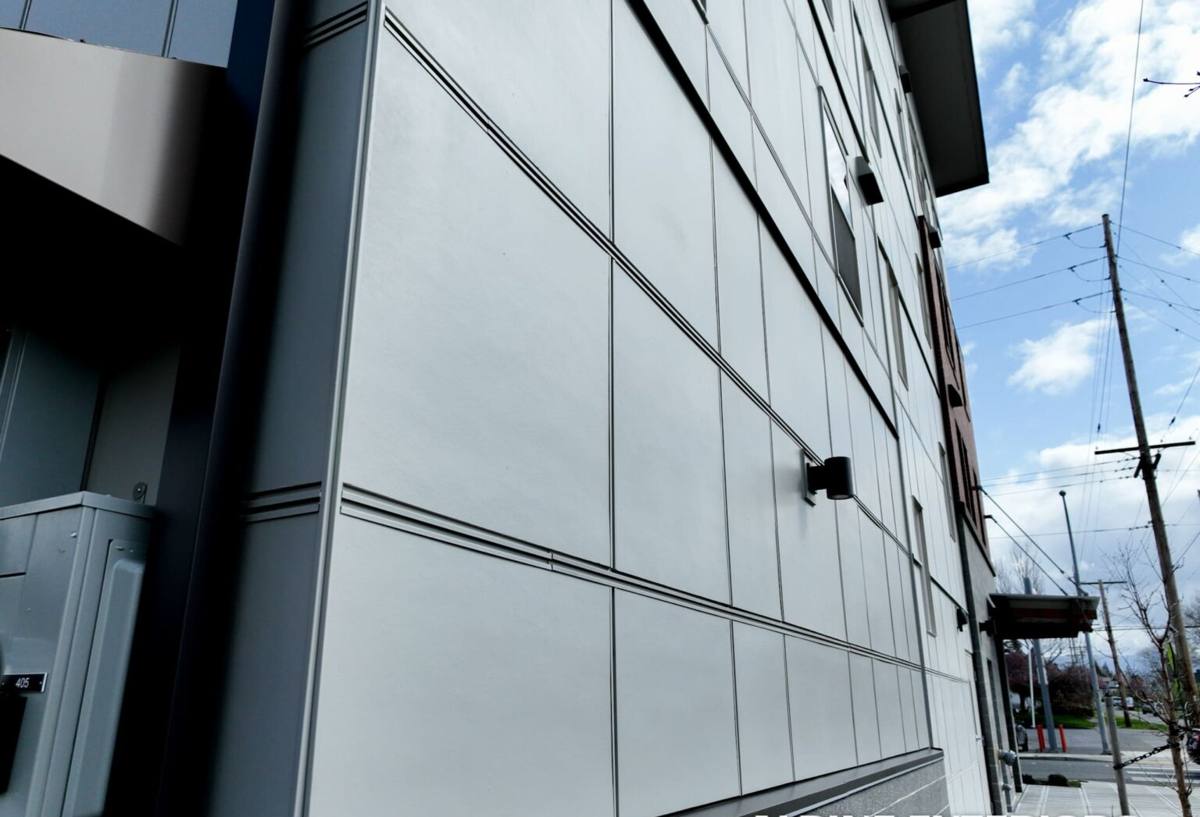
How Local Climate Conditions Wear Down Siding Here Specifically
Salt Air and Corrosion
Proximity to Sarasota Bay means airborne salt settles on exterior surfaces and fasteners continuously, not just during storms. Over years, salt exposure accelerates the breakdown of certain siding materials and corrodes unprotected or improperly rated fasteners, which is one of the most common hidden failure points we find when we tear off old siding in bayside neighborhoods.
Hurricane-Force Wind Loads
Manatee County's building code requires exterior cladding to meet specific wind-load ratings, and Whitfield Estates' open exposure toward the water means wind pressure on a home's siding can be significant even outside of a named storm. Siding that wasn't installed with the correct fastening schedule for this wind zone — or that has weakened over time — is far more likely to lift, crack, or tear loose in a serious blow.
Wind-Driven Rain
It's rarely rain falling straight down that causes damage here; it's rain driven sideways by storm winds, forced up under laps and around trim edges that weren't flashed correctly. A siding system's drainage plane and flashing details matter more in this kind of weather than the siding material itself.
Intense, Year-Round UV
Florida's sun doesn't take an off-season. Constant UV exposure fades paint, dries out and cracks organic materials, and breaks down lower-grade coatings well before their expected service life — which is why factory-applied, UV-stable finishes matter so much more here than in northern climates.
Signs Your Siding Has Reached the End of Its Service Life
- Soft, spongy, or crumbling spots when you press on the siding, especially near the bottom courses
- Visible cracking, buckling, or warping across panels or boards
- Paint that won't hold — repeated peeling or blistering within a year or two of repainting
- Rust streaks running down from fastener heads or trim seams
- Rising energy bills alongside drafts near exterior walls
- Visible gaps at corners, window trim, or butt joints where old caulk has failed
- Musty odors or discoloration on interior walls that back up to exterior siding
Any one of these on its own might be a minor repair. Several at once, especially on a home over 15-20 years old, usually means the siding system as a whole has reached the point where patching costs more over time than a full replacement.
What a Correct Siding Replacement Actually Involves
Siding replacement done right is a system installation, not a cosmetic swap. Skipping any one of these steps is where most premature failures start.
- Full tear-off and inspection — removing the old siding down to the sheathing so hidden rot, insect damage, or moisture staining can be found and dealt with, not covered over.
- Sheathing repair — replacing any compromised OSB or plywood before anything new goes back on the wall.
- Weather-resistive barrier — a continuous, properly lapped moisture barrier that gives water a path to drain out rather than soak in, which matters enormously given how much wind-driven rain this area sees.
- Correct flashing at every penetration — windows, doors, hose bibs, light fixtures, and roof-to-wall transitions all need flashing installed in the right sequence with the water-resistive barrier, not caulked over as an afterthought.
- Fastening to wind-zone specification — the right fastener type, spacing, and embedment for Manatee County's wind requirements, not a generic pattern.
- Proper joint and gap treatment — factory-mitered or correctly caulked joints sized for expansion, not tight-butted seams that will crack.
- Trim, caulking, and paint touch-up — finished with materials rated for sustained sun and humidity exposure.
Why We Install Only James Hardie Fiber Cement
We install James Hardie siding exclusively. That's a deliberate standard, not a limitation in what we're capable of offering. For a coastal, hurricane-exposed, high-UV climate like Bradenton's, fiber cement solves problems that other materials simply weren't built for.
James Hardie's HZ5 product line is engineered specifically for humid, high-moisture climates like Florida's — it's formulated to resist moisture-related damage in conditions where standard siding products are more prone to swelling, softening, or fungal growth. It's also non-combustible, which matters in a state where wildfire and lightning-strike exposure are real, if less-discussed, risks. Hardie's factory-applied ColorPlus finish is baked on under controlled conditions and backed by a dedicated finish warranty, which holds up to sustained UV far better than field-applied paint. And Hardie's fiber cement composition doesn't rot, doesn't attract termites, and isn't a food source for the pests and moisture-loving organisms that break down organic siding materials over time in this climate.
We back every installation with Hardie's manufacturer warranty coverage plus our own workmanship warranty, because in this environment, installation quality determines whether that product warranty is even worth anything. A great product installed with the wrong flashing detail or fastener schedule will still fail early.
Siding Material Comparison for a Coastal Wind Zone
| Material | Moisture Behavior in Humid Coastal Air | Wind/Impact Durability | UV/Fade Resistance | Long-Term Maintenance |
|---|---|---|---|---|
| Vinyl siding | Doesn't rot, but can warp or melt under intense heat/reflected sun; seams can allow water intrusion | Can crack or blow off in high winds if not rated and installed correctly | Color fades over time, not repaintable without special primers | Low, but replacement is often the only fix for damage |
| Wood/cedar siding | Absorbs moisture, prone to rot and insect damage without constant upkeep | Moderate; depends heavily on fastening and board condition | Requires repainting or restaining every few years | High — ongoing sealing, painting, and pest monitoring |
| Engineered wood siding | Improved over solid wood but still moisture-sensitive at cut edges and joints | Good when installed to spec | Needs field-applied paint, subject to standard fade/wear | Moderate — edge sealing and paint maintenance required |
| James Hardie fiber cement | Engineered HZ5 formulation for humid climates; does not rot | Rated for high wind zones when installed per specification | Factory ColorPlus finish with dedicated fade warranty | Low — periodic cleaning and caulk inspection |
Broad cost ranges vary by home size, existing wall condition, trim complexity, and profile selection, and we walk through the real numbers for your home during the estimate rather than quoting from a table. What the comparison above shows is where the ongoing cost actually lives: in the maintenance and premature-failure column, not just the upfront number.
Our Process, Start to Finish
Every project starts with an on-site inspection of the current siding, trim, and any visible moisture or wind damage. We walk the whole exterior, not just the obviously worn sections, because failure at one corner often signals a problem repeating elsewhere on the same wall. From there we provide a written estimate covering full tear-off, sheathing repair allowances, moisture barrier and flashing work, Hardie product and profile selection, and finish color.
Once scheduled, work follows the sequence above: tear-off, sheathing inspection and repair, weather-resistive barrier, flashing, Hardie installation to the correct fastening schedule, trim and caulking, and a final walkthrough with the homeowner before cleanup. We keep the job site contained and cleared of debris daily — that matters in an established neighborhood where yards, landscaping, and neighboring properties are close by.
Permitting and Wind Code Compliance in Manatee County
Siding replacement in Bradenton and unincorporated Manatee County requires permitting and inspection to confirm the work meets current wind-load and building code requirements — this isn't optional paperwork, it's what confirms the installation can actually perform in a storm. A crew that regularly pulls permits and passes inspections in this specific jurisdiction knows what the inspector will look for before they show up, which avoids the delays and rework that come from a first-time misunderstanding of local requirements.
Why Local Experience in Whitfield Estates Specifically Matters
A siding crew that has already worked in Whitfield Estates and the surrounding Bradenton-area neighborhoods understands the practical realities of the job before day one: how close homes sit to mature landscaping and neighboring properties, what the salt-air exposure typically does to fasteners and trim over time in this specific corridor, and how to sequence work around the area's storm season rather than around it. That familiarity shows up in fewer surprises — knowing which wall assemblies are common in homes of a given era in this neighborhood, and planning material staging and site access accordingly.
It also matters for accountability. A contractor with an ongoing presence in the area has a reputation to protect with the neighbors, HOA representatives, and repeat clients who see each other's homes regularly — that's a different incentive structure than a crew passing through from out of the region for a single job.
After Installation: What Keeps Hardie Siding Performing
Correctly installed Hardie siding is low-maintenance, not zero-maintenance. We recommend a periodic rinse to remove salt residue and airborne grime, an annual visual check of caulking at trim and penetrations, and prompt attention to any impact damage before it becomes an entry point for moisture. None of this is heavy lifting — it's the kind of upkeep that, done consistently, is what actually lets a coastal-rated product deliver its full service life.
If your siding is showing wear, or you'd simply like an honest assessment of what it will take to protect your Whitfield Estates home for the next storm season and beyond, we're happy to walk your property and provide a free, no-pressure estimate — just fill out the form below.