 Bradenton Window
 Longboat Key Sits in One of the Toughest Climates in the Country for Siding
Longboat Key is a barrier island, which means every home here takes on weather that inland Manatee County properties simply don't see. You've got open Gulf of Mexico on one side and Sarasota Bay on the other, so salt-laden air moves across these homes constantly, in both directions, every day of the year. Add in intense year-round UV, wind-driven rain during summer storms, and the real possibility of hurricane-force wind loads, and you have a siding environment that punishes anything not built and installed specifically for it.
This isn't a generic "Florida is hot and humid" situation. It's a specific combination of airborne salt, sustained UV exposure, and wind-driven moisture intrusion that ages siding products differently than they'd age even twenty miles inland in Bradenton proper. We install James Hardie fiber cement siding exclusively, and on Longboat Key specifically, the reasons for that go beyond general product preference — they're about what actually survives out here.
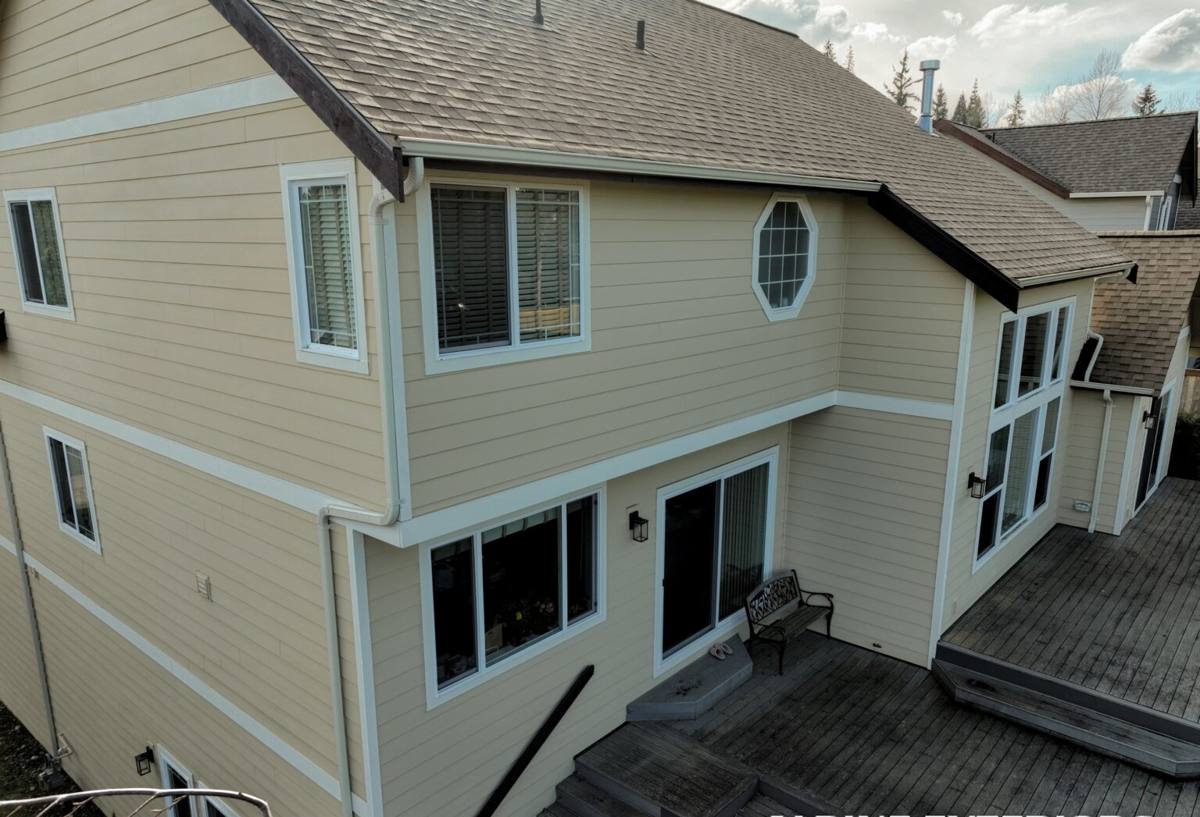
What Salt Air, UV, and Wind-Driven Rain Actually Do to Siding
Salt Air
Airborne salt is corrosive to metal fasteners and trim, and it accelerates the breakdown of coatings that aren't formulated to resist it. Over years, salt exposure works into seams, joints, and any place where a finish has started to crack or chalk, speeding up deterioration you won't notice until it's already advanced.
UV Exposure
Florida sun is relentless, and on an open barrier island there's little tree canopy or structure shading to soften it. Field-applied paint and lower-grade finishes fade and chalk faster under this kind of sustained UV load, which means more frequent repainting and a shorter functional lifespan for the finish itself.
Wind-Driven Rain
During storms, rain on Longboat Key doesn't just fall — it's pushed sideways into walls, trim, and penetration points by sustained wind. Siding systems that rely on caulk and paint alone to keep water out, rather than proper flashing and drainage detailing, are the ones that develop hidden moisture problems behind the cladding.
Why We Standardized on James Hardie for This Market
James Hardie fiber cement is non-combustible, dimensionally stable, and manufactured with a factory-applied ColorPlus finish rather than a field-applied paint job. For a barrier island environment, that combination matters in a very specific way: the finish is baked on under controlled conditions and backed by its own warranty, so it isn't as vulnerable to the early fading and chalking that salt air and UV cause on site-painted materials. Hardie's fiber cement composition also doesn't absorb moisture and swell the way wood-based or wood-alternative products can, which matters when wind-driven rain is a regular occurrence rather than an occasional event.
We don't install LP SmartSide, vinyl, Cemplank, Allura, or raw wood siding, and on Longboat Key specifically that decision comes down to long-term performance in this exact climate. Vinyl can warp and become brittle under sustained heat and UV. Engineered wood products need vigilant caulk and paint maintenance to keep moisture out at the edges, which is a harder standard to hold on a salt-exposed island. We'd rather install one product correctly than offer several and hope maintenance keeps up with the weather.
Choosing the Right Hardie Product Line for a Longboat Key Home
James Hardie makes climate-engineered product lines, and choosing the right one for a barrier island property is part of doing the job correctly rather than just picking a look.
- HZ10 products are engineered for hot, humid climates with high moisture exposure — this is generally the right specification for a Gulf-facing or bay-facing Longboat Key home.
- HZ5 products are built for more moderate humidity and freeze-thaw conditions and are more commonly specified further north or inland — rarely the right call directly on the coast here.
- Panel and lap profile choice affects how the siding sheds wind-driven rain at laps and joints, which is a bigger factor here than on a typical inland home.
We spec the product line based on the home's actual exposure — a direct waterfront lot facing open water gets treated differently than a home set back with more surrounding structure, even within the same neighborhood.
What a Correct Installation Involves Here
Fiber cement siding is only as good as the installation behind it, and that's especially true where wind-driven rain and hurricane-force gusts are part of the design load, not a rare event.
Weather-Resistive Barrier and Flashing
Before a single piece of siding goes up, the wall needs a properly lapped weather-resistive barrier and correctly integrated flashing at every window, door, and penetration. This is the layer that actually stops water that gets past the siding surface — the siding itself is the first line of defense, not the only one.
Fastening for Wind Load
Fastener type, spacing, and placement all need to follow Hardie's published specifications and account for the wind exposure category the home falls into. Under-fastened or incorrectly placed fasteners are a common cause of siding failure in high-wind coastal areas, and it's not something you can see from the ground once the job is finished.
Joints, Caulking, and Trim
Butt joints, corners, and trim transitions are where water intrusion problems start if they're not detailed correctly. On a barrier island job, we treat every joint as a place salt-laden wind-driven rain will eventually find, and detail it accordingly rather than relying on caulk alone to do the work over the long term.
Cost Factors on a Longboat Key Siding Project
Every home is different, but the factors that move the price on a Longboat Key job tend to follow a consistent pattern:
| Factor | Why It Matters Here |
|---|---|
| Water exposure (Gulf-front vs. bay-side vs. set back) | Determines HZ product line and detailing requirements |
| Existing wall condition | Salt air and moisture can hide damage behind old siding that needs repair before new siding goes on |
| Trim and architectural detail | More corners, windows, and transitions mean more flashing and joint work |
| Site access | Barrier island logistics — narrow lots, limited staging space, bridge/ferry access for material delivery — can affect scheduling and labor |
| HOA or architectural review requirements | Many Longboat Key communities have design review processes that affect color and material approval timelines |
We walk every property before quoting so the estimate reflects what your home actually needs, not a generic per-square-foot number.
Our Process, Start to Finish
- On-site inspection — we assess current siding condition, wall substrate, and the home's specific wind and water exposure.
- Product and line selection — we recommend the Hardie product line, profile, and ColorPlus finish suited to the exposure.
- Detailed proposal — scope, product specification, and honest cost range in writing before any work begins.
- Tear-off and substrate check — old siding comes off and the wall sheathing is inspected for hidden moisture damage before new material goes up.
- Weather barrier and flashing installation — the layer that does the real work of keeping wind-driven rain out.
- Hardie siding installation — installed to manufacturer fastening and clearance specifications for this wind and moisture zone.
- Final walkthrough — we review the finished job with you before calling it complete.
Why Hiring a Crew That Already Works Longboat Key Matters
A siding crew that mostly works inland jobs may never have had to think hard about flashing details for direct salt spray, or fastening schedules for open-water wind exposure. On Longboat Key, those aren't optional refinements — they're the difference between siding that holds up for decades and siding that needs early repair. Working this island regularly also means we're familiar with the kind of architectural review and permitting processes several Longboat Key communities use, so we can help you plan a realistic timeline instead of guessing.
Manatee County's coastal building requirements exist for a reason, and a crew that treats them as a floor rather than a ceiling is going to deliver a longer-lasting result on a home this exposed.
Maintaining Hardie Siding on a Barrier Island
James Hardie siding is low-maintenance compared to wood-based alternatives, but "low-maintenance" doesn't mean "no maintenance" in a salt-air environment. A simple annual routine goes a long way:
- Rinse siding with fresh water periodically to remove salt residue buildup, especially on Gulf-facing or bay-facing walls.
- Inspect caulking at trim, window, and door joints once a year and reseal any cracked or separated areas promptly.
- Walk the perimeter after major storms to check for impact damage or areas where debris may have struck the siding.
- Keep irrigation heads and sprinklers from hitting the siding directly, which can cause localized staining and mineral buildup over time.
- Watch for any soft spots or discoloration near ground level, which can indicate moisture wicking from grade or hardscaping too close to the wall.
If your Longboat Key home is due for new siding, or you're just not sure whether what's on the walls now is holding up the way it should, we're happy to take a look. A free, no-pressure estimate gets you a straight answer on where things stand and what correct James Hardie installation would involve for your specific property — just fill out the form below.